Lando Norris
 McLaren
 Mercedes
 Red Bull
 Ferrari
 Williams
 Racing Bulls
 Aston Martin
 Haas
Haas Alpine


Ayrton Senna’s fatal crash out of the lead of the 1994 San Marino Grand Prix at Imola saw the FIA and Formula 1 implement instant improvements to the safety standards.
The 1994 San Marino GP marked one of the darkest times in Formula 1 history following the first fatal crashes at a race weekend for 12 years. Roland Ratzenberger died after his crash at Villeneuve during qualifying and Senna lost his life the next day after crashing at Tamburello.
Senna suddenly lost control of his Williams out of the lead of the race at 192mph and hit the wall at 131mph. The impact flung the Brazilian’s head into the headrest, fracturing his skull, while part of the suspension and a part of the upright assembly penetrated Senna’s helmet.
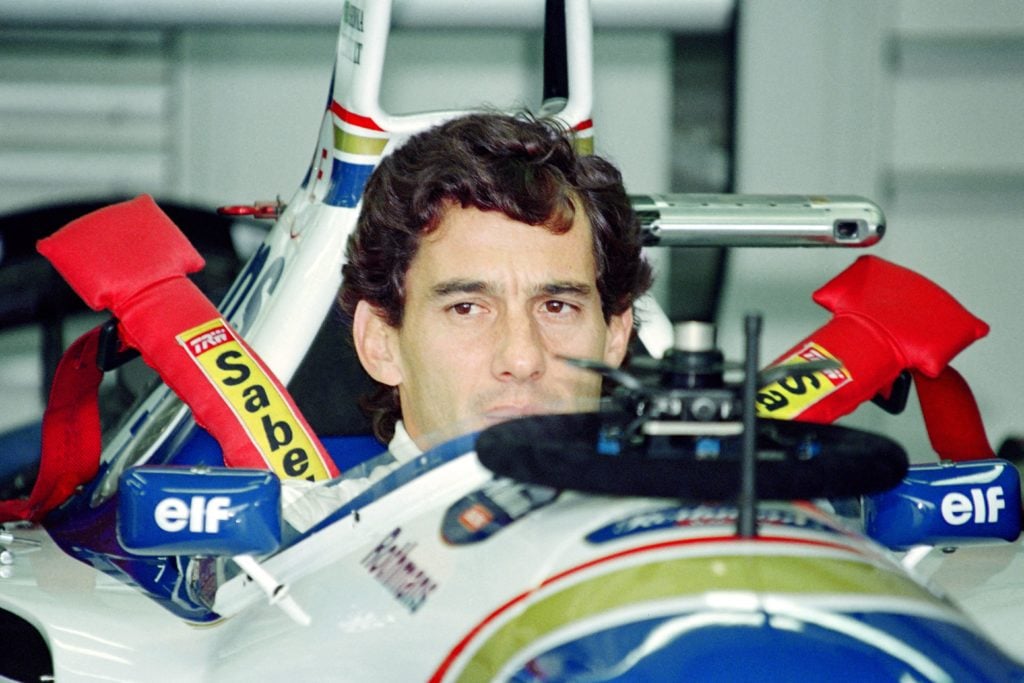
Ayrton Senna’s death at Imola sparked the FIA and F1 to improve circuit safety standards
Formula 1 continued the 1994 San Marino GP within 40 minutes of Senna’s crash as Michael Schumacher won. But the legacy of the tragic events which unfolded at Imola made a lasting impact that helped to avoid another death from injuries sustained in a Grand Prix until 2014.
Jules Bianchi became the first Formula 1 driver to pass away owing to injuries sustained in a race in July 2015. The Frenchman sustained substantial head injuries in his crash in the 2014 Japanese Grand Prix at Suzuka. F1 had not seen a race-related death since Senna’s passing.
READ MORE: All to know about Ayrton Senna including Alain Prost rivalry and Imola crash
F1 and the FIA reacted instantly to the events of the 1994 San Marino GP to improve safety standards. The first changes came in at the Spanish Grand Prix and the Canadian Grand Prix two and three rounds after the race at Imola, with the Monaco Grand Prix held in between.
The FIA implemented a programme of circuit alteration in the wake of Senna’s death as the governing body wanted to identify high-risk corners at F1-grade circuits. Computer analysis found 27 high-risk corners, of which 15 were made safer via car performance modifications.
In Spain, the FIA reduced the size of front wing endplates and rear diffusers. It then ordered holes to be cut into engine covers in Canada, before introducing a skid block and restricting rear wings from extending beyond the rear wheel centreline from the German Grand Prix.
Further changes included making testing of tyre barriers mandatory and the barriers having to be secured by conveyor belts. The FIA also enforced stricter standards for helmets and it reduced pit lane speed limits to 80km/h (50mph) in practice and 120km/h (74mph) in races.
The FIA and F1 later agreed to have a flat, 100km/h (62mph) speed limit in the pit lane from 2004. But the F1 pit lane speed limit fell to a flat 80km/h in 2014 after an FOM cameraman sustained a broken collarbone and cracked ribs after being hit by a loose wheel in Germany.
F1 and the FIA continued to improve safety standards in the wake of the 1994 San Marino GP
Continued efforts by the FIA in the following years to make Formula 1 even safer also saw it install the first data units in the survival cell in 1996, along with requiring higher cockpit sills and 75mm side headrests. Circuit changes also took the number of high-risk corners to two.
The 1997 F1 season also saw the FIA mandate a faster safety car, before requiring a front roll hoop test in 1998 as well as specifying that drivers must be able to exit the cockpit within 10 seconds of a crash. Wheel tethers and new seat belt criteria were also introduced in 1999.
READ MORE: Ayrton Senna’s final radio message to F1 rival Alain Prost before Imola crash
Despite complaints from many drivers at the time, the FIA made the Head and Neck Support (HANS) device mandatory for F1 from 2003 to limit head movement in a crash. One sceptical driver was Fernando Alonso, but he thanked the HANS device after a massive crash in Brazil.
“It’s quite hard to say [how much it helped] because the accident was the biggest one of my career,” a 21-year-old Alonso said after striking the debris of Mark Webber’s accident on Lap 56 of the 2003 Brazilian Grand Prix and hitting into the tyre barriers plus the opposite wall.
“But I am obviously pleased with how [the device] performed. For me, the system isn’t at all uncomfortable in the car, and it was definitely an advantage at that moment. With that kind of crash, you usually suffer from neck pains afterwards, and I have had no problems at all. I think that the HANS device helped in that, and did a very good job in that particular crash.”
F1 drivers re-established the GPDA after Ayrton Senna’s death

Formula 1 drivers also re-established the Grand Prix Drivers’ Association (GPDA) at the 1994 Monaco GP, with Niki Lauda driving that. He was also elected as a representative along with Schumacher – who initially did not believe Senna died – Martin Brundle and Gerhard Berger.
Senna had initially sought to reform the GPDA at the 1994 San Marino GP after the death of Ratzenberger and offered to lead the association. The Brazilian had been deeply affected by the Austrian’s passing, tempting Sid Watkins to ask Senna to ponder retiring from Formula 1.
The GPDA was initially formed in 1961 but disbanded in 1982 amid tensions with the FIA as Lauda and Didier Pironi led a drivers’ strike against new superlicence conditions. The GPDA also only achieved full membership for the very first time with all active F1 drivers in 2017.
Ex-Benetton, McLaren and Williams F1 driver Alex Wurz is the chairman of the GPDA today. The association serves to push Formula 1 and the FIA to continue looking to improve safety standards and also improve racing. The GPDA also looks to hold F1 and the FIA to account.
Receive exclusive F1 news and updates twice a week to your mailbox