

 Lando Norris
 McLaren
 Mercedes
 Red Bull
 Ferrari
 Williams
 Racing Bulls
 Aston Martin
 Haas
Haas Alpine


Ayrton Senna was one of if not the greatest Formula 1 drivers of all time and remains a much-loved legend in his native Brazil and F1, so here is everything you need to know.
The iconic son of Sao Paulo won three Formula 1 drivers’ championships with McLaren using Honda engines in the late 1980s into the early 1990s. Senna had a true gift behind a steering wheel but became a national treasure in Brazil for what he also gave outside of a race track.
Senna made Brazilians feel pride in their country at a time many struggled to following years under a dictatorship. He was a symbol of what Brazilians could achieve, and proudly carried the flag with Senna’s charisma and resilience around the world to give a reason to be proud.
His immense charity work only helped to further the adulation that Brazilians felt for Senna. Following his death at Imola in 1994, it was discovered that Senna had donated in excess of $400m (£320m) to children’s charities but kept it private as he did not want people to know.
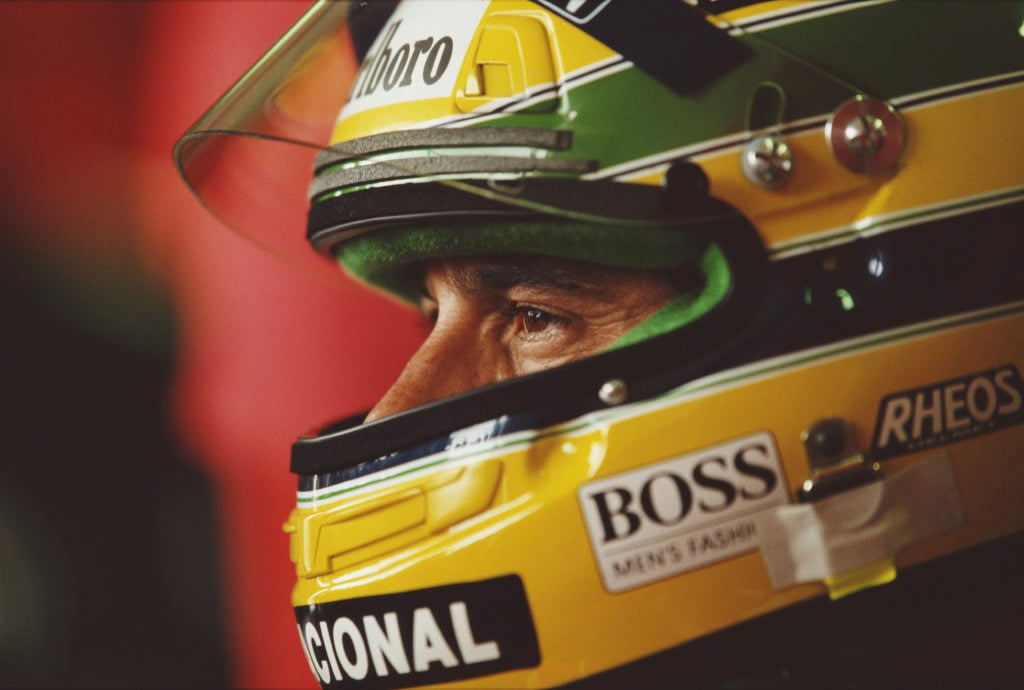
Ayrton Senna beat Martin Brundle by 10 points to win the 1983 British Formula 3 title
Senna caught the motorsport bug at an early age after first showing his interest in cars and racing at only four years old. His father Milton da Silva, who was a wealthy land and factory owner, supported Senna’s passion by building his first go-kart before he started racing at 13.
Karting titles came quickly for Senna as he won the South American Kart Championship in 1977. He also went on to finish second in the Karting World Championship in 1979 and even 1980. Senna then moved to England in 1981 to further his motorsport career and rise to F1.
Moving to Eaton did the trick, as a rookie Senna won the 1981 Formula Ford 1600 title with 12 wins in 20 races. It was the start of his single-seater dominance, as Senna won the 1982 British Formula Ford 2000 plus European Formula Ford 2000 and the 1983 British F3 titles.
The 1983 British Formula 3 championship also birthed a brilliant battle with Martin Brundle, who Senna beat to the title by 10 points. It was often hard to separate the pair who finished first and second in 12 of the 20 races, with Senna winning 10 of those amongst 12 victories.
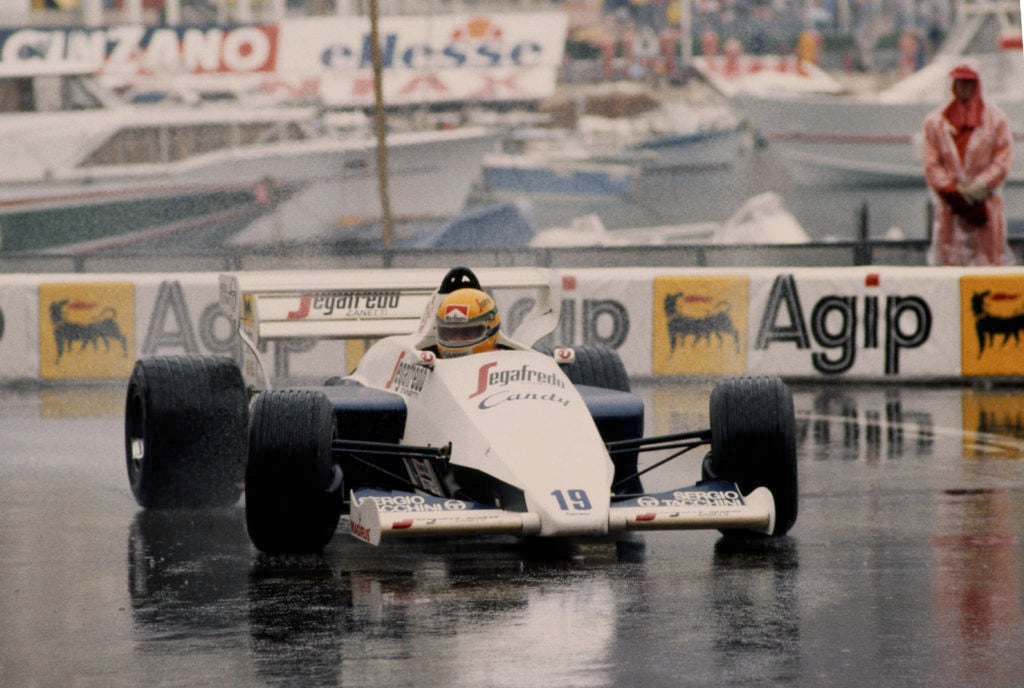
Ayrton Senna made his name in Formula 1 with Toleman at the 1984 Monaco Grand Prix
But the Senna story may never have materialised as he considered retiring from racing after winning the Formula Ford 1600 title as his parents asked him to return to Brazil to take over the family business. After thinking it over, Senna decided to continue his racing and winning.
Brabham, McLaren and Williams were soon at his door in 1983, as well, offering Senna tests in Formula 1 cars. Sponsors ultimately blocked him from finding a race seat with most teams for 1984 but Toleman gave Senna his chance and they did not wait long to reap the rewards.
The 1984 Monaco Grand Prix saw Senna announce himself as a Formula 1 driver in extreme rain. Despite qualifying in 13th place, the Brazilian charged through the order and was even catching leader Alain Prost by around four seconds a lap before the race was stopped early.
Ayrton Senna developed a bitter rivalry with Alain Prost
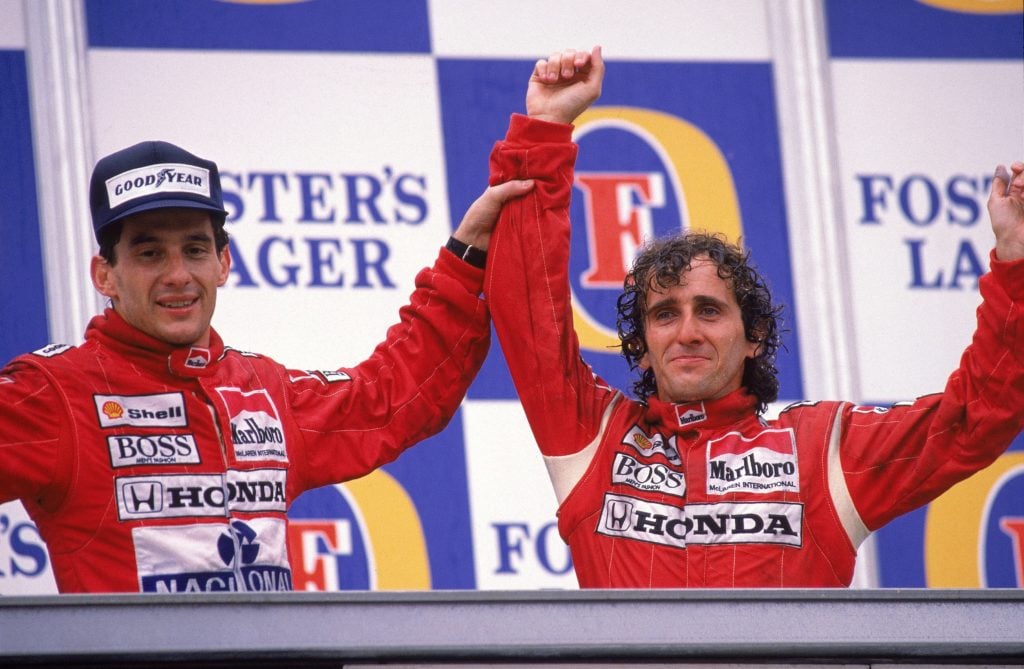
Senna and Prost would go on to build a fierce rivalry, which often went over the limits while teammates at McLaren. The Japanese Grand Prix was often at the heart of their controversy, as well, with Suzuka regularly staging rounds late in a season and also their fights for a title.
The 1988 Japanese GP marked one of the first major races in Senna and Prost’s bitter rivalry as the F1 drivers’ championship was decided. Despite stalling on the grid and falling to P14, Senna recovered at a rapid rate to beat Prost to the race win by 13 seconds and get the title.
One year later and Suzuka again staged a title showdown between Senna and Prost, but this time the Frenchman won the war albeit controversially. The McLaren teammates collided at the final chicane on Lap 47 after Prost turned in once he spotted Senna dive down his inside.
Both drivers stalled, so Prost retired, but Senna jump-started his Honda engine after getting a push start and went on to win the 1989 Japanese GP. Yet the stewards disqualified him for using an escape road to rejoin the race despite Senna otherwise having to go against traffic.
Ayrton Senna was almost banned from his 1990 Formula 1 title-winning season
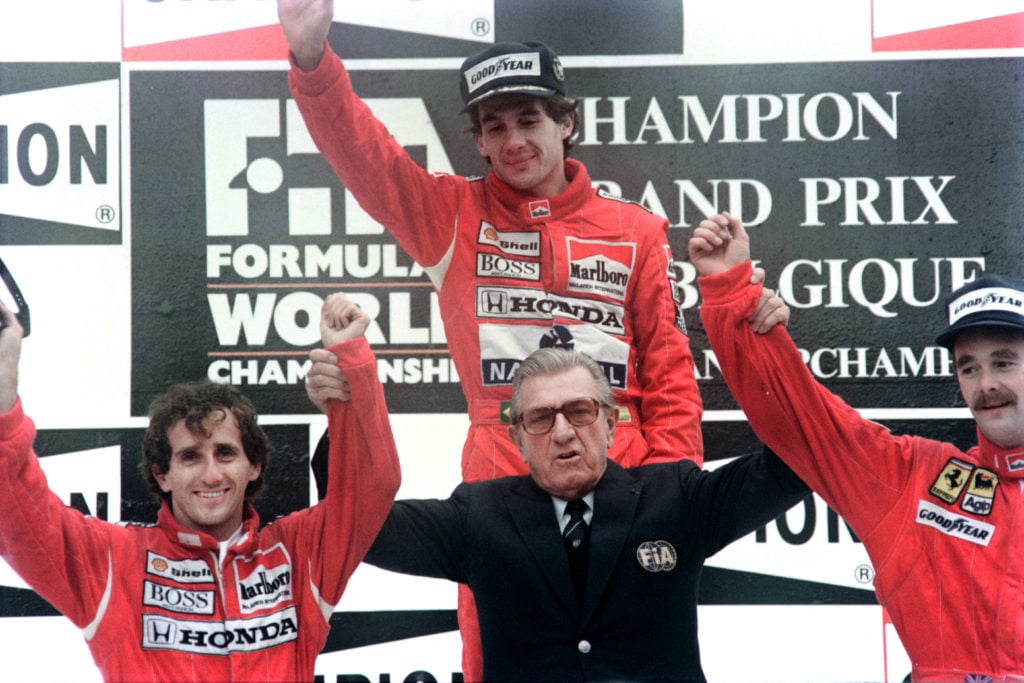
McLaren appealed Senna’s disqualification from the 1989 Japanese GP but it resulted in him getting a $100k (£80k) fine and a suspended six-month ban. Senna was also nearly banned from the 1990 F1 season after accusing FISA president Jean-Marie Balestre of manipulation.
FISA was the FIA’s sporting arm at the time and Senna took issue with Balestre’s handling of the 1989 Japanese GP. He said in a press conference in Brazil: “It was clear that political and economic pressure groups manipulated behind the scenes to make Prost world champion.”
Eventually, Senna retracted his claim on February 15, 1990 – the day FISA released the entry list for the F1 season. FISA had initially left Senna off the list but issued a correction only one hour after it named Jonathan Palmer as the new teammate of Gerhard Berger for McLaren.
Senna wasted no time in showing the world that he deserved to win the 1989 championship by winning six of the first 12 rounds in 1990 and securing a further four podiums. But Prost, who had joined Ferrari, took another title battle with Senna to Suzuka and the Japanese GP.
While Suzuka was not the final race in 1988, 1989 or 1990, it was the deciding round in the championship battles. But the title fight would not even get past the first corner in 1990 as Senna refused to yield to Prost and took both drivers out of the Japanese Grand Prix at T1.
Pole position being on the dirty side of the grid at Suzuka enraged Senna, who requested it be moved to the racing line on the outside. Those pleas fell on deaf ears and Prost got the better start, so Senna refused to yield. Prost called Senna’s actions “absolutely disgusting”.
His third and ultimately last drivers’ championship then arrived in 1991, with Senna totally dominant in his McLaren whilst Prost and Ferrari struggled. Williams also made progress in the latter half of the year, so held talks with Senna about joining the Grove squad for 1992.
Ayrton Senna produced iconic drives to win the 1991 Brazilian GP and 1993 European GP
Senna even produced one of his greatest Formula 1 races in the 1991 campaign to win the Brazilian Grand Prix for the first time. Despite losing all but sixth gear, an exhausted Senna battled through immense pain in the rain to hold off Riccardo Patrese and win at Interlagos.
McLaren struggling in 1992, as Williams won the drivers’ championship with Nigel Mansell, then saw Ferrari target Senna. But he rejected the Scuderia and eventually stayed put after Prost blocked Williams from signing Senna for 1993 having joined them to replace Mansell.
READ MORE: Five unforgettable Sao Paulo GP from Senna’s painful win to Hamilton’s title
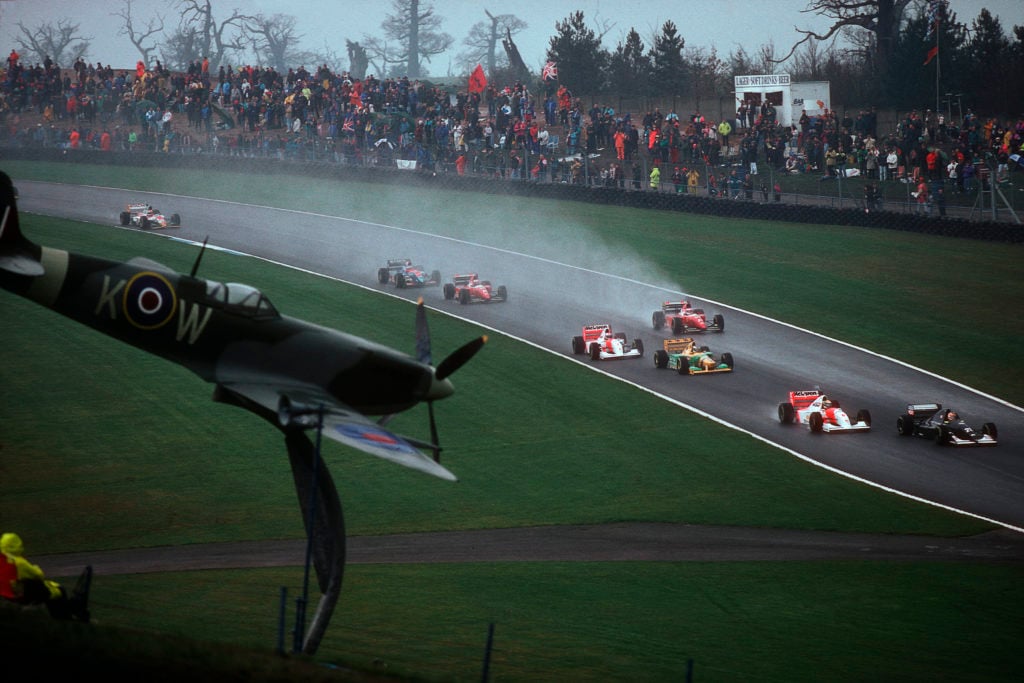
While McLaren had a mixed year with Ford engines after Honda left F1, Senna produced one of the greatest drives in history at Donington to win the 1993 European Grand Prix. In mixed conditions, he shot from fifth to first on the first lap and lapped everyone but second place.
Williams soon took control of the 1993 season, though, and Senna eventually sealed a move to Frank Williams’ team in 1994 once Prost retired. But the Brazilian would only enter three rounds with Williams before tragedy befell the 1994 San Marino Grand Prix and Senna died.
The 1994 San Marino GP was one of the darkest weekends in Formula 1 history after Senna crashed one day after Roland Ratzenberger also lost his life. Senna’s death led to a flurry of improvements to safety standards in F1, including to crash barriers and higher cockpit sills.
When and where was Ayrton Senna born?
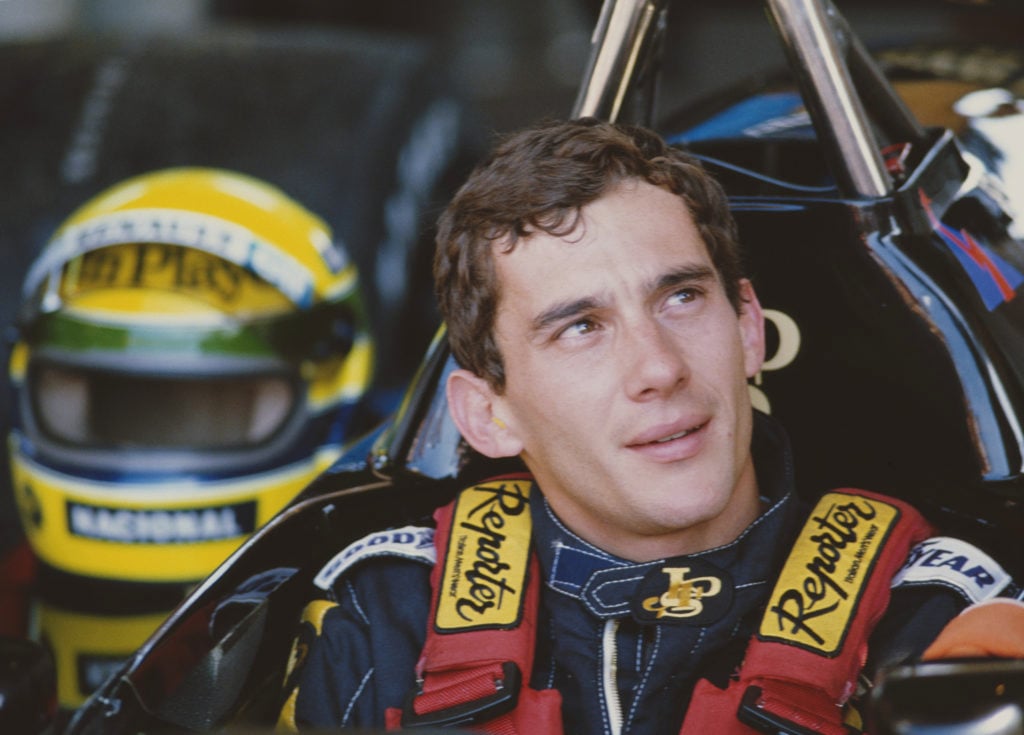
Sao Paulo has been blessed with many iconic native residents through the years, but Senna remains one of the Brazilian city’s most loved sons. Senna was born in Sao Paulo on March 21, 1960 as the middle child to parents, dad Milton da Silva and mum Neide Senna da Silva.
The Senna family also included Ayrton’s older sister Viviane and younger brother Leonardo. Viviane founded the Instituto Ayrton Senna, which promotes comprehensive education for young Brazilians, in November 1994. His niece, Bianca, is also the CEO of the Senna brand.
His nephew, Bruno Senna, is also a racing driver but had to briefly forgo a motorsport career following Ayrton’s death. Viviane was reluctant to allow Bruno to follow Ayrton into a racing career but later supported his wish and saw him reach Formula 1 and also race for Williams.
When and how did Ayrton Senna die?
Senna died on May 1, 1994 following a crash in the San Marino Grand Prix at Imola when he hit the wall at Tamburello at 131mph. The Brazilian left the track in a straight line at 192mph before striking the wall, tearing the front-right wheel and nose cone off his Williams FW16.
The wheel also entered the cockpit and struck Senna on the head, forcing his head back and fracturing his skull on impact with the headrest. A part of the suspension plus a piece of the upright assembly also penetrated his helmet. Any of the injuries may have caused his death.
Senna’s death was confirmed after he was airlifted to Bologna’s Maggiore Hospital by Maria Teresa Fiandri, the head of the emergency department. It was also found that Senna had an Austrian flag in his car he aimed to unfurl to honour Ratzenberger after the San Marino GP.
Ratzenberger’s death after a 500G impact with an exposed concrete wall at the Villeneuve kink during qualifying for the 1994 San Marino GP had deeply affected Senna. He also met with other F1 drivers at Imola to discuss re-establishing the Grand Prix Drivers’ Association.
Brazil bore days of mourning after his death, and over three million people lined the streets when Senna was buried at the Cemiterio do Morumbi on May 5, 1994. His death has saved the lives of many as F1 and the FIA reacted to Senna’s passing by bettering safety standards.
Ayrton Senna was a magician at Monaco

Formula 1 lost one of its greatest-ever drivers when Senna died from the injuries sustained from his crash in the 1994 San Marino Grand Prix at Imola. He had a true gift in a race car, and Senna showed his immense talent few places more often than the Monaco Grand Prix.
The Principality was Senna’s playground and the 1984 Monaco GP was the making of him in F1. But the stewards denied the Brazilian his chance to win the race for Toleman after Prost successfully pleaded for it to be stopped on Lap 31 as Senna edged within 7.446 seconds.
Formula 1 already had its Mr Monaco in Graham Hill after the Briton won the Monaco GP in 1963, 1964, 1965, 1968 and 1969. But Senna would go one better around the iconic streets with six victories, winning the Monaco GP in 1987, 1989, 1990, 1991, 1992 and lastly 1993.
READ MORE: The most successful teams and engine manufacturers at the Monaco GP
Joining Lotus in the 1985 season set the foundation for Senna to win his first Monaco GP in 1987. But it was once he joined McLaren in 1988 that Senna turned the Principality into the Brazilian’s playground and he produced that lap “well beyond my conscious understanding”.
Senna had an out-of-body experience during qualifying for the 1988 Monaco Grand Prix. He humiliated the field to secure pole position by 1.427s to Prost, after Senna set a 1:23.998 to his rival’s 1:25.425. It seemed as if he was driving in another category through the race, too.
By the time Prost regained second place from Berger on Lap 54 of 78, the Frenchman trailed his McLaren teammate by 55 seconds. In a bid to put pressure on Senna, the pair started to trade fastest laps. So, team boss Ron Dennis told Senna to slow down to protect a one-two.
But after receiving Dennis’ radio message, Senna lost concentration for a split second as the Brazilian arrived at Portier. Senna spun into the wall and retired from a dominant lead, with Prost going on to win the 1988 Monaco GP. Irate, Senna stormed straight back to his home.

Ayrton Senna failed to qualify for the 1984 San Marino Grand Prix
Many remember the start of Senna’s Formula 1 career for his dazzling display in the rain for Toleman at the 1984 Monaco Grand Prix over his sixth round in the pinnacle of motorsport. But his start in F1 had not always been a dream scenario before taking P2 in the Principality.
Only two rounds before his spectacular performance in Monte Carlo, Senna failed to qualify for the 1984 San Marino Grand Prix at Imola. It would be the one and only time that Senna ever failed to qualify for a race and even marked the final appearance of Toleman’s TG183B.
Toleman were forced to carry their outdated TG183B into the 1984 season before debuting the TG184 at the French Grand Prix. Having Pirelli tyres instead of Michelins even cost them lap time and, amid Senna’s push to switch suppliers, a difference of opinions arose at Imola.
A clash between Toleman and Pirelli forced Senna and teammate Johnny Cecotto to spend a day on the sidelines as the team withdrew from all running on the Friday. It left them facing a daunting Saturday, when a drying track made the last minutes of qualifying absolutely key.
To make matters worse, Senna’s TG183B formed a fuel pressure issue and he stopped out on track between Tosa and Piratella. It ensured the Brazilian did not improve on his 1:41.585 lap when the track was at its fastest, and Senna failed to qualify for the 1984 San Marino GP.
Senna even ended qualifying 13.068 seconds off the pace, as compatriot Nelson Piquet took pole position for the 1984 San Marino GP with Brabham. But from the low came some relief as Toleman terminated their contract with Pirelli and took Michelin tyres from the next race.
Did Ayrton Senna have a wife?
While Senna dated many women, the Brazilian only got married once to his ex-wife Lilian de Vasconcelos Souza. The couple were childhood sweethearts and it marked their first serious relationship. But after getting married in 1981, Senna divorced Lilian only eight months later.
Ayrton Senna’s net worth
At the time of his death in 1994, Senna had an estimated net worth of $400m (circa £320m). The Formula 1 legend’s net worth in 1994 would even be $852m (£681m) in today’s money.
Ayrton Senna’s Formula 1 career stats
Senna formed a potent partnership with McLaren to win three drivers’ championships with the Woking squad. He even tasted some success with Lotus and Williams, predominantly in qualifying. Senna ultimately won 25.47% of his Grand Prix and took pole position at 40.37%.
| F1 TITLES | GRAND PRIX ENTRIES | GRAND PRIX WINS | GRAND PRIX POLES | GRAND PRIX PODIUMS |
| 3 | 162 | 41 | 65 | 80 |
Each of Ayrton Senna’s Formula 1 drivers’ championships:
- 1988 F1 season: 16 races, 8 wins, 13 poles, 3 fastest laps, 11 podiums
- 1990 F1 season: 16 races, 6 wins, 10 poles, 2 fastest laps, 11 podiums
- 1991 F1 season: 16 races, 7 wins, 8 poles, 2 fastest laps, 12 podiums
Receive exclusive F1 news and updates twice a week to your mailbox


