Lando Norris
 McLaren
 Mercedes
 Red Bull
 Ferrari
 Williams
 Racing Bulls
 Aston Martin
 Haas
Haas Alpine


Formula 1 will face a major regulation change in 2026 when the cars adopt active aerodynamics and more efficient and powerful engines.
The FIA’s premier single-seater motorsport championship will implement drastic modifications to the cars to help improve racing and increase overtaking opportunities.
The new power units will be more efficient by having a greater portion of power come from the electrical engine, while F1 drivers will also get the use of a manual override button as a way to increase the power output and improve overtaking chances.
Active aerodynamics will be one of the biggest changes, which will enable drivers to switch from a low-drag ‘X-mode’ for straights to a higher-drag ‘Y-mode’ for the corners. The hope is that this can eliminate the effects of the aerodynamic wake generated by the car in front, which often prevents drivers from getting close to pull off an overtake.
A new regulation change also shakes up the competitive order, with the last in 2022 ultimately ending several years of dominance from Mercedes and handing it back to Red Bull. Oscar Piastri is hopeful the changes will throw up a ‘surprise’ when discussing the future of F1 with Forbes.
McLaren star Oscar Piastri hopeful for ‘surprise’ during 2026 F1 season
McLaren has enjoyed a resurgence to the front in recent races having closed the gap to Red Bull on track by bringing effective upgrades to their car.
Poaching valuable staff, including engineer Rob Marshall, has also led to them being able to lift the lid on Red Bull’s ‘secret sauce’ according to former F1 team boss Otmar Szafnauer.
Piastri is hopeful that this form will continue through into the new regulation package, as teams have begun to converge more in the last six months.
“It’s an exciting prospect. Changes to the engine – which will happen in 2026 – can introduce differences [up and down the grid]. So, there will be a large margin for improvement for the teams over time.”
“History has shown that there’s normally one team that gets it gets it right more than the others initially. It wouldn’t be a total surprise to see if one team kind of comes out ahead in ‘26. Hopefully, that’s us. But we’ll wait and see.”
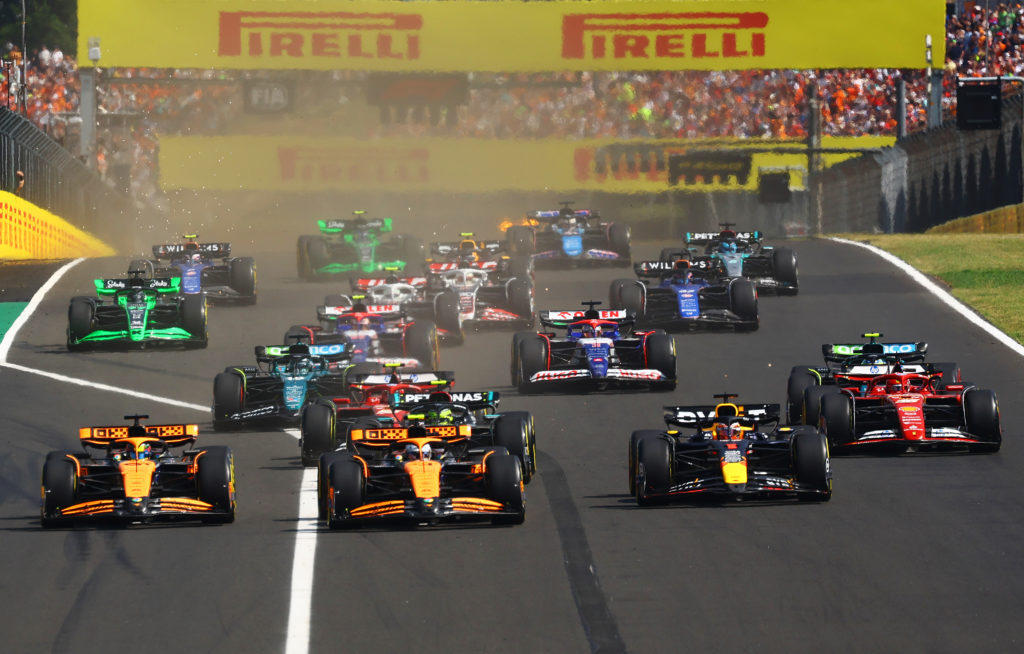
How the 2026 F1 rule changes could impact how the grid looks?
Changes to the regulations always throw up an opportunity for F1 teams to improve their prospects, with Brawn GP a notable example in 2009.
Although the car was intended to be for Honda before they pulled out amid the global financial crisis in 2008, the team was eventually taken over by former F1 technical chief Ross Brawn. He believed in the years spent preparing for the regulation change in 2009 after Honda was stuck finishing last in the Constructors Championship between 2007 and 2008.
READ MORE: McLaren driver Lando Norris’ life outside F1 from height and parents to celebration
With Audi set to join the grid as a manufacturer in 2026, it could see the German car maker conquer yet another feat in its motorsport portfolio after years of success at Le Mans.
Red Bull has been critical about the regulation changes, amid uncertainty around their in-house engine project after Marc Priestley recently shared that he was told nobody has ‘too much confidence’ in the Red Bull Powertrains operation.
Receive exclusive F1 news and updates twice a week to your mailbox