Lando Norris
 McLaren
 Mercedes
 Red Bull
 Ferrari
 Williams
 Racing Bulls
 Aston Martin
 Haas
Haas Alpine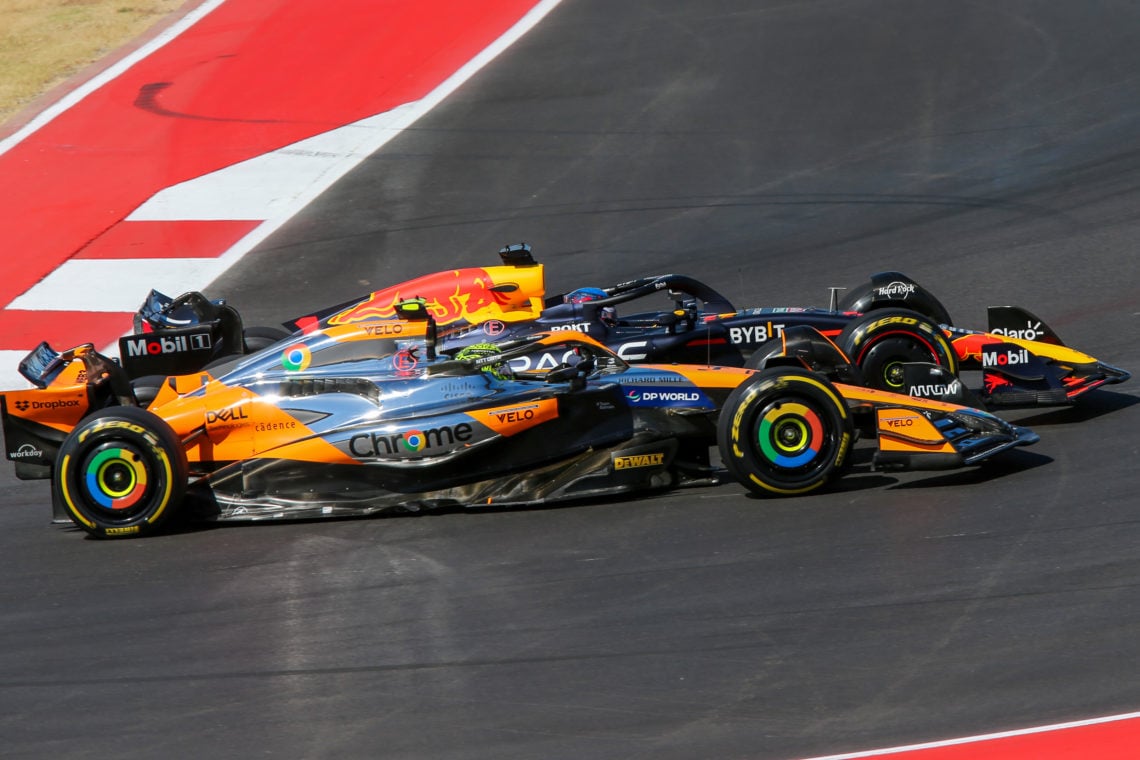


When McLaren brought Red Bull’s suspicious floor bib to the FIA’s attention during the United States Grand Prix, they knew exactly what they were doing.
The team accused Red Bull of using a device that could adjust the ride height of the floor’s leading edge between qualifying and the race, therefore enabling them to derive maximum aerodynamic performance from running the floor low in qualifying.
Raising the floor for the race would not only allow for the increased weight of the car when it is fully fueled, but could also avoid wearing out the regulation plank beyond the permitted 10 per cent thickness.
The part in question engulfed the weekend news cycle, as accusations of cheating were levelled at Red Bull including the outlandish theory from McLaren CEO Zak Brown that their drivers could change the ride height of the car using a ‘lever in the cockpit’ while in Parc Ferme.
Of course, no such thing existed. Nor was there any proof that Red Bull could actively change the ride height of their car during Parc Ferme conditions without first drawing attention to a scrutineer.
The part itself is one of two ways Red Bull can adjust the ride height of their car and has been known to teams for the last two years as it was on the FIA open-source parts list, which is the list of parts the teams must supply drawings of so that others can copy if they wish. It’s a regulation that helps with cost-saving, introduced at the start of the hybrid era.
READ MORE: McLaren driver Lando Norris’ life outside F1 from height and parents to celebration
McLaren was aware of this but decided to pounce on them with six races of the season left, knowing they were about to introduce a major floor update for Austin. So why create the non-story? To understand this tit-for-tat, you have to go back to the recent race in Azerbaijan.
McLaren forced to remove Mini-DRS mechanism following Baku win
It only emerged after the Azerbaijan GP that McLaren was using a trick DRS device that could open the slot gap by a few millimetres while on a straight.
Video footage from onboard Oscar Piastri’s car clearly showed the rear wing deflecting at high speed, in what some in the paddock branded innovative. Ferrari and Red Bull felt it contravened the rules and what they agreed to, which was flexible bodywork being allowed on the front wing but not allowed at the rear.
By Singapore, they were required by the FIA to take it off. They were not penalised or disqualified because the FIA felt it would not have been ‘appropriate’ given it passed all the deflection and load tests.
Just as Red Bull blasted any cheating theories by having Max Verstappen take the pole and win the Sprint race in Austin, McLaren responded to the accusations well by taking the Mini-DRS off the car, then getting Lando Norris to win the Singapore GP by over 20 seconds from Max Verstappen.
Max Verstappen’s driving standards under the spotlight again
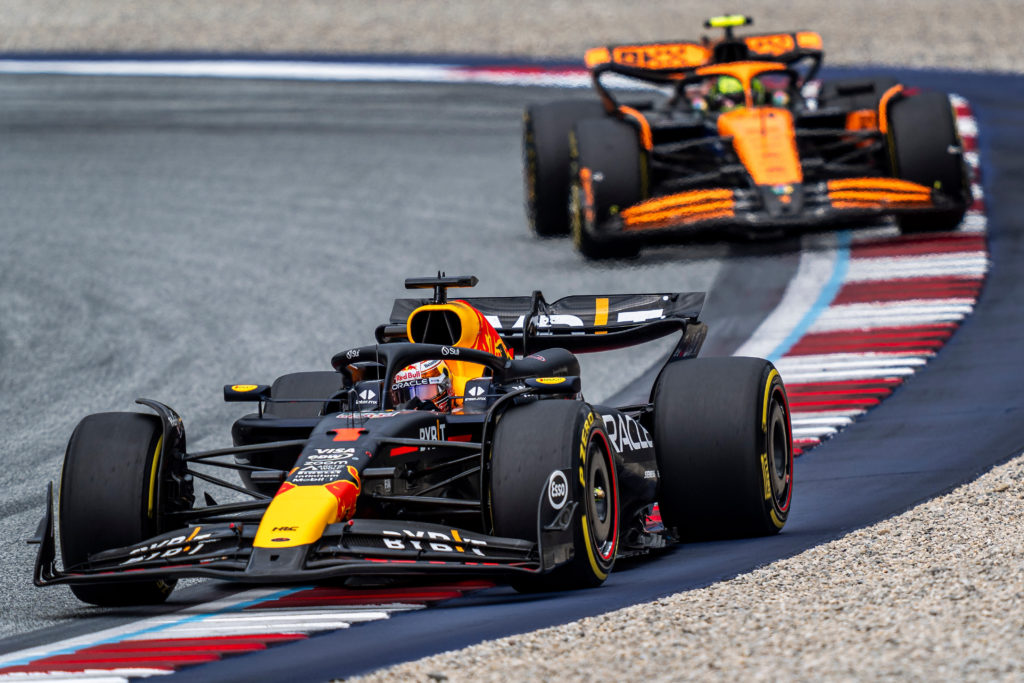
Verstappen has always taken an uncompromising approach to racing and sometimes this can boil over, like it did during this year’s Austrian GP.
The Dutchman knew Norris had a time penalty for track limits but decided to race him anyway, leading to a collision between the pair that cost him the victory and forced the McLaren to retire. Verstappen was deemed at fault for moving during the braking zones, while the discussion turned to whether the stewards offered him too much lenience in the build-up to the incident.
In Austin it was a similar case, with Verstappen using his signature ‘If you go around the outside, I’ll force you off track’ move he has been using even in the years before he reached F1. The technique is somewhat unfair to the driver who is trying the offensive move, as it gives them no other choice but to leave the circuit.
READ MORE: Is Max Verstappen’s defensive driving a legacy of not being punished enough?
Norris committed the foul by completing the overtake off-track, therefore gaining a lasting advantage by doing so as he held position in third. McLaren argued he was ahead at the apex, but as per the racing guidelines, it was Verstappen who had the right to the corner by being ahead after the braking zone as they reached the apex.
It has been a point of contention for years in F1 but it might finally see an amendment to the rules that prevents Verstappen from doing the same again, given other drivers such as George Russell were punished for far less harsh moves.
In a close title that could be worth millions of pounds in prize money at the end of the season, I would expect more of these spats to play out in the next five races.
Receive exclusive F1 news and updates twice a week to your mailbox