Lando Norris
 McLaren
 Mercedes
 Red Bull
 Ferrari
 Williams
 Racing Bulls
 Aston Martin
 Haas
Haas Alpine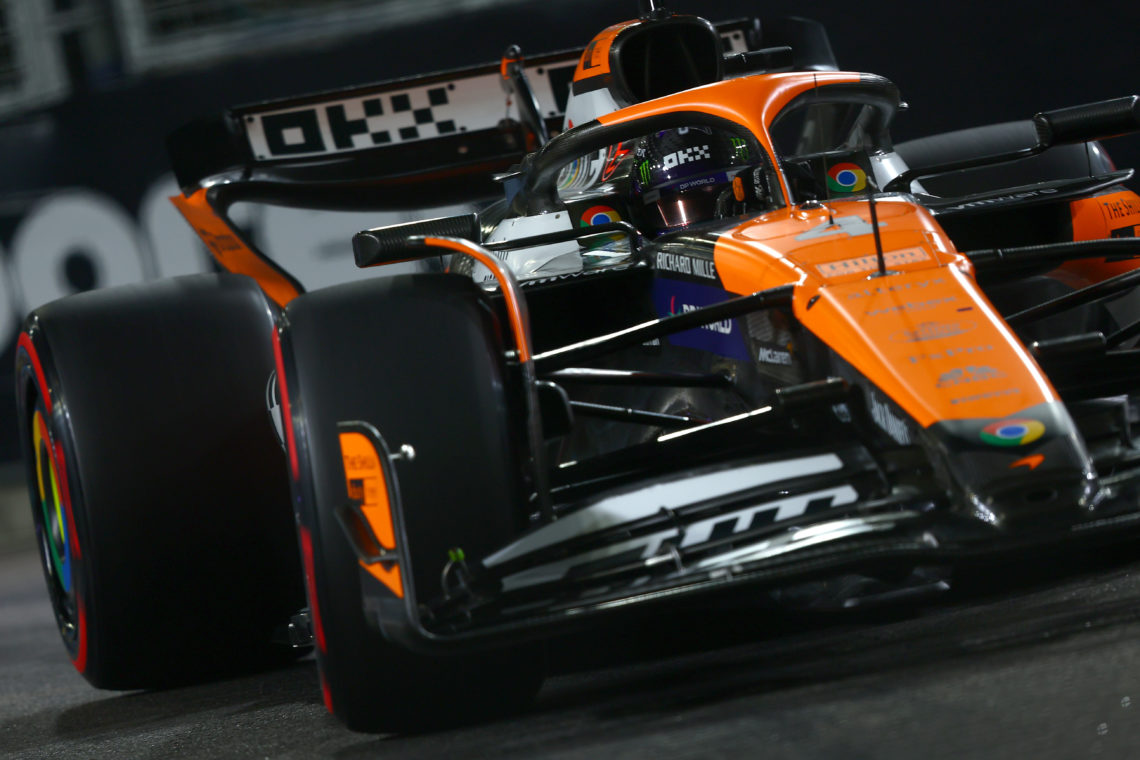

McLaren faced scrutiny heading into the Singapore Grand Prix weekend over its rear wing design, after rivals spotted something amiss from their onboard footage.
Oscar Piastri put up a stern defence of Charles Leclerc when the Ferrari driver piled on the pressure in the final laps of the race, consistently staying within half a second of him at the DRS zone.
The straight-line speed of the McLaren also played a role, but it subsequently emerged that the team was using a trick rear wing that activated a ‘Mini-DRS’ on the straights.
The upper flap of Piastri’s rear wing pivoted upwards and opened the DRS slot gap by millimetres on the straights, effectively dumping extra drag and generating higher straight-line speeds.
After the FIA inspected McLaren’s rear wing during practice for the Singapore GP, the governing body subsequently told them to revert to an older specification rear wing without the Mini-DRS following protests from rival teams including Red Bull.
FIA single-seater director, Nikolas Tombazis, explained why the governing body elected not to disqualify McLaren despite running a rear wing that was not allowed when speaking to Formu1a.uno.
FIA felt it ‘didn’t seem appropriate’ to disqualify McLaren after Mini-DRS saga
McLaren’s rear wing passed the deflection tests but did not meet the requirements in the Technical Directive issued to the team regarding its design.
The rear wings must meet a maximum deflection amount and not deform when under high loads, and teams felt McLaren’s design did not conform to this agreement.
However, Tombazis felt that it would have been harsh to disqualify the team given their rear wing passed all of the required tests.
“The McLaren wing passed all the tests and met everything that was written in the technical directives. To us it didn’t seem appropriate in retrospect to act in this way [and disqualify the cars in Baku],” said Tombazis.
“In Baku there was the sun in a certain direction, which highlighted this phenomenon more: this was not the case in Monza or Spa, and no one had noticed. If someone had come to us at Monza or Spa we would have acted earlier.”
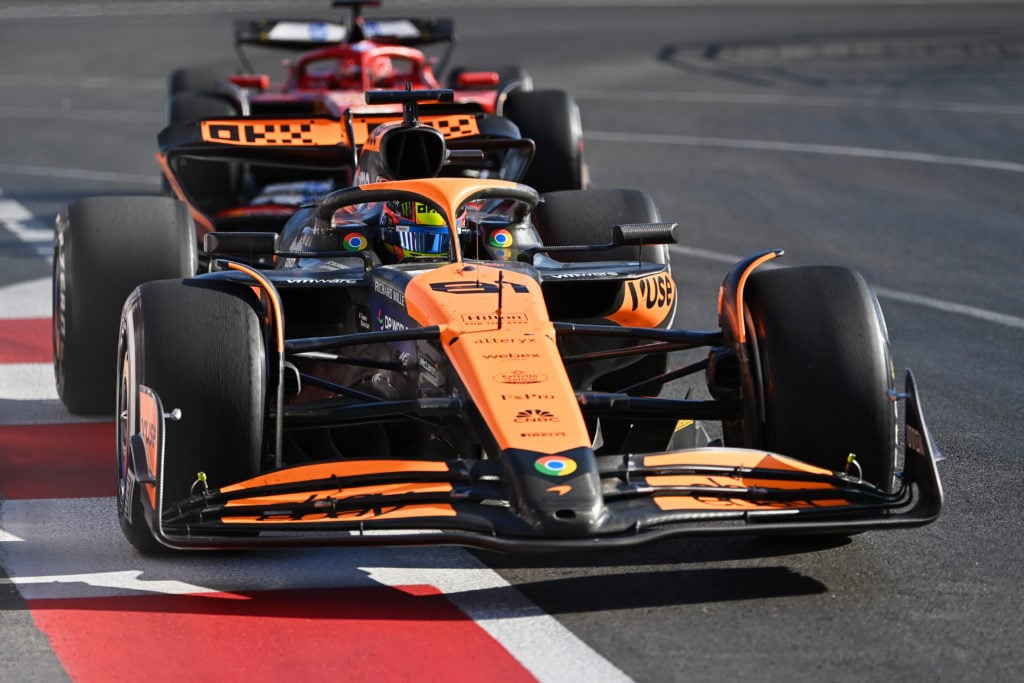
How much performance will McLaren lose from its rear wing changes?
McLaren was not planning to use their low-downforce rear wing setup at Singapore, with likely to have been deployed at Las Vegas and Mexico later in the season.
Rivals Red Bull believed that McLaren was gaining two-tenths from their rear wing trick, which could have a massive impact over a full race distance.
Data from the race in Baku showed they were far less reliant on the DRS to make overtaking moves, with Norris seemingly progressing through the field up to fourth despite struggling in the dirty air.
McLaren CEO Zak Brown praised his team’s ingenuity on Friday and also received support from Alpine team principal Oliver Oakes, but it appears they have gone too far with their design on this occasion.
Receive exclusive F1 news and updates twice a week to your mailbox