Lando Norris
 McLaren
 Mercedes
 Red Bull
 Ferrari
 Williams
 Racing Bulls
 Aston Martin
 Haas
Haas Alpine


Formula 1 has been very competitive throughout the majority of this season with seven different drivers taking a race victory so far.
Red Bull had a significant advantage over the rest of the field in the opening few races as Max Verstappen won six of the first eight Grands Prix.
But after the Dutchman won the Spanish Grand Prix in June, it was not until Verstappen won the Sao Paulo Grand Prix from 17th on the grid last time out that he topped another podium.
McLaren pair Lando Norris and Oscar Piastri also both became Grand Prix winners for the first time in Miami and Hungary respectively. Ferrari duo Carlos Sainz and Charles Leclerc plus Mercedes teammates Lewis Hamilton and George Russell have also won races in 2024.
But modern Formula 1 cars are very heavy, which makes them quite difficult to manoeuvre on slow-speed tracks such as those in Monaco and Singapore.
DRS is also critical to overtaking, making some passes very easy and the defending driver powerless to retain the position.
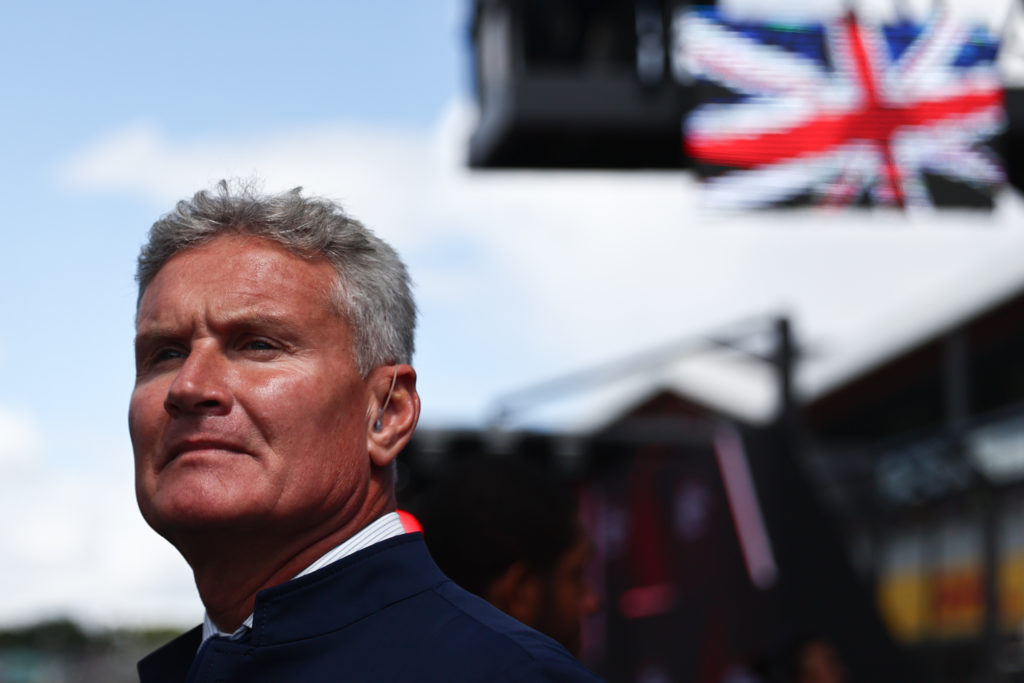
So, David Coulthard has suggested one idea on the Formula For Success podcast that could improve Formula 1 and create a better experience for the drivers in particular.
David Coulthard suggested refuelling would help improve Formula 1
In modern Formula 1, cars can’t refuel during a Grand Prix which means they are allowed to start a race with up to 110kg in the fuel tank.
This extra weight changes the balance of the car significantly as the fuel slows the car in a straight line and drivers need to brake early.
The cars will also be slightly less agile through high-speed turns compared to qualifying, where teams run the least amount of fuel possible.
Refuelling had some dangerous moments before it was banned ahead of the 2010 season. Most famously, Jos Verstappen’s Benetton caught fire at Hockenheim in 1994.
But Coulthard believes the return of refuelling would add an extra dynamic to a Grand Prix with another layer of strategy.
He said: “I would just like to see refuelling. Not really because it particularly improved the quality of the racing, but the driver experience.
“Going off with 30, 40 kilos in a Grand Prix, you had a series of little sprints. Going off with 100 kilos, it’s like putting a very large person in the back of your car.
“It’s so detrimental to the overall pace. It feels a bit more like sports cars than what Grand Prix racing was, but there you go.”
Refuelling may cause fewer overtakes on the circuit during a race
Refuelling adds a significant layer to the strategy that teams can use to gain positions by short-fueling the car and making a pit stop earlier or running for more laps and using clean air.
As cars are on different fuel strategies, drivers are rarely battling on the track as they opt to head into the pit lane at different times.
Refuelling was reintroduced in 1994 and there were fewer overtakes on average per race at 18.1 which dropped from 24.5.
It would create very different strategies in a race but refuelling may not be on the horizon due to safety concerns.
Receive exclusive F1 news and updates twice a week to your mailbox