Lando Norris
 McLaren
 Mercedes
 Red Bull
 Ferrari
 Williams
 Racing Bulls
 Aston Martin
 Haas
Haas Alpine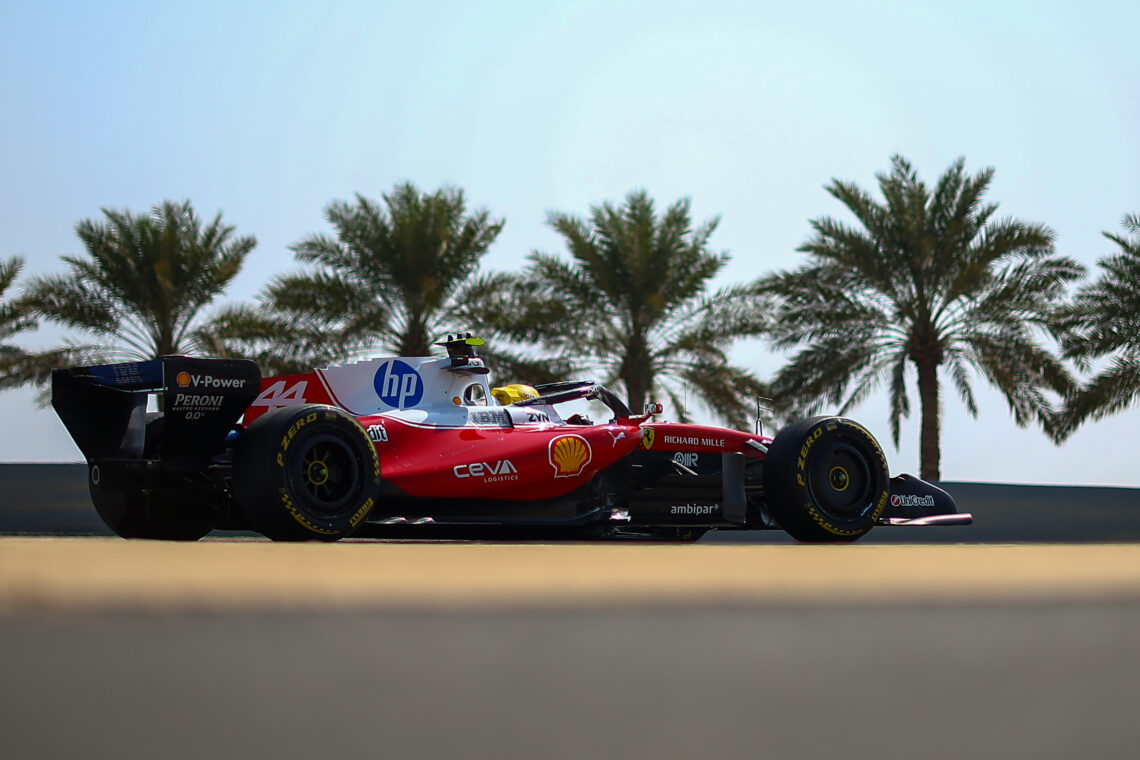


Ferrari have had to adjust their engine settings ahead of the second pre-season test in Bahrain as their fuel consumption is worse than their initial simulations had indicated.
The Scuderia largely had a positive test with their new car built to the 2026 F1 regulations in Bahrain last week. Ferrari were especially pleased with the reliability of their new engine, as Lewis Hamilton and Charles Leclerc used the unit they also had at the Barcelona shakedown.
Ferrari completed more than 4,300km (2,671m) with that one single engine, the equivalent of more than 14 full Grand Prix distances. The only real hiccup came towards the end of the third and final day last Friday after Hamilton stopped on the circuit after running out of fuel.
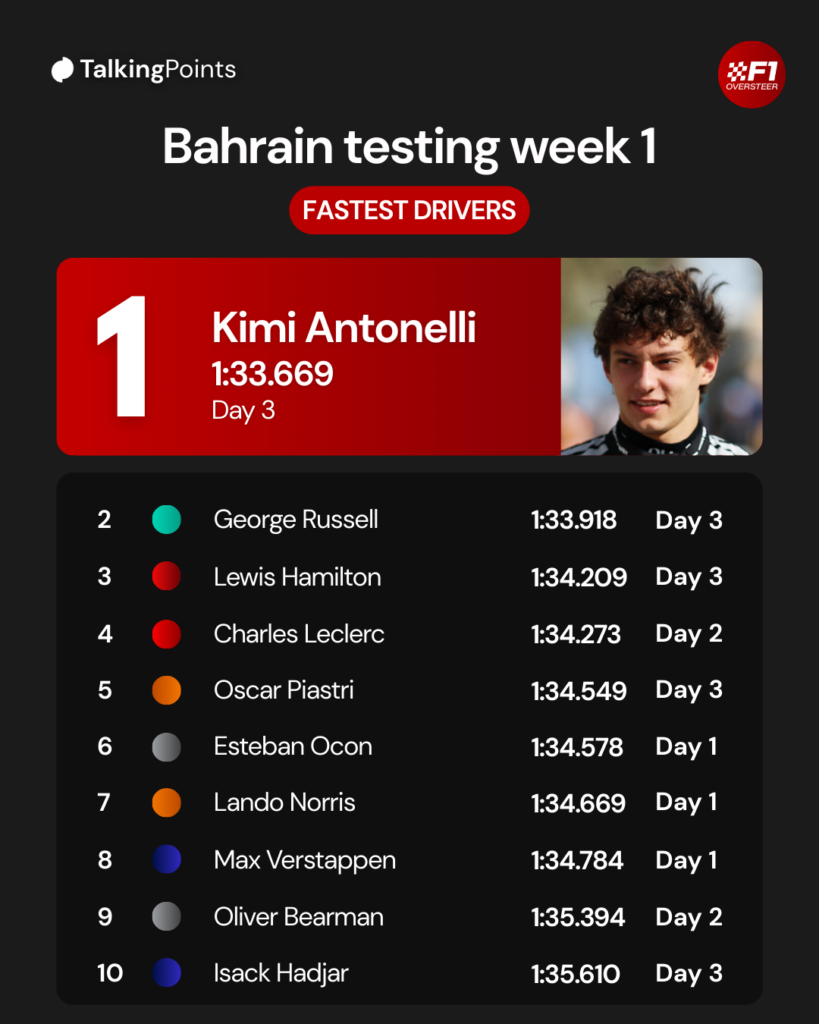
Kimi Antonelli made a serious statement on Day 3 at the first 2026 Bahrain test – Who looks strongest heading into Round 1?
Ferrari believe their Bahrain test fuel data is ‘very positive’ for correcting their race simulations
Team principal Fred Vasseur affirmed that Hamilton’s stoppage was not an issue as they had intentionally sent the Briton out low on fuel. Ferrari wanted to establish how much fuel they need for Hamilton and Leclerc to retain the one litre required for the FIA’s post-race checks.
READ MORE: Everything you need to know about F1’s 2026 engine and aero regulations
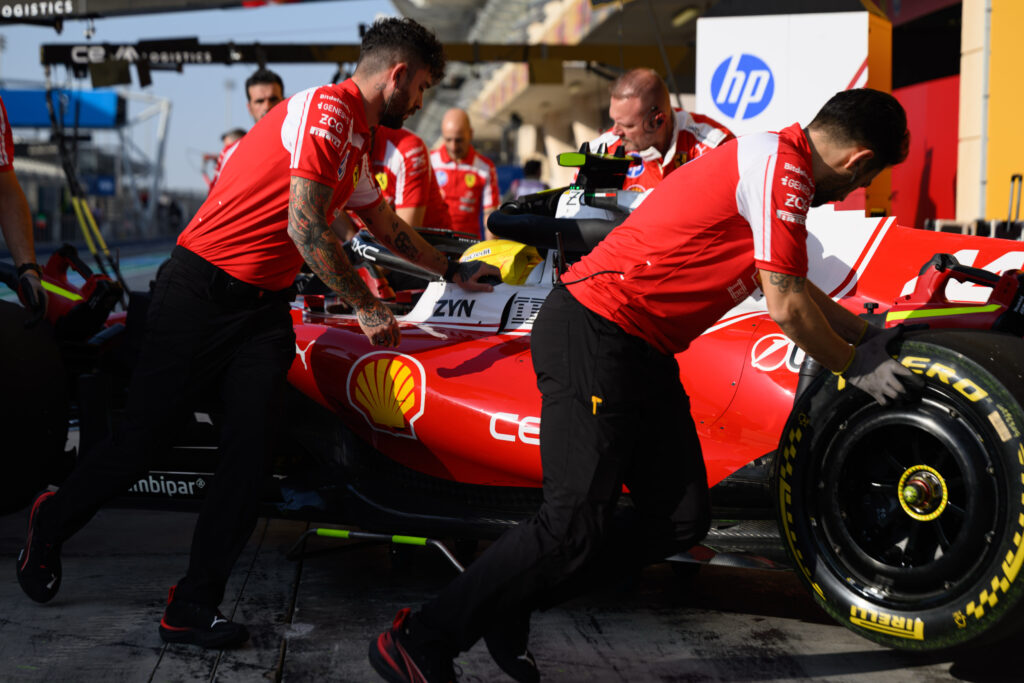
That is according to Motorsport.com, which notes that Ferrari ran Hamilton’s car dry as their data proved their fuel consumption is worse than their simulations had indicated. Now, they must adapt with the data collected at the first official pre-season test of the 2026 F1 season.
The Maranello natives can see the positives from the first Bahrain test highlighting that their fuel consumption is slightly higher than expected based on their simulations, though. Ferrari will now use the data to adjust their engine settings during their race simulations this week.
F1 has rented out the Bahrain International Circuit for a second three-day test, during which Ferrari hope to verify the changes to their fuel simulations based on the data they collected last week. Ferrari believe the hiccup can be ‘very positive’ for planning for the actual races.
Ferrari must refine their energy recovery as well as fuel simulations at the second Bahrain test
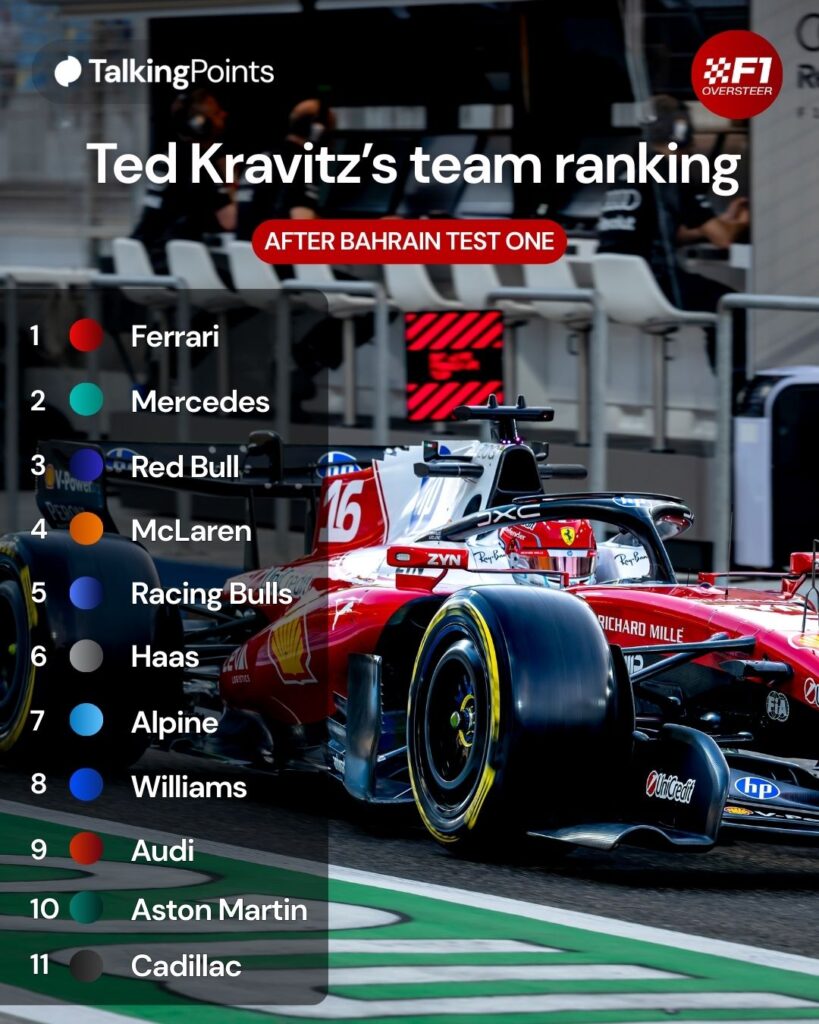
The first pecking order predictions are IN!
What jumps out?
Ferrari decided early to test the same engine in Barcelona and Bahrain, as they felt using the shakedown and the first official pre-season test of the 2026 regulations cycle together could allay fears regarding the reliability of the power unit that had materialised during the winter.
Hamilton, Leclerc and customer Ferrari engine team Haas, more so than Cadillac, helped the Scuderia prove their power unit is indeed reliable. But Ferrari still have work to do regarding their latest engine, beyond verifying that their fuel simulations are now accurate this week.
As F1 has removed the expensive MGU-H from the power unit formulae with the 2026 rules, drivers are having to find new ways of recovering energy through the MGU-K alone. Ferrari’s 2026 energy recovery hinges on engine braking but their settings are too harsh in low gears.
Receive exclusive F1 news and updates twice a week to your mailbox