Lando Norris
 McLaren
 Mercedes
 Red Bull
 Ferrari
 Williams
 Racing Bulls
 Aston Martin
 Haas
Haas Alpine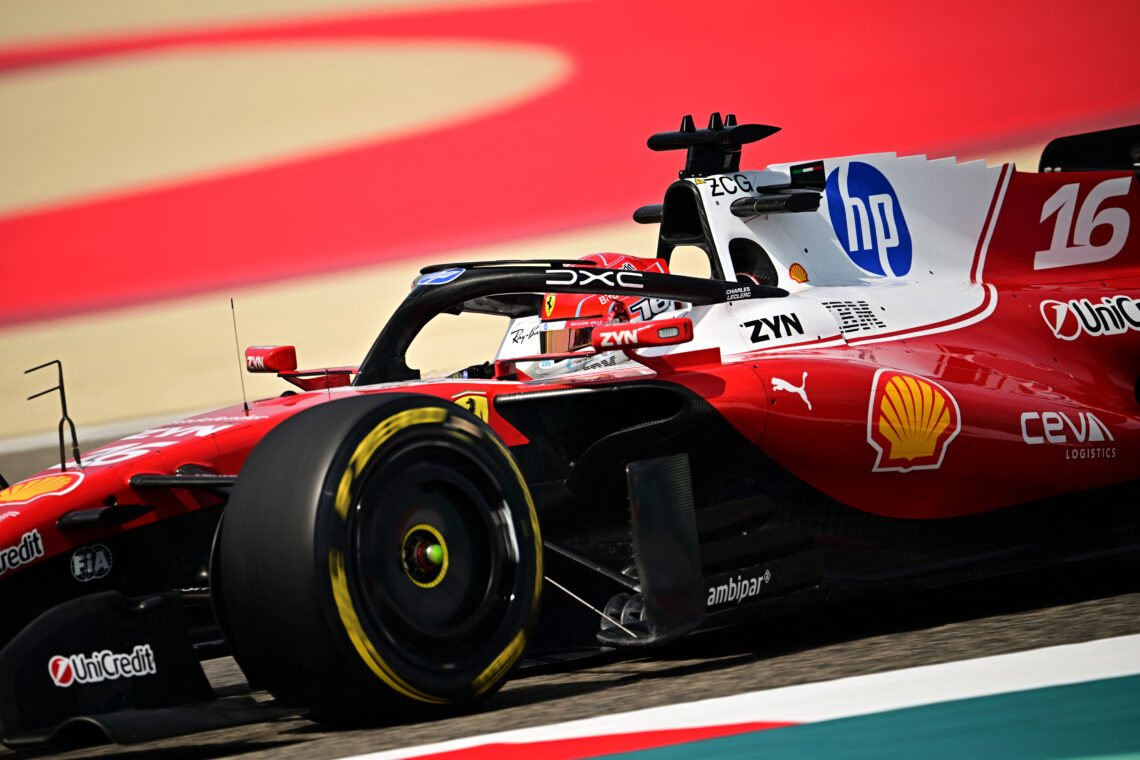


Ferrari have found a new problem with the SF-26 after reviewing the data that Charles Leclerc recorded in their 2026 F1 regulations car at the first Bahrain pre-season test.
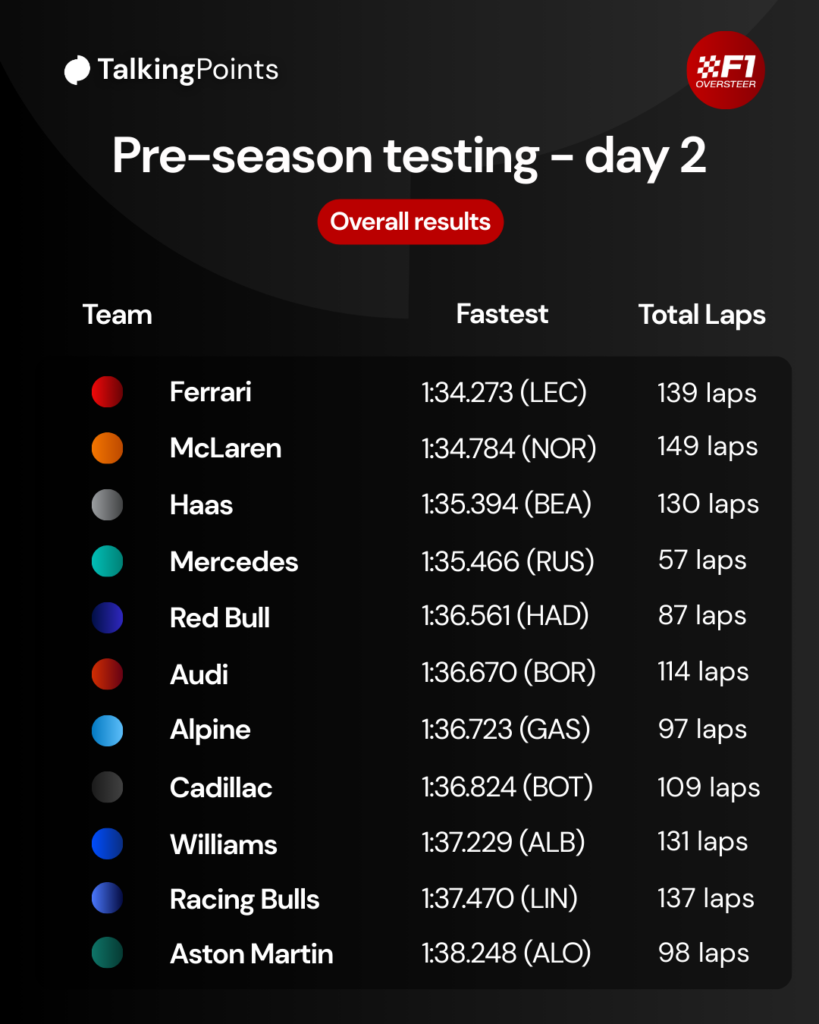
The 28-year-old enjoyed a largely productive session for the Scuderia during the second day in the Sakhir desert on Thursday. Leclerc topped the day two timesheets with a 1:34.273 lap, as well as posting 139 laps around the home of the Bahrain Grand Prix after he drove all day.
Leclerc’s fastest effort on a day that Ferrari completed the distance of nearly two-and-a-half Grands Prix led Lando Norris’ best effort in the McLaren MCL40 by 0.511 seconds. Norris set the quickest time on day one in Bahrain at 1:34.669, when Leclerc was 0.521s adrift in third.
Bahrain testing day 2 belongs to Charles Leclerc
What was your main takeaway from today? 🤔

Ferrari will investigate their engine braking after realising it is too aggressive in low gears
But lap times are largely immaterial during testing, and Leclerc’s run in the SF-26 revealed a potential problem with Ferrari’s new car built to the 2026 F1 regulations. The Scuderia have now made improving their electrical energy management a key area they must understand.
READ MORE: Everything you need to know about F1’s 2026 engine and aero regulations
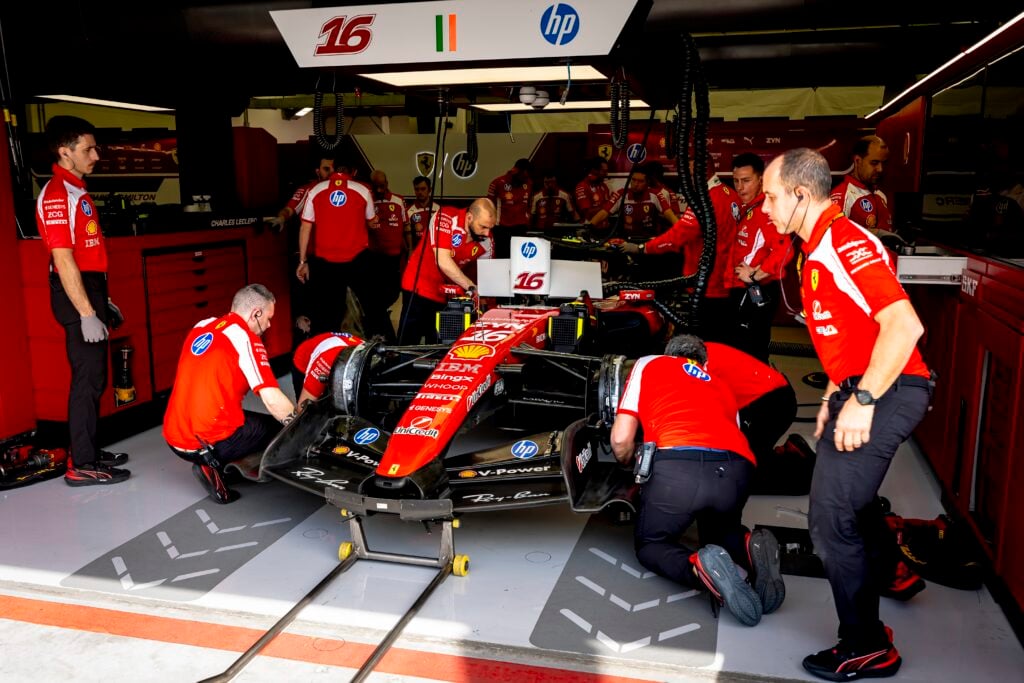
Their energy management already concerned Ferrari after the Barcelona shakedown at the end of January, which they hoped to address during testing in Bahrain. Yet Motorsport.com reports that Ferrari are now planning a ‘significant investigation’ into their engine braking.
Ferrari have realised in Bahrain that Leclerc and Lewis Hamilton needing to use lower gears through the corners to recover some of the electrical energy stored in the battery is not as linear as it needs to be. Instead, the engine braking is too violent and could ‘break the car’.
Ferrari still need to find the ideal set-up after suffering from understeer and rear-end instability
Ferrari’s engineers in Maranello now intend to investigate how they can make their engine braking more linear, based on the data they have gained during the first pre-season test in Bahrain. It remains to be seen if any changes will be ready before the second test in Sakhir.
Here’s how the teams fare at the end of Bahrain testing Day 2 ⏱️
What has caught your attention the most?
The F1 paddock will take to the Bahrain International Circuit once again from February 18-20 for the final pre-season test in 2026. Those three days could be crucial for Ferrari to see whether any changes made to their engine braking pay off before the first race in Australia.
It is also not the only problem that Ferrari will look to overcome before the 2026 F1 season starts in Melbourne on March 6-8. Mercedes driver Andrea Kimi Antonelli could see Ferrari have “more understeer” than Red Bull and McLaren whilst watching trackside on Thursday.
Additionally, Ferrari’s rear-end instability in Bahrain might be a big problem for Hamilton in 2026, as the balance of the SF-26 has looked significantly worse than some of their rivals at times. Clearly, Ferrari are also still chasing the perfect set-up for their new aero and chassis.
Receive exclusive F1 news and updates twice a week to your mailbox