Lando Norris
 McLaren
 Mercedes
 Red Bull
 Ferrari
 Williams
 Racing Bulls
 Aston Martin
 Haas
Haas Alpine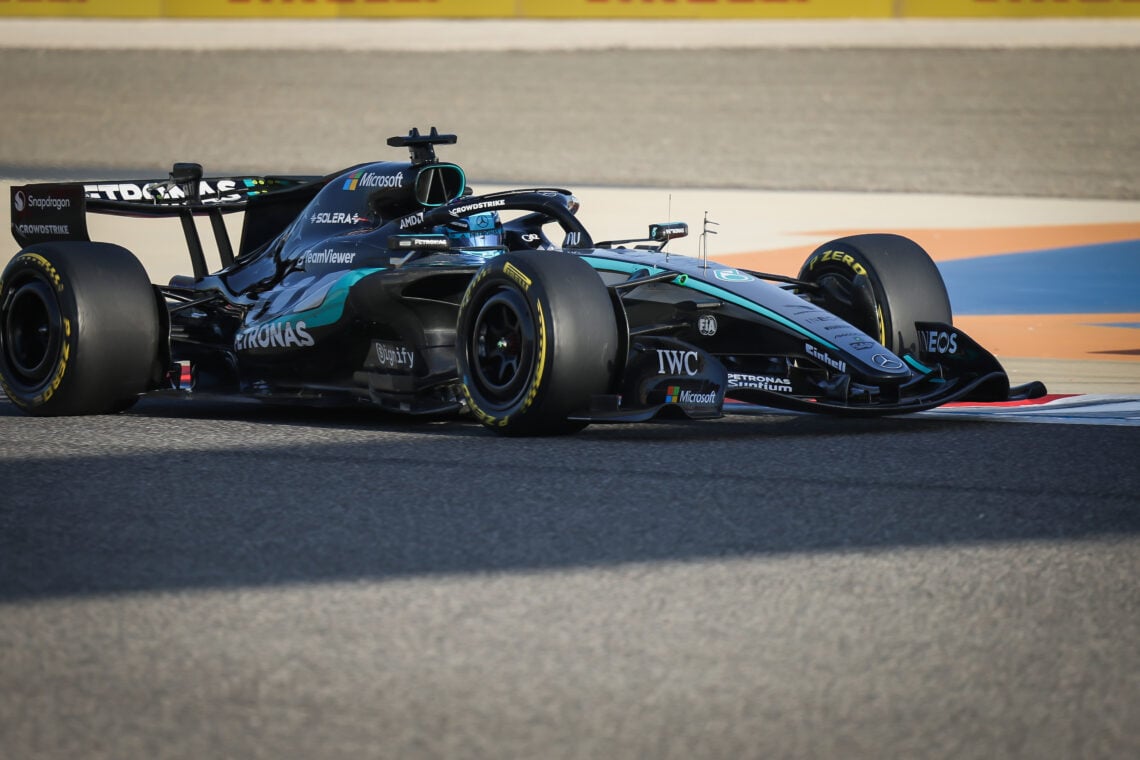


Mercedes have discovered their power unit’s fate at an FIA Commission meeting in Bahrain on Wednesday, with teams expected to vote on changes in the coming days.
Formula 1 testing has uncovered plenty of interesting quirks in this season’s new cars, but Mercedes at this early stage appear to be leading the way.
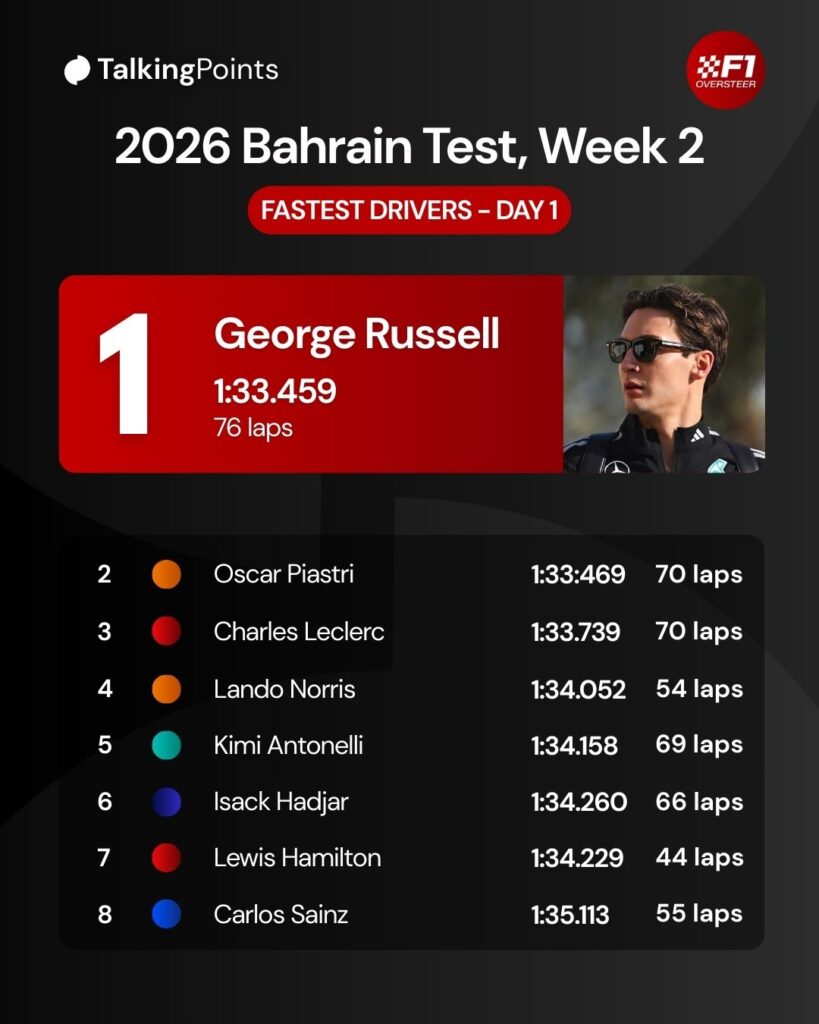
George Russell set the fastest time during day four of testing on Wednesday, after Andrea Kimi Antonelli was the quickest driver on week one in Bahrain.
George Russell starts Week 2 at the 2026 F1 Bahrain test on top! But what stood out the most?
One of the biggest discussion points heading into the Australian Grand Prix has been Mercedes’ power unit and it’s supposed increased compression ratio.
The FIA are set to change how they measure compression ratios from August 1st, but journalist Scott Mitchell-Malm has revealed why this might not necessarily be good news for Mercedes’ rivals.
READ MORE: All you need to know about Mercedes F1 Team from team principal to lineage
The FIA’s new power unit testing rules could be bad news for Mercedes’ rivals
Ferrari joined forces with other teams to demand the FIA look at Mercedes’ engine before the 2026 season started.
Although the Silver Arrows passed initial tests, rival teams weren’t happy with how the FIA tested Mercedes’ power unit.
Regardless of this, an online vote is set to take place between the teams over changes to how compression ratios are testing, but speaking on The Race F1 Podcast, Mitchell-Malm explained: “There is a theory that it’s not really much of a knock to Mercedes, depending on what exactly it is that they’ve done and how much of, not a trick because that makes it sound potentially slightly dodgy, but just what level of innovation has been required and how baked into the engine design is it for them to achieve this.
“The way it was put to me is basically the significance of this proposal is that you would have this hot test, but you would keep the ambient test.
Doubts are rising at McLaren and Red Bull about pace, but who’s really the weak link in the big four?

“And what was suggested to me is that actually what Mercedes rivals would have wanted would be to remove the ambient test and only have the hot test because if you’re then aiming to have that compression ratio hit at 130 degrees, that’s a lot easier to do than to hit it at ambient and 130 degrees.
“I believe that’s all to do with how the combustion ratio should drop in a normal combustion engine when the car runs and the engine runs, and it all gets hot.
“And what Mercedes have managed to find a way to do is basically maintain that, so basically, unless another manufacturer managed to replicate what Mercedes was doing in order to achieve the 16 to 1 ratio when running hot, they’d have to be above 16 when ambient, so that’s why keeping the ambient test is an important part of it.”
READ MORE: Ferrari’s new exhaust flap needed special FIA approval and cannot be copied by their F1 rivals
Mercedes debut new floor during 2026 Bahrain testing
The first week of pre-season testing in Bahrain didn’t uncover an overall leader in terms of outright pace, but the top four teams from 2025 appear to be at the front of the pack once again.
Although some of Mercedes’ rivals suggested that they were the team to beat, Toto Wolff was coy about suggesting that they might be favourites this year.
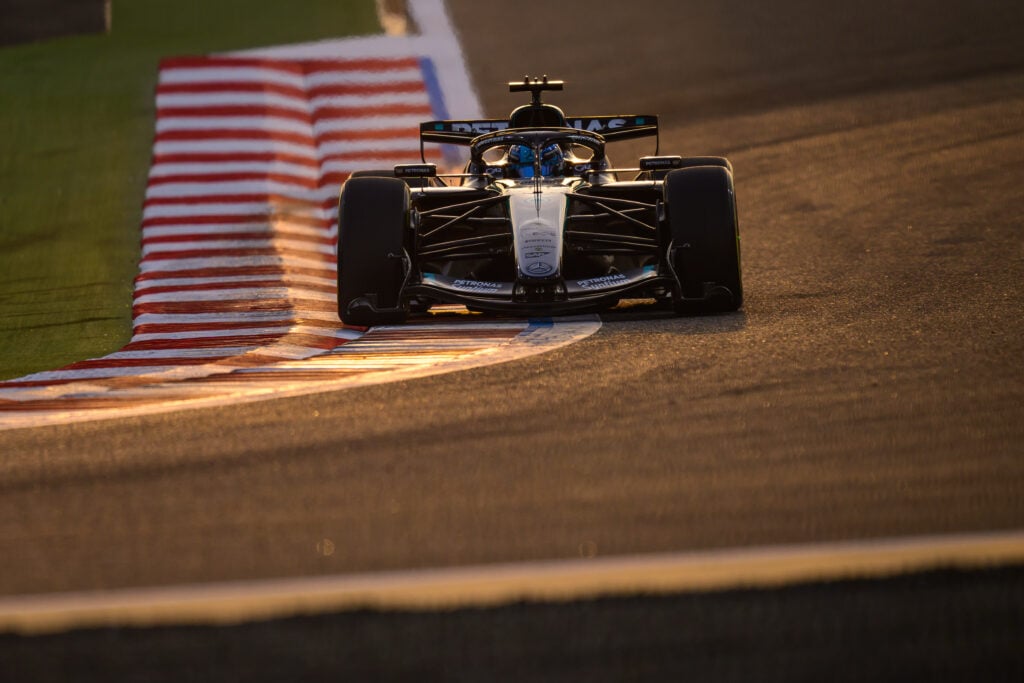
Mercedes’ car looked superb on Wednesday, and a new floor installed on Antonelli’s car might have helped their balance.
Jolyon Palmer was worried about Antonelli breaching track limits] as he continued to push the car, that’s unlikely to be an issue in a competitive setting.
However, one of Mercedes’ biggest fears for the 2026 season might now have been allayed by the FIA’s latest decision, not only pushing back any immediate changes to compression ratio testing, but also putting their rivals under more pressure to adapt.
Receive exclusive F1 news and updates twice a week to your mailbox