Lando Norris
 McLaren
 Mercedes
 Red Bull
 Ferrari
 Williams
 Racing Bulls
 Aston Martin
 Haas
Haas Alpine


The FIA is now set to change the way it tests F1 engines from August 2026, following a host of complaints from rivals who fear Mercedes can increase their compression rate.
Tensions have bubbled away among the engine manufacturers since it emerged that Ferrari, Audi and Honda believed Mercedes had found a loophole in the 2026 F1 engine regulations. Red Bull joined Ferrari’s side in the Mercedes engine saga, too, and started seeking changes.
Mercedes’ rivals have been lobbying the FIA throughout the winter to change the way that F1’s governing body tests the compression rate in V6 engines. Ferrari et al believe Mercedes can increase their compression rate from the permitted 16:1 limit to 18:1 during operation.
The threshold was lowered from 18:1 to 16:1 as part of the 2026 F1 regulations, which put a greater emphasis on electrical power. F1 engines now have a near 50/50 split between the V6 internal combustion engine and electrical energy supply, as well as ditching the MGU-H.
Are Mercedes’ rivals hiding behind 2026 ‘excuses’?

FIA agrees to test compression rates in hot conditions following complaints about Mercedes’ 2026 F1 engine
The FIA has repeatedly cleared Mercedes’ 2026 F1 engine as the power unit meets the 16:1 compression rate test, as the regulation state it is only checked in ambient conditions. The FIA has cleared Mercedes’ 2026 F1 engine in hot conditions following tests at 75°C, as well.
READ MORE: Everything you need to know about F1’s 2026 engine and aero regulations
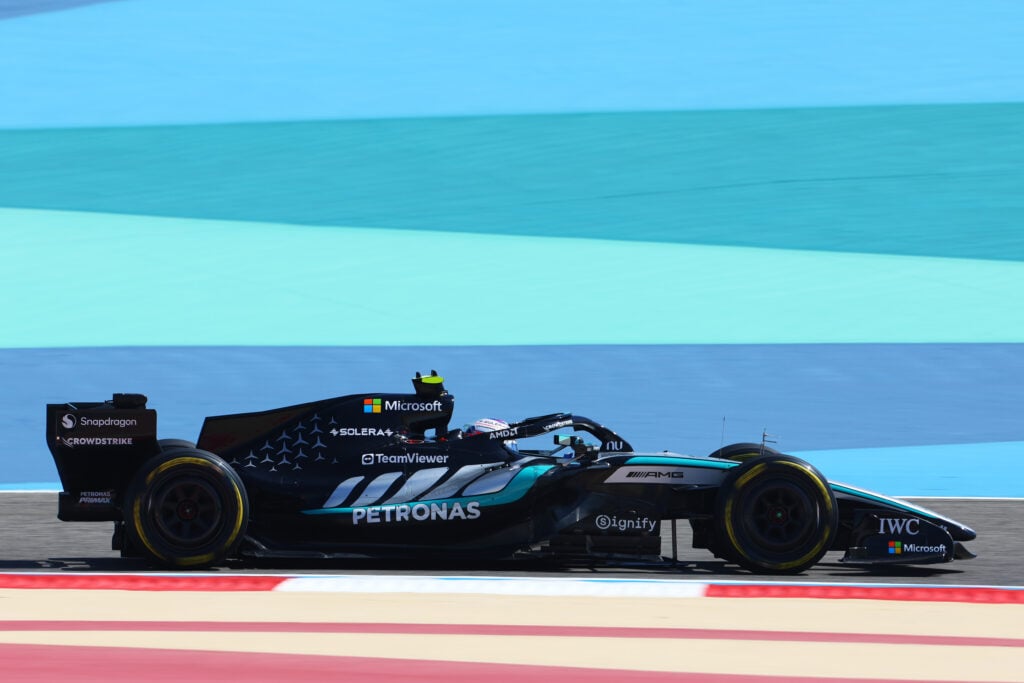
Yet the topic of compression rates and Mercedes’ 2026 power unit was discussed in the F1 Commission meeting in Bahrain this Wednesday, and the FIA is now due to change the way it tests engines. But the changes to the FIA’s tests will only come into effect on August 1, 2026.
The FIA confirmed in a statement issued on Wednesday afternoon that it has put forward a vote to the F1 power unit manufacturers to introduce a new way to test compression rates at a representative 130°C, as well as in ambient conditions, after validating a new method.
The FIA expects to know the outcome of the vote within the next 10 days, before putting it to the FIA World Motorsport Council (WMSC) for final approval. But the ‘hot’ compression rate test will not be introduced before the second half of the 2026 F1 season, once it is approved.
Formula 1 breaks for the summer following the Hungarian Grand Prix in round 13 of 24, set to be held on July 24-26. The F1 paddock then does not regroup until the Dutch Grand Prix on August 21-23, at which point the FIA’s new engine checks will have then come into full effect.
The World Motorsport Council must ratify the changes to the FIA’s F1 engine tests
The FIA World Motorsport Council still has to ratify the new engine test before it is formally added to F1’s rulebook. But it would be rather unusual for it not to be formally approved, as the new test originated from discussions between the FIA and the F1 engine manufacturers.
Until the WMSC has ratified the change to the wording of the rulebook, the FIA will continue to check compression rates in ambient conditions at the factories of the engine constructors when removed from the cars. But it is likely that the FIA’s ‘hot’ tests will be permitted soon.
The FIA is only expected to begin checking compression rates in hot conditions from August in order to give every F1 engine manufacturer – not only Mercedes – the time to make any changes to their power unit before the new tests come into force later in the 2026 season.
Receive exclusive F1 news and updates twice a week to your mailbox