Lando Norris
 McLaren
 Mercedes
 Red Bull
 Ferrari
 Williams
 Racing Bulls
 Aston Martin
 Haas
Haas Alpine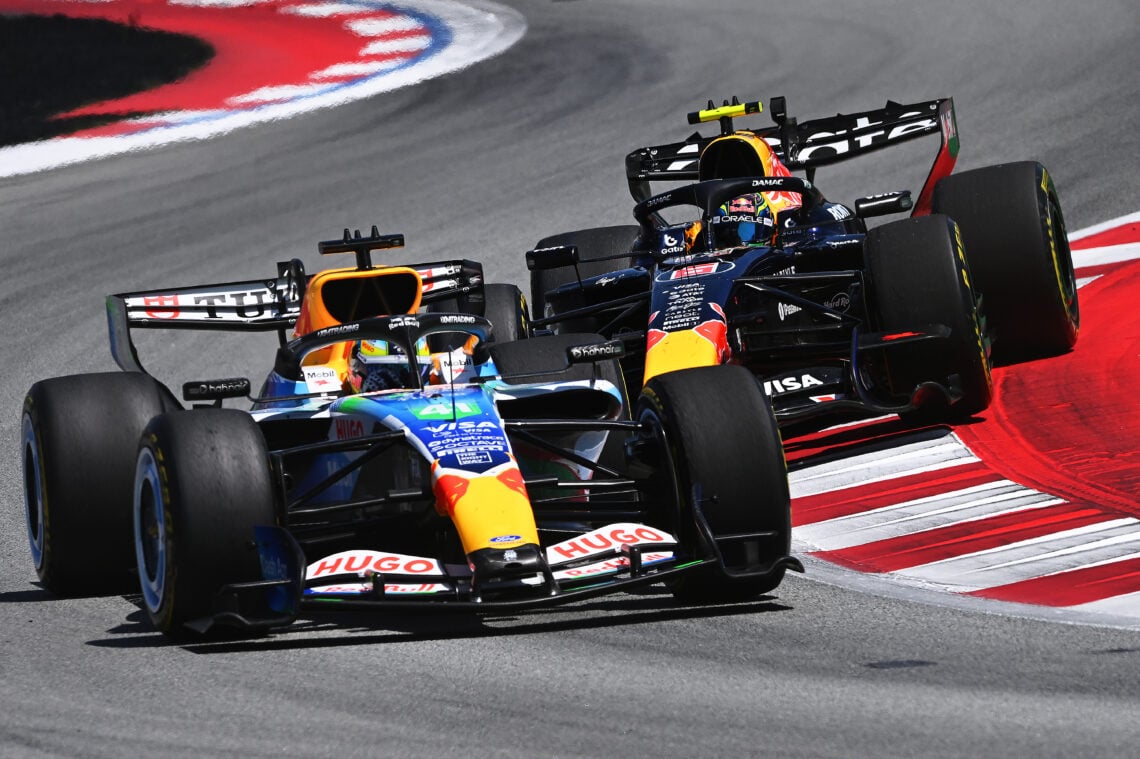


The FIA are considering whether to introduce an independent engine supplier for the next Formula 1 rules cycle.
Currently, four of F1’s five engine manufacturers – Mercedes, Ferrari, Red Bull and Audi – have their own teams. Aston Martin partners Honda are the only exception.
For FIA president Mohammed Ben Sulayem, the supplier/customer dynamic creates an ‘A team’ and ‘B team’ dynamic that affects voting patterns.
The FIA are targeting Red Bull with independent engine proposal
While Ben Sulayem didn’t explicitly mention Red Bull and Racing Bulls when discussing the proposal (with outlets including The Race), the ‘A team/B team’ terminology was a giveaway. They are the only competitors who could be given such a label.
You’re in charge of Red Bull, who are you signing for Racing Bulls’ 2027 line-up right now?
Let us know why in the comments!

Indeed, he has made clear that the FIA are concerned about Red Bull owning Racing Bulls. They are looking into restrictions on dual ownership to ensure sporting integrity is preserved.
The idea is that, from 2030, teams like Racing Bulls will be able to buy a power unit from an external, FIA-approved supplier. While this wouldn’t be realistic during the current ruleset, the sport’s governing body intend to simplify the engines long-term.
The last time there was a similar arrangement was in the early 2010s, when Cosworth supplied Williams as well as backmarkers Lotus, HRT and Marussia.
Why Racing Bulls are bound to stick with Red Bull
The idea is to stop Mercedes, Ferrari and Red Bull Powertrains exerting leverage over smaller teams on the grid through engine contracts. But unfortunately for Ben Sulayem, this is a price that they’re willing to pay.
For teams like Racing Bulls, Haas and Alpine, the connections are ultimately advantageous. They not only improve competitive prospects, but they also offer access to academy talent (such as Arvid Lindblad or Oliver Bearman).
They would only consider cutting ties if the Cosworth-style independent supplier was on a similar level to the existing powerhouses, but that doesn’t seem realistic.
“I’m not sure if this will ever come to pass,” journalist Josh Suttill said on The Race F1 podcast. “Think of Cosworth at the start of the 2010s. They supplied a lot of the new teams. There was talk of it carrying on for the V6 era, but that fizzled out.
“I’m not sure if it will come in, because I’m just thinking of it from the perspective of a customer team. Say you’re Alpine, from their perspective, would you switch away from a Mercedes customer unit, to then go to this independent one?
“That would feel like a bit of a risk. I know the formula will be simpler, but at the end of the day, that Mercedes engine facility is obviously very well-renowned, very accomplished.
“You’d bet on them doing a good job on whatever the formula is. Is that engine supplier going to be of a good enough standard?”
“You’ve got people like Haas, surely for them it’s better to stay aligned with Ferrari? You’ve got Racing Bulls, surely it’s better for them to stay aligned with Red Bull? You’ve got Alpine, they’ve just had really good success with moving to Mercedes.”
Most fans would get behind the FIA’s desire to stop F1 becoming (or remaining) a two-tier series, but this is not the solution.
Receive exclusive F1 news and updates twice a week to your mailbox