Lando Norris
 McLaren
 Mercedes
 Red Bull
 Ferrari
 Williams
 Racing Bulls
 Aston Martin
 Haas
Haas Alpine


Mercedes and Red Bull are already embroiled in a controversy over Formula 1’s new regulations, and the season doesn’t officially start for another four weeks at the Australian Grand Prix.
Last season saw McLaren dominate the competition, but with the updated 2026 regulations on the horizon, it was unclear just how seriously their rivals were taking the final year of that ruleset.
Red Bull kept updating their car right until the end of the year to give Max Verstappen the best chance of winning a fifth consecutive championship, while the likes of Williams, Aston Martin and Alpine shifted their focus away from last year’s cars very early on.
Are Mercedes’ rivals hiding behind 2026 ‘excuses’?

The updated regulations are introducing brand new power units, and that’s why many people went into the campaign believing that Mercedes would be the favourites based on their previous success.
Mercedes ran the most laps at the Barcelona shakedown, and teams also got a glimpse of their new engine and the potential compression ratio trick that they’ve discovered during their development.
Ferrari were among the teams willing to protest against Mercedes, and after initially appearing to be on Toto Wolff’s side, it now looks like Red Bull have changed their stance after what they spotted at the Circuit de Catalunya.
READ MORE: All you need to know about Mercedes F1 Team from team principal to lineage
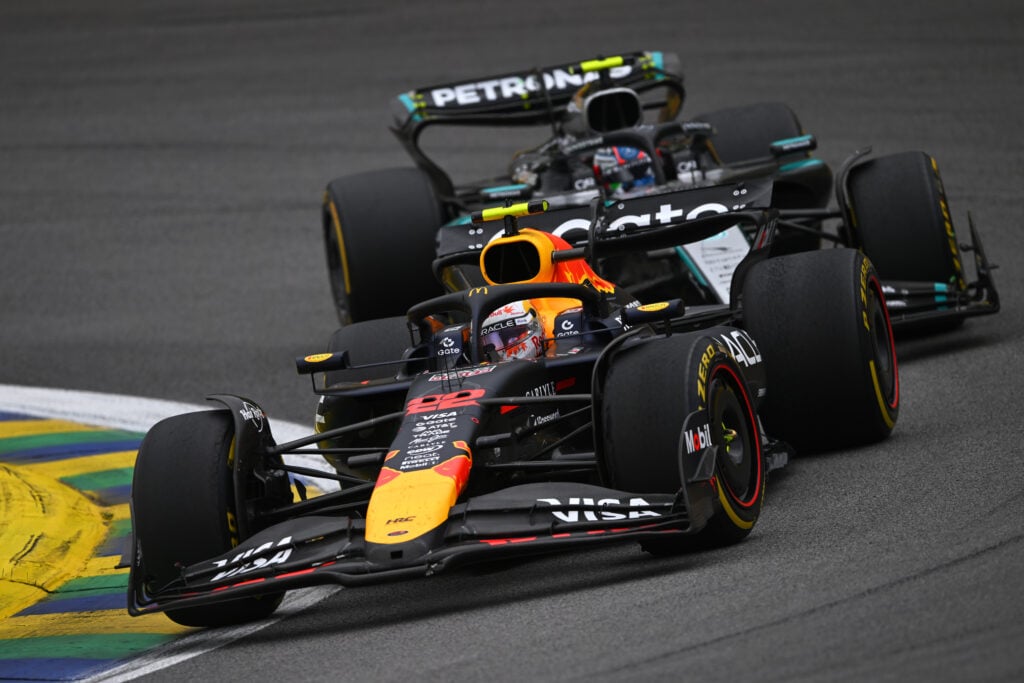
Red Bull set to U-turn on Mercedes engine compression trick after Barcelona shakedown
A report from Motorsport Italia has shared more details about the politics underlying the start of F1 testing in 2026.
Red Bull are now willing to object to Mercedes’ power unit, as it’s believed Wolff’s team have found a way to keep their engine’s compression ratio at 16:1 when it’s tested at ambient temperatures, but it can run at a ratio of 18:1 when fired up.
The FIA needs four of the five power unit suppliers to agree to proceed with action, and discussions will now take place at a commission meeting set to be held in Bahrain, with the process expected to ‘move quickly’.
Red Bull’s U-turn appears to come from what they saw in Barcelona, having reportedly previously known about the trick themselves.
What one change would YOU make to the way Formula 1 is broadcast going into the 2026 season?
Let us know in the comments!

More than one team spotted Mercedes’ ‘significant engine superiority’ while also believing they never exposed their true potential.
Data suggests their ‘performance peaks were concentrated in short stretches of a few laps’, so that Mercedes engineers could gather enough information without giving too much away.
However, it’s believed that when rival teams witnessed this first-hand, it raised alarm bells about how far clear of the competition they might be.
Red Bull, therefore, didn’t want to miss an opportunity to try and peg back Mercedes if they believed the Silver Arrows might be streets ahead going into the start of the season.
READ MORE: All you need to know about Red Bull Racing from engine to Ford links
Toto Wolff’s private reaction to rival F1 teams questioning power unit trick
Wolff will know exactly how important getting this year’s power unit right is, considering the last time they dominated Formula 1 was when the rules were previously changed in 2014.
It led to Lewis Hamilton winning six drivers’ championships and Nico Rosberg getting in on the act in 2016 as well.
Wolff was said to be furious that rival teams have questioned the work that Mercedes have been doing in preparation for this season.
Their interpretation of the rules appears to be correct, but if a supermajority has been reached between the other four power unit suppliers, then that puts them in a very tricky position.
Receive exclusive F1 news and updates twice a week to your mailbox