Lando Norris
 McLaren
 Mercedes
 Red Bull
 Ferrari
 Williams
 Racing Bulls
 Aston Martin
 Haas
Haas Alpine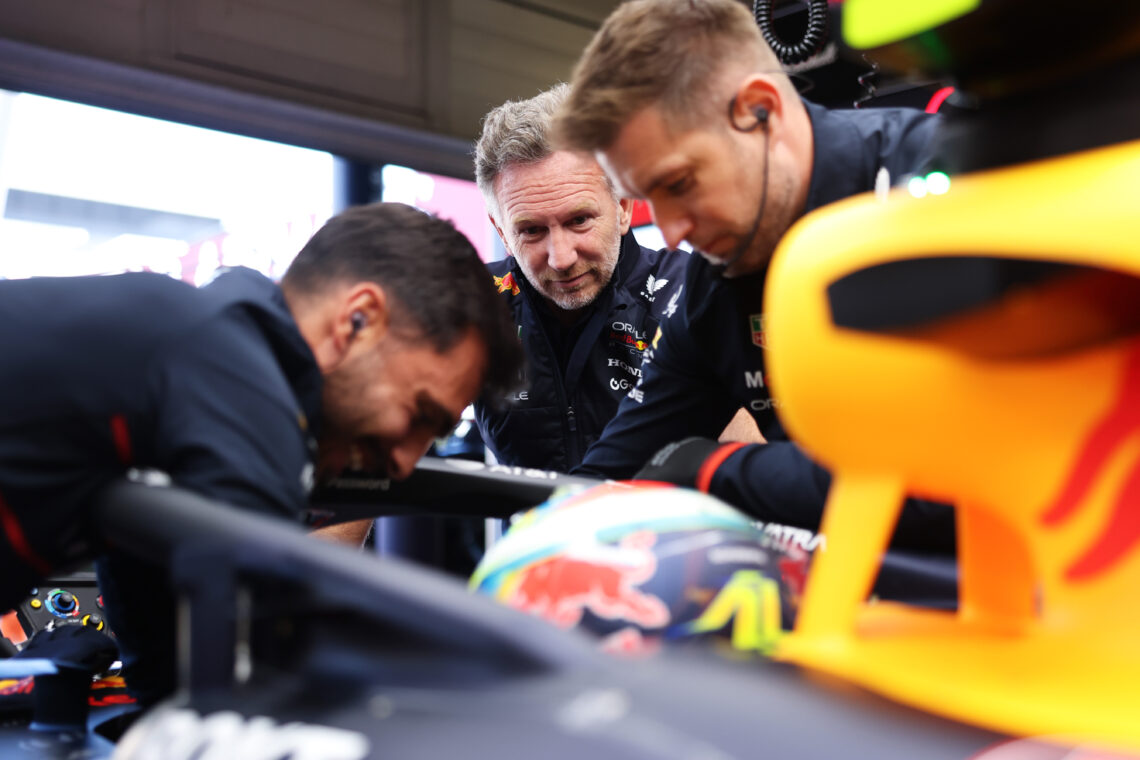


A new theory has emerged that Christian Horner’s contract at Red Bull may have contained a ‘performance clause’ which played a part in his immediate dismissal from the team.
Horner was sacked on Wednesday by Red Bull following a 20-year term as team principal. In that time, the team went on to win eight drivers’ championships and six constructors’ championships.
However, the current season has signalled a shift within the ranks, and Red Bull find themselves fourth in the teams’ standings at the midpoint of the season.
| Position | Constructors' Standings | Points |
| 1 | McLaren Racing | 460 |
| 2 | Scuderia Ferrari | 222 |
| 3 | Mercedes-AMG Petronas | 210 |
| 4 | Red Bull Racing | 172 |
The fall-off in performance can be linked to the swathe of exits by key personnel from the team in the last 18 months, backed up by Max Verstappen, who now considers his Red Bull F1 car ‘undrivable’.
Christian Horner was ‘proudly in charge of’ development for the new 2026 engines
A report from Formula1.it notes the “less widely accepted” theory that Horner’s contract at Red Bull contained a clause that relied on the performance of the engines in development to be sufficiently competitive for the start of next season.
“Another theory, albeit less widely accepted, sees the activation of a performance clause, which could be linked both to the current season and to the expected poor performance of the new engine.
“Developed in collaboration with Ford for 2026, the project is one of which Horner was completely and proudly in charge of.”
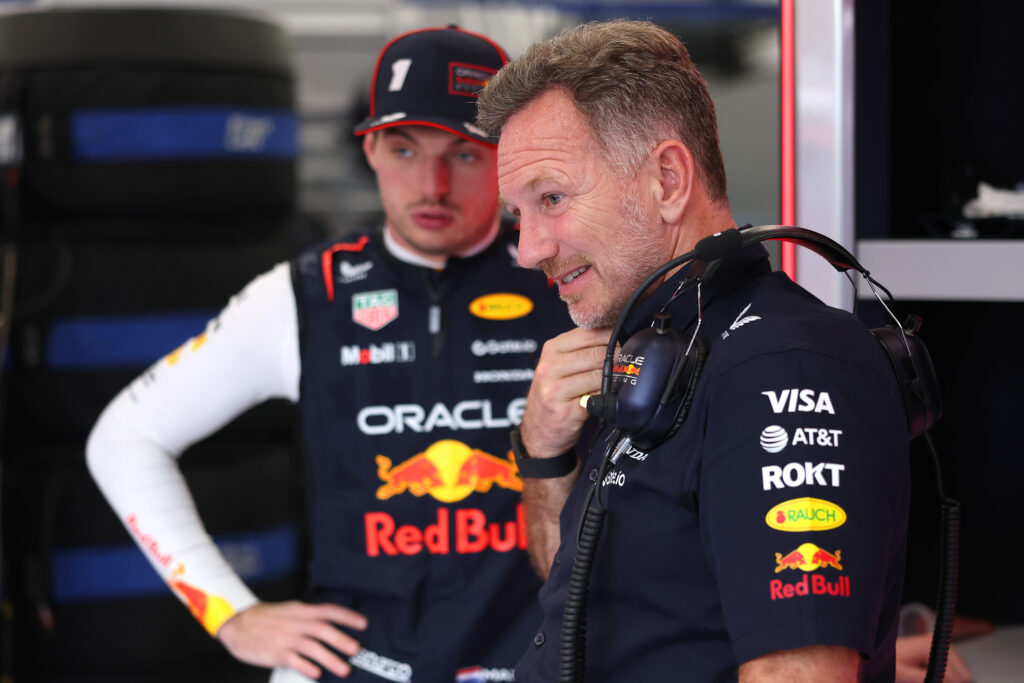
If true, and the performance of Red Bull Powertrains’ engine isn’t where they want it to be, it could set the team back years in terms of development. They could be forced to play catch-up with the rest of the teams for a while before getting themselves back into a competitive position.
Max Verstappen has to re-evaluate his future at Red Bull ahead of the new regulations
Whilst there is no concrete evidence for the fact, Mercedes have emerged as front-runners in the development race, owing largely to their history of nailing the engine regulations since the start of the turbo-hybrid era in 2014.
The Silver Arrows went on to win eight consecutive constructors’ championships, and whilst their performance did drop off at the beginning of 2022, engine customer McLaren have shown them what the engine is capable of with the pairing of solid aerodynamics.
Ted Kravitz believes Verstappen should be asking questions of Red Bull’s future competitiveness as we head into the new era if he wants a shot at adding to his four World Championships.
This has fuelled the rumours of Verstappen making the switch to Mercedes in time for the new regulations, which would give him enough time to have a hand in the development of their car for future years.
Receive exclusive F1 news and updates twice a week to your mailbox