Lando Norris
 McLaren
 Mercedes
 Red Bull
 Ferrari
 Williams
 Racing Bulls
 Aston Martin
 Haas
Haas Alpine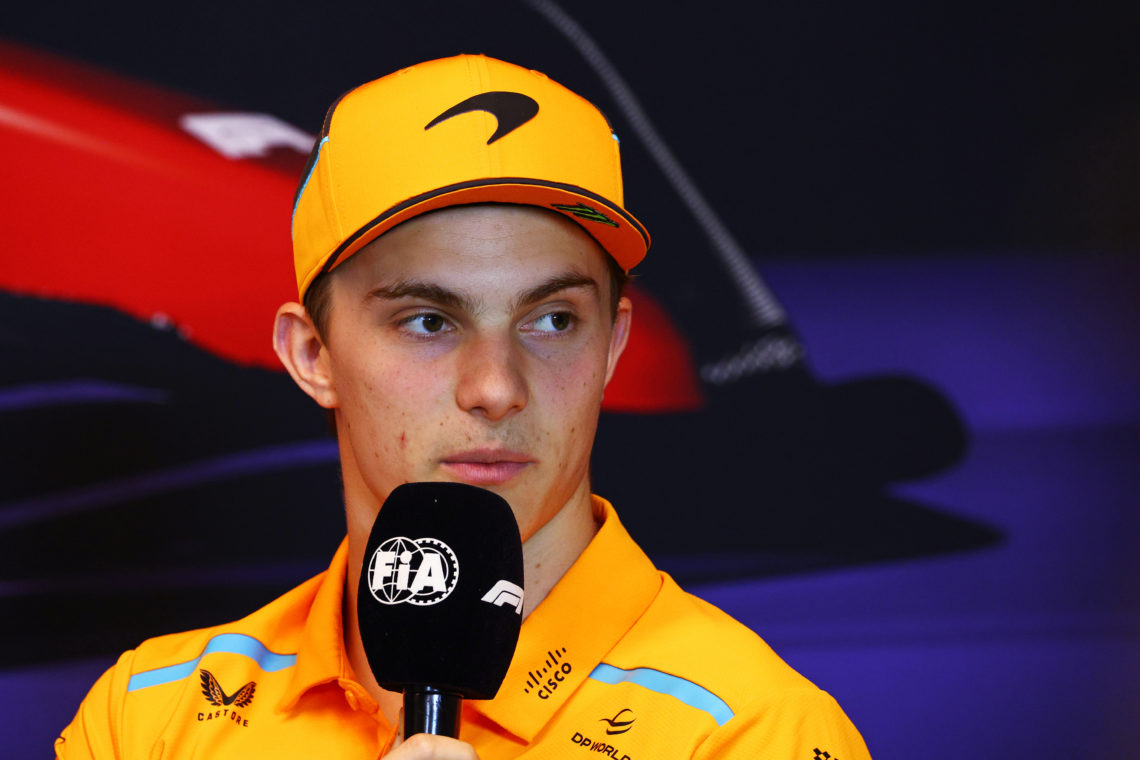


Formula 1 will no longer use DRS from the 2026 season onwards, the sport confirmed on Thursday as it unveiled its new regulations. The divisive technology will be replaced by a different overtaking aid.
F1 introduced DRS, or the drag reduction system, in 2011. It allows drivers to open up a gap in their rear wing when within one second of the car ahead in designated areas of the track, usually long straights.
This considerably increases their straight-line speed, improving their chances of completing an overtake. They’re also able to use it in practice and qualifying, again in those predetermined zones.
But at the end of next season, it will be scrapped. Instead, the new generation of F1 cars will feature a push-to-pass button, or ‘manual override mode’.
In effect, they will have the opportunity to deploy extra electrical energy when chasing another car. The architects of the new rules hope that the lighter and smaller machinery will lend itself to closer racing throughout the lap, not just down the straights.
Oscar Piastri says ‘goodbye’ to DRS in Formula 1
DRS has split opinion since its introduction 15 years ago. Some believe it has increased excitement given that drivers previously struggled to execute overtakes, even on straights.
In the current era of F1, where the complexity of the aerodynamics makes it difficult to follow closely, it has taken on an even greater importance. Some, however, see it as an artificial measure and a symptom of one of the sport’s biggest problems.
At certain tracks, there have been suggestions that the DRS is too powerful. This has enabled drivers to cruise past the car in front well before the braking zone, which arguably adds little to the spectacle.
Posting on his X account, McLaren driver Oscar Piastri bid farewell to the system. “Goodbye old friend, DRS,” he wrote in response to an introductory video from the official Formula 1 page.
The one area where Oscar Piastri has the edge’ over Lando Norris
Piastri is locked into McLaren for the 2026 season after signing a contract extension midway through his rookie year. This will be his first taste of a major regulation change in the sport.
The Woking outfit have been climbing towards the front of the grid in recent times, with Lando Norris scoring his first-ever victory in Miami and Piastri finishing second behind Charles Leclerc in Monaco. Eddie Jordan believes that the Australian could consequently be a ‘dark horse’ for next year’s championship.
The hope for McLaren will be that the new regulations don’t set them back. Indeed, the reset may be coming at a bad time for the sport as Red Bull’s advantage finally starts to disappear.

But equally, an overhaul of this magnitude presents an opportunity. With a Mercedes power unit – rumoured to be the class of the field in the early simulations – Piastri and Norris will be optimistic about their team’s prospects.
McLaren will hope that, in the long term, their two drivers battle it out for the title. Norris has a clear advantage at this stage, leading the 23-year-old 6-2 in both the qualifying and race head-to-head.
But the Briton is aware that Piastri often has the edge in fast corners, and he’s bound to keep improving as he gains more experience. Indeed, it’s worth remembering that he’s only taken part in 30 races so far, which puts him at a major disadvantage compared to his fellow front-runners.
Receive exclusive F1 news and updates twice a week to your mailbox