Lando Norris
 McLaren
 Mercedes
 Red Bull
 Ferrari
 Williams
 Racing Bulls
 Aston Martin
 Haas
Haas Alpine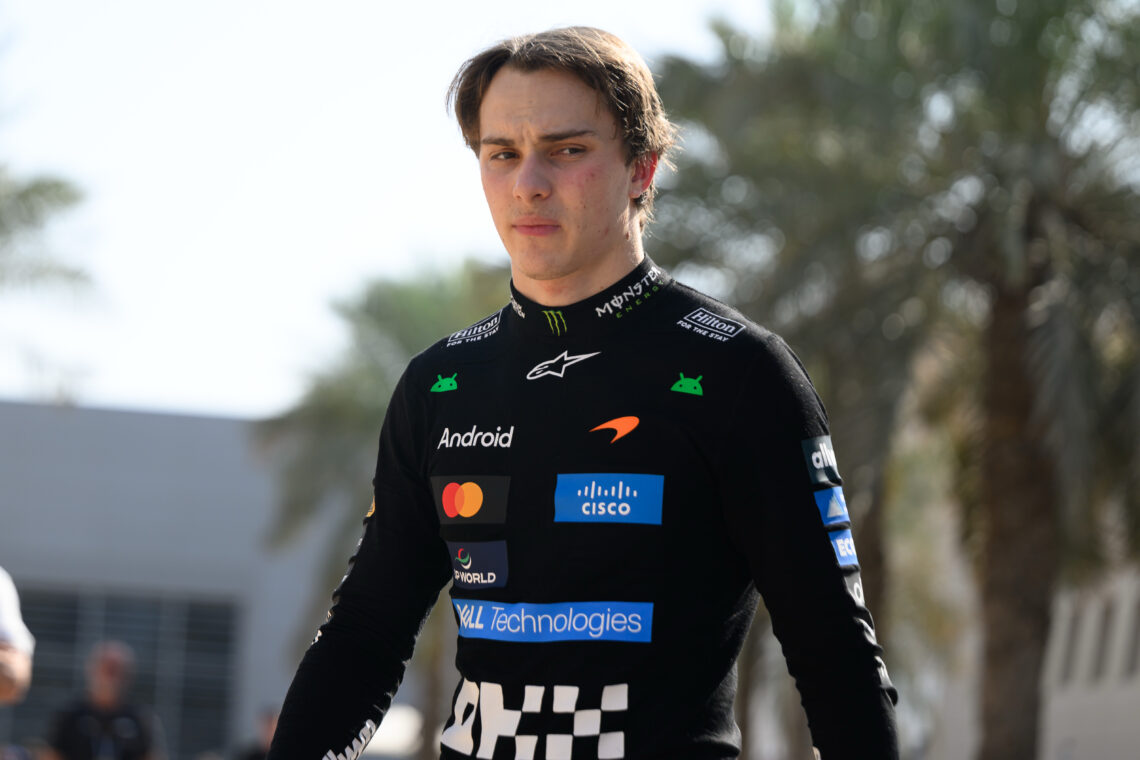


Oscar Piastri is “not really surprised” that the 2026 F1 regulations did not sort out the issues drivers faced following other cars during the final year of the ground-effect era.
But the McLaren racer does feel Formula 1 needs to hold a wider discussion about the 2026 regulations before the season begins in Australia on March 6-8. Piastri is concerned that the new rules have produced fresh problems, like with the race start procedure and overtaking.
Many paddock figures are concerned that the latest engines built to the 2026 F1 regulations may create unsafe scenarios at the start of races. Piastri has even branded it as a “recipe for disaster” after seeing how irregular different drivers’ practice starts went at the Bahrain test.
Drivers now have to rev their engines for around 10 seconds to spool the turbo up and avoid turbo lag at the start of races due to the removal of the MGU-H, which was a vital tool in the previous engine rules era. But drivers must avoid overcharging their batteries with high revs.
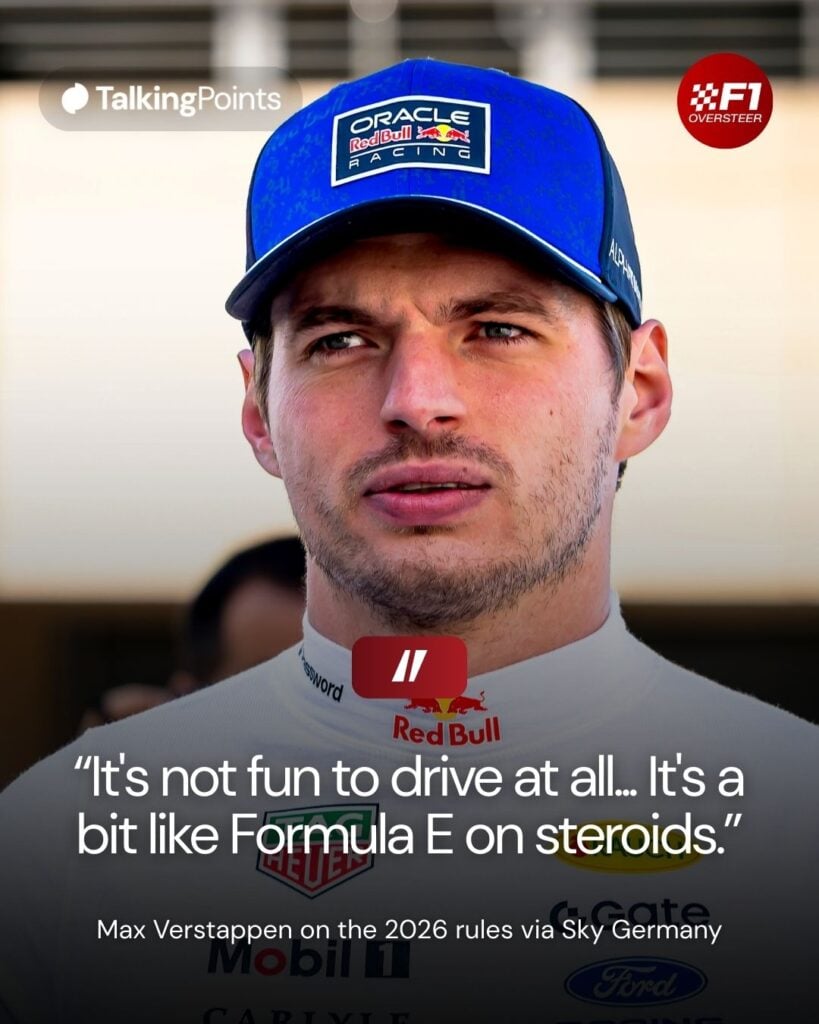
Have the 2026 regulations made F1 worse, with Max Verstappen likening driving the new cars to Formula E?
Oscar Piastri calls for a discussion on the 2026 F1 rules after encountering issues behind other cars
Piastri fully expects the topic of race starts to be brought up at Wednesday’s F1 Commission meeting in Bahrain, during which the FIA will rule on Mercedes’ 2026 F1 engine. Rival crews believe Mercedes can increase their rate of compression from 16:1 to 18:1 during operation.
READ MORE: Everything you need to know about F1’s 2026 engine and aero regulations
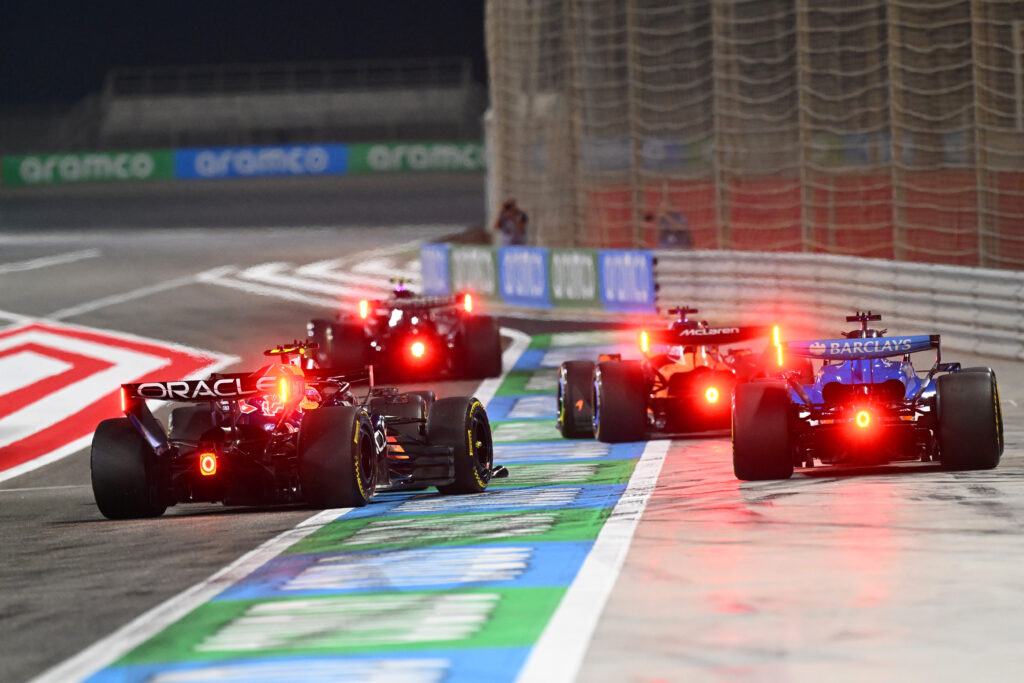
There are also concerns that the new overtake mode introduced to replace DRS may not be powerful enough. Piastri is also convinced that the 2026 aero rules have not eliminated the issues that drivers had when following other cars towards the end of the ground-effect era.
“It’s undoubtedly something we’ll discuss between now and Melbourne,” Piastri noted, via RacingNews365, regarding the growing concerns concerning race starts. “There are plenty of issues that need attention. Starts, but also overtaking, will definitely be different.
“DRS used to be a pure advantage for gaining ground. But with the overtake button, you first have to generate energy, and then use it. Some rules don’t always make it easy.
“I’m sure all manufacturers are also working on optimisation, how to redistribute everything to make overtaking as easy as possible.
“To be honest, following is still quite similar to last year, which doesn’t really surprise me. But there are certainly many things that need to be discussed and addressed.”
McLaren are one F1 team to skirt the FIA’s bid to prevent outwash with their 2026 bargeboards
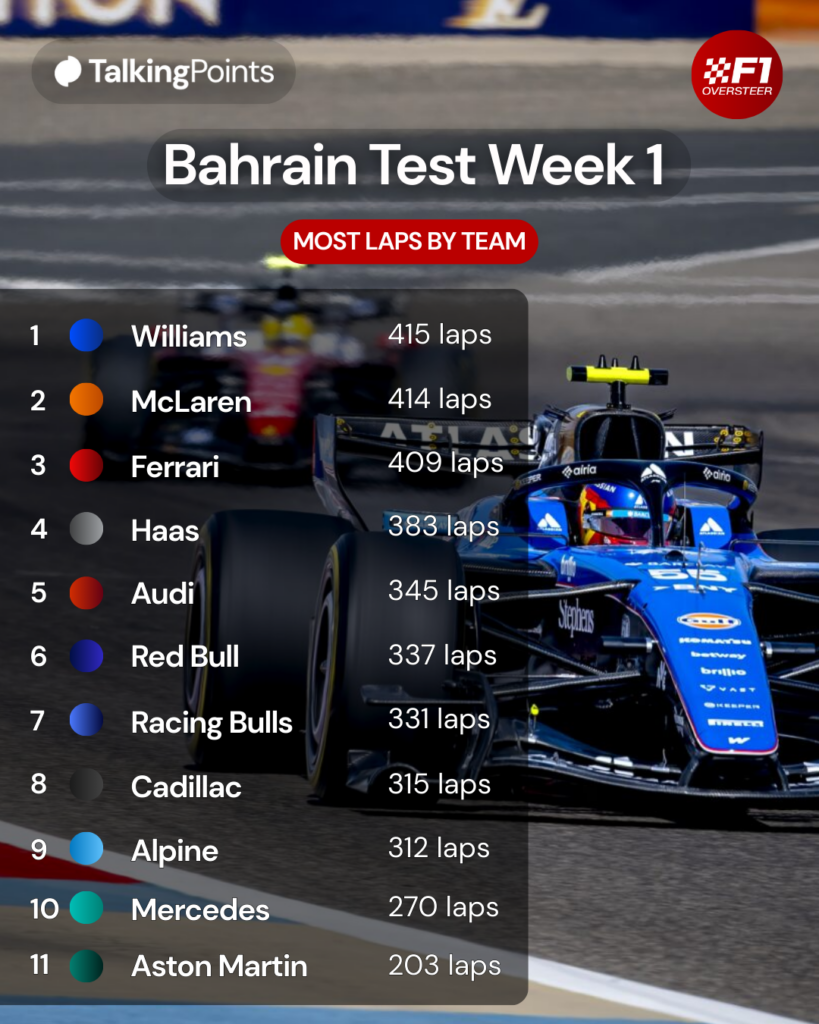
Williams put in the most laps during the first week of pre-season testing in Bahrain – Is this a reassuring sign after they missed the Barcelona shakedown?
Formula 1 returned to ground-effect regulations in 2022, in a move to improve the racing by allowing drivers to follow each other more closely on track. But by the end of the rules cycle in 2025, staying close to other cars became increasingly difficult after four years of updates.
One of the main ways that F1 tried to fix the issue of drivers not being able to stay with the car in front with the 2026 rules was to reduce the outwash from front wings, plus the new bargeboard designs. Front wings are now 100mm narrower and sit within the front wheels.
The 2026 aero regulations allow for more complicated bargeboards than those used during the final year of the ground-effect era. But Gary Anderson immediately shared fears about McLaren’s bargeboards producing more outwash than desired in the Barcelona shakedown.
McLaren are not the only team to have found a way to increase the outwash effect created by their bargeboards, which the FIA and F1 hoped would yield inwash. It remains to be seen how severe the extra outwash effect influences the racing when the season starts in March.
Receive exclusive F1 news and updates twice a week to your mailbox