McLaren
 Mercedes
 Red Bull
 Ferrari
 Williams
 Racing Bulls
 Aston Martin
 Haas
Haas Alpine


Formula 1 teams have voted through a crucial engine rule change for the 2027 season after a period of uncertainty.
At the start of the new regulations, the batteries have produced nearly 50% of the car’s power, but from next year, this will fall to 42%. The year after that, it will be 40%.
The main goal is to ensure drivers can push flat out in qualifying, where the demands of energy management have forced them to use unnatural techniques.
What are your thoughts on shorter F1 races in 2027?
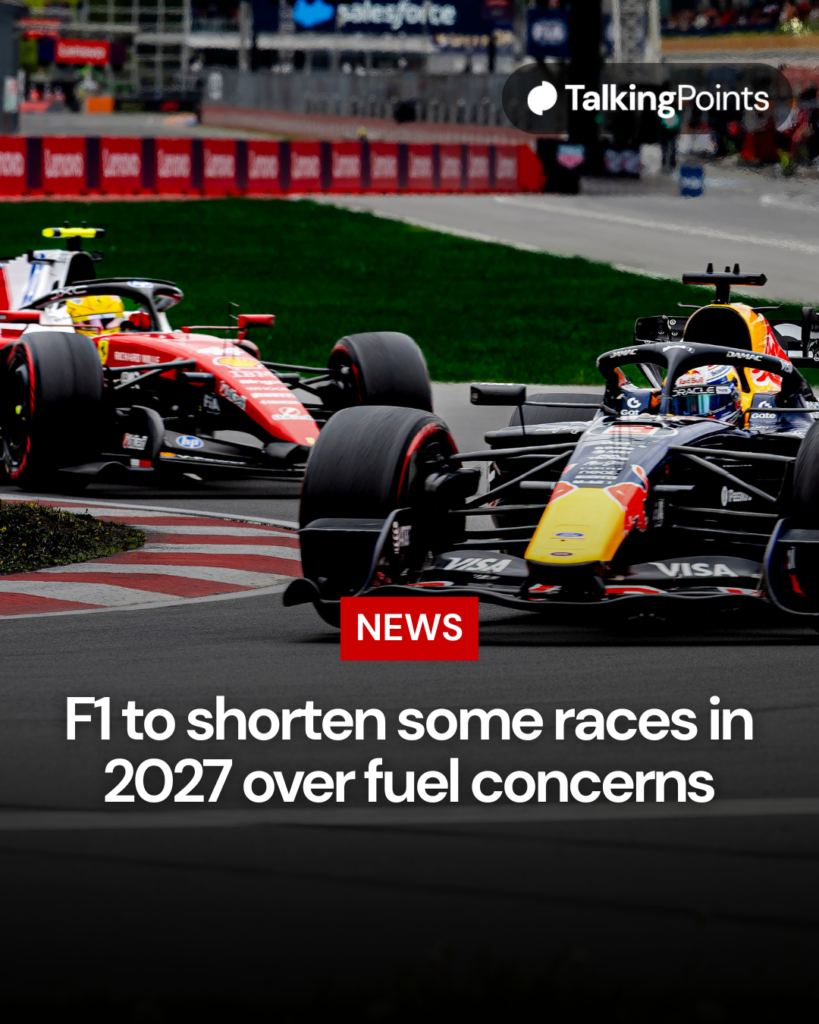
After changes to the engines, some races will run for fewer laps to ensure teams have enough fuel
Mercedes have just teed up 2027 Max Verstappen title challenge
The FIA previously announced that teams had agreed on a 60/40 split from 2027, but the timeline was adjusted after Ferrari and Audi raised issues.
Max Verstappen has previously indicated that he would stay in F1 as long as the change was voted through. The driving experience should now be more enjoyable, even if it’s still not perfect in the eyes of many.
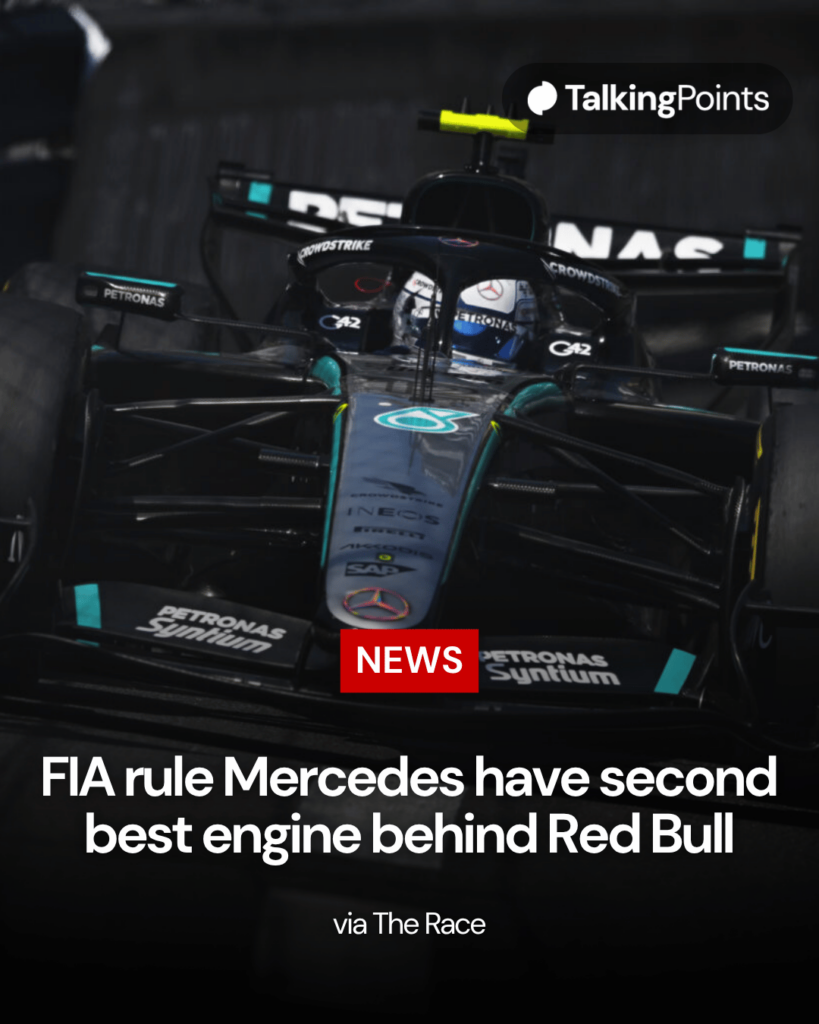
But FIA data suggests there could be a competitive advantage for Red Bull, too. In an email sent to the teams during the Monaco GP weekend, the sport’s governing body controversially ranked RBPT’s internal combustion engine as the benchmark.
Red Bull could challenge the FIA’s ruling, which will deny them access to Additional Development and Upgrade Opportunities (ADUO). Despite winning every Grand Prix this year, Mercedes will be able to use the catch-up mechanism, albeit not at the level of Ferrari, Audi or Honda.
What are your thoughts on Mercedes being granted an engine upgrade through ADUO despite their 2026 dominance?
It seems as if the Red Bull ICE is indeed class-leading, but their battery is holding them back relative to Mercedes. On that basis, the shift in emphasis for 2027 plays perfectly into their own hands.
In a year’s time, this could be seen as the moment where Mercedes voted for their own downfall. They have diluted the power of the battery even though this appears to be their greatest strength.
What’s more, Verstappen has proven lately that he can compete with what most would agree is the fourth-fastest car, qualifying on the front row in Miami and Monaco.
Red Bull are clearly behind on the chassis side, but it seems inevitable they will close that gap. With the engine regulations playing to their strengths, there’s every chance Verstappen will have a car good enough to fight for the title next year.
After all, he has already demonstrated that he can bridge a gap of multiple tenths through talent alone. And even for a team as dominant as Mercedes, that is a frightening proposition.
Receive exclusive F1 news and updates twice a week to your mailbox