Lando Norris
 McLaren
 Mercedes
 Red Bull
 Ferrari
 Williams
 Racing Bulls
 Aston Martin
 Haas
Haas Alpine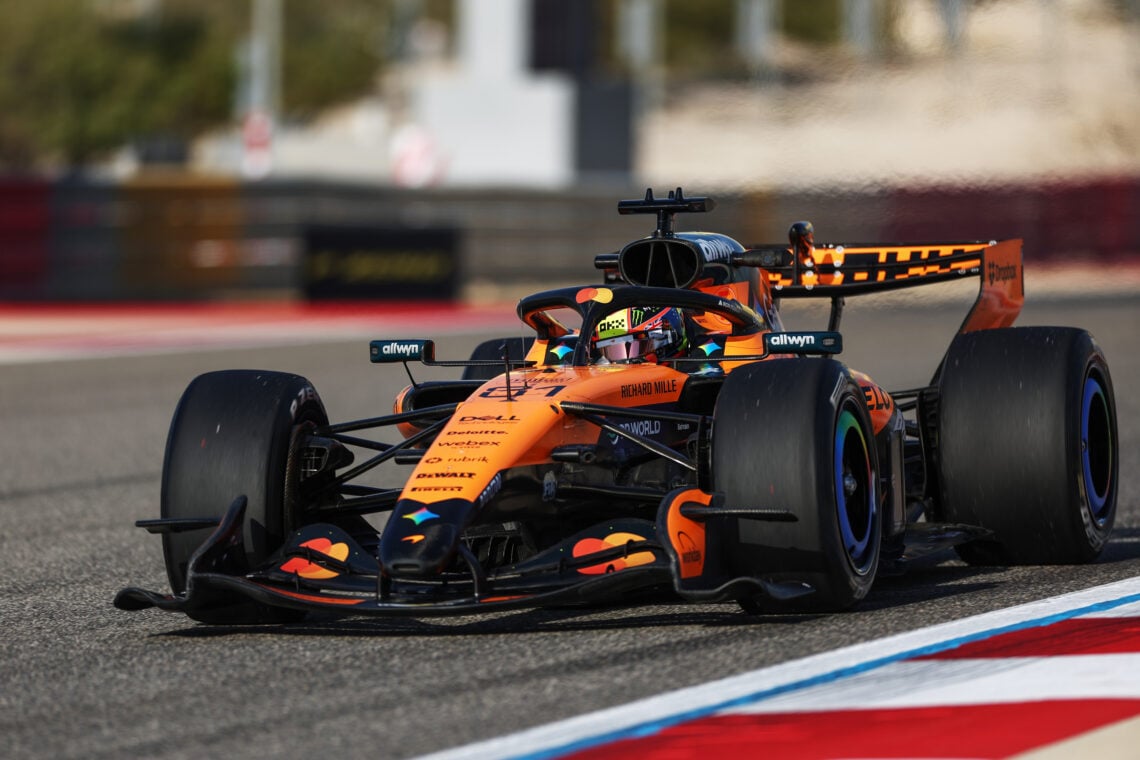


McLaren have built their car slightly differently to the rest of the grid to create a ‘more agile’ machine compared to their rivals.
Lando Norris and Oscar Piastri will both have their sights set on the drivers’ championship again after two years of having the quickest car on the grid.
However, McLaren have already acknowledged that they don’t expect to be the leaders in the paddock at the beginning of 2026 due to the changing regulations.
Mercedes already have a power unit advantage over McLaren due to their familiarity with the new engine.
Who is going to win the Australian Grand Prix?
Let us know why in the comments!
However, there are suggestions that McLaren’s gearbox is class-leading this year, and with drivers looking set to spend far more time in first gear to charge up their batteries, being able to put that extra load through the gearbox is going to be essential.
Journalist Mark Hughes has now had confirmation that McLaren have shortened their wheelbase this year.
It makes Andrea Stella’s team an outlier in the paddock and comes with its own pros and cons.
READ MORE: All you need to know about McLaren F1 Team from team principal to engine

McLaren’s shortened wheelbase means ‘more agile’ F1 car will be on the minimum weight limit
Hughes was speaking on the Motor Sport Magazine Podcast about McLaren’s new car and explained: “Everyone has gone for the full wheelbase allowance. It’s come down to 3,400mm this year from 3,600mm.
“And the expectation was because you’ve got the battery and all the associated plumbing and the upgraded MGU-K and everything associated with that and the greater cooling. It was assumed everybody would need that full permitted wheelbase, but we see McLaren have gone around 10 centimetres shorter than that.
“I’ve since had this sort of confirmed that they have gone slightly shorter on wheelbase, so that’s easier to get the weight down to the minimum, but it means there’s a bit less floor area to create the downforce, and it means the centre of gravity is probably a bit higher. So, that’s an interesting choice.
Did Oscar Piastri just end the debate over McLaren’s papaya rules?

“It makes it much easier to get down to the weight limit and be below the weight limit, and then you can put the ballast wherever you need it in the car to get the best balance that you need for any circuit.
“So, that’s one quite significant advantage. The other one is that a shorter wheelbase car will generally be a bit more agile.
“It’ll be a bit easier to change direction and thereby put a bit less load on the tyre and just generally be a more malleable car for the driver.
“There are advantages to it, but there are disadvantages too.”
READ MORE: McLaren driver Lando Norris’ life outside F1 from parents to celebration
McLaren rivals are struggling to reach the minimum weight ahead of the Australian Grand Prix
One of the many changes to the rules this season saw the minimum weight limit reduced by 30kg to 768kg.
Considering the new hybrid power units are heavier than last year, this put teams under real pressure to find ways to create more savings.
Williams are said to have one of the heaviest cars on the grid, and while that’s a problem they’ll be confident that they can fix, Jolyon Palmer has pointed out how expensive it will be for Williams to resolve.
An overweight power unit is the latest concern to add to Aston Martin’s list, with Honda’s underpowered engine said to be 15kg heavier than it’s supposed to be.
McLaren might not be a works team, but if getting to the minimum weight limit can give them an early advantage over their rivals, then that will give them time to fully understand the Mercedes power unit and extract the maximum potential from what could be the best engine on the grid.
Receive exclusive F1 news and updates twice a week to your mailbox