Lando Norris
 McLaren
 Mercedes
 Red Bull
 Ferrari
 Williams
 Racing Bulls
 Aston Martin
 Haas
Haas Alpine


Williams looked set to be the team who were most on the back foot heading into the 2026 Formula 1 season after missing the shakedown in Barcelona, but the first pre-season test in Bahrain was far more positive for James Vowles’ outfit.
No team completed more mileage during the first three days of testing in Bahrain than Williams, with Carlos Sainz and Alex Albon learning a lot about the car.
As the likes of Aston Martin continue to struggle, Williams appear to have built a perfectly acceptable midfield car.
The first pecking order predictions are IN!
What jumps out?
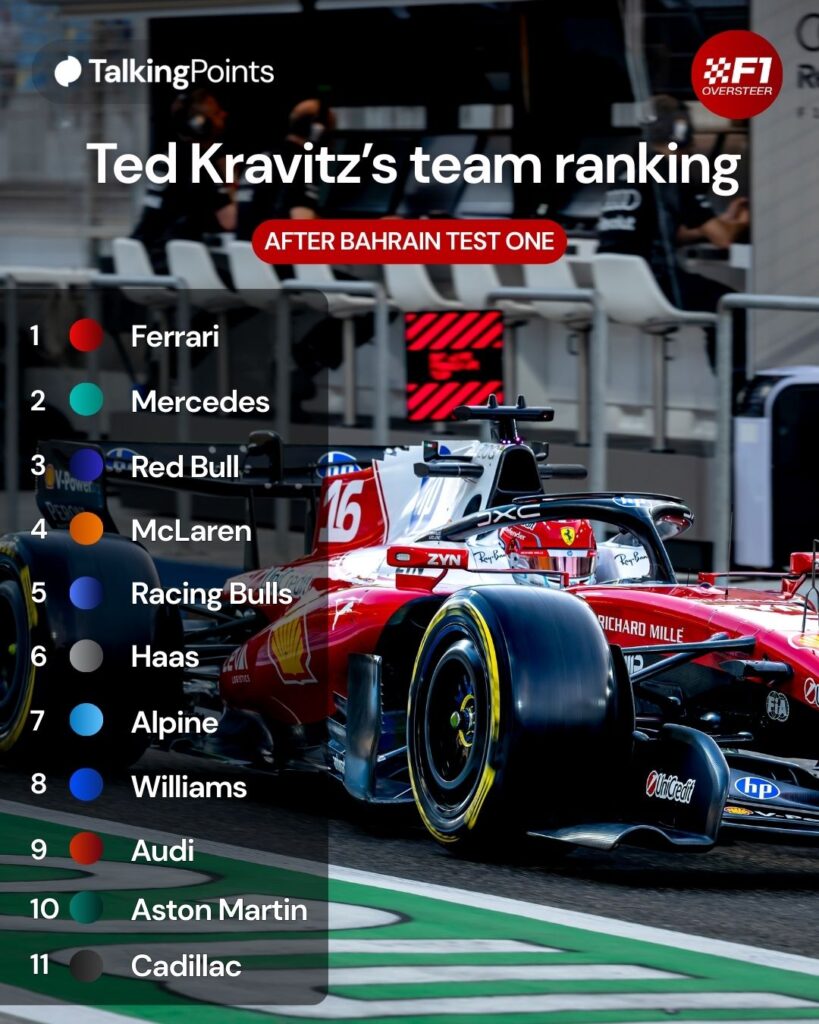
However, there are still questions about Williams’ overall pace based on their race runs.
One accusation that James Vowles has faced ever since it was discovered that they wouldn’t make it to Barcelona is about the weight of his car.
The 2026 F1 regulations reduced the minimum weight of the cars despite heavier, more complicated power units being introduced to the sport.
Now, it’s emerged just how far away from the weight limit the FW48 really is.
READ MORE: All to know about Williams Racing from team principal to Mercedes ties
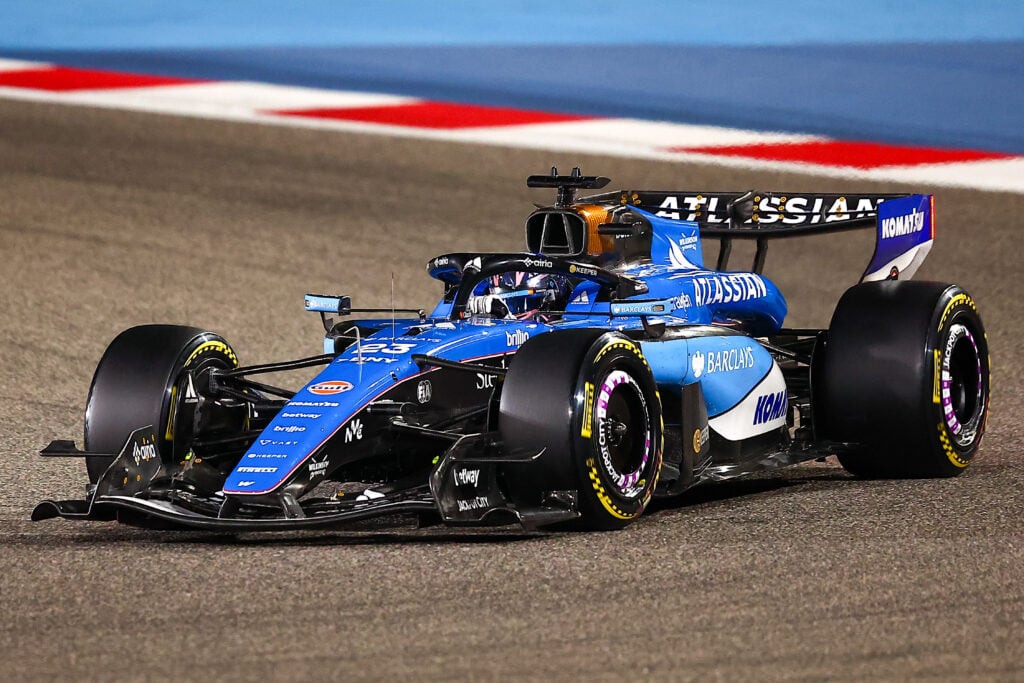
Williams set to lose 40 seconds per F1 Grand Prix due to 20kg weight limit conundrum
A report from the Spanish outlet MARCA has shared more details about Williams’ preparations for the upcoming season.
MARCA suggests that ‘information’ coming from Williams is that their car is ‘around 20kg’ overweight, which is likely to be ‘extremely significant’.
It’s been calculated that this will cost Williams around 0.7 seconds per lap, which, over a typical race distance, is worth around 40 seconds compared to any team whose car is on the weight limit.
Finishing 40 seconds behind the race winner wouldn’t be a bad result given the likely field spread this season, but Williams’ car is more on par with ‘RB and Haas’ according to MARCA, meaning Vowles’ team would sink to near the back of the midfield.
Williams’ last major F1 milestones – Can the Grove-based squad achieve any of these again in 2026? ⬇️

The extra weight is said to come from ‘reinforcements made to the chassis’ in order to pass the FIA crash tests.
However, it’s believed that Williams are planning their first set of major updates for the Bahrain Grand Prix, which should ‘shed weight and gain downforce’ and create a ‘significant leap in performance’.
The race runs Williams completed in Bahrain highlighted their current struggle, with Albon’s average lap time two seconds off the pace of Mercedes driver Andrea Kimi Antonelli and more than one second behind the best midfield runner, Haas star Esteban Ocon.
READ MORE: Williams star Carlos Sainz’s life outside F1 from full name, girlfriend and height
Williams suffering from weight limit issue raised by Christian Horner last season
One person who foresaw the problems that Williams are dealing with is former Red Bull boss Christian Horner.
Speaking in an official F1 press conference at last year’s Miami Grand Prix, Horner said: “A number was plucked out of the air for car weight.
“We’ve got engines that are significantly heavier and a car weight that has become lower. So it will be an enormous challenge for every team to achieve it. Saving weight costs a colossal amount of money.
“There was a discussion last week about introducing steel skids – maybe that would warrant adding 5 kilos to the minimum weight. But it is what it is. It’s the same for everybody.
“There will be choices teams make to hit the weight because weight is free lap time. Every 10 kilos is about 0.35 seconds. It will be very challenging for all teams to get down to minimum weight.”
Ferrari and Mercedes’ data sheets suggest they’re currently at the weight limit, but it’s hard to know whether to believe that, as Williams suggested something very similar when they launched their car.
Mercedes are planning to add ballast to their car ahead of the Australian Grand Prix, highlighting that they’re at a very different stage of their development.
Receive exclusive F1 news and updates twice a week to your mailbox