Lando Norris
 McLaren
 Mercedes
 Red Bull
 Ferrari
 Williams
 Racing Bulls
 Aston Martin
 Haas
Haas Alpine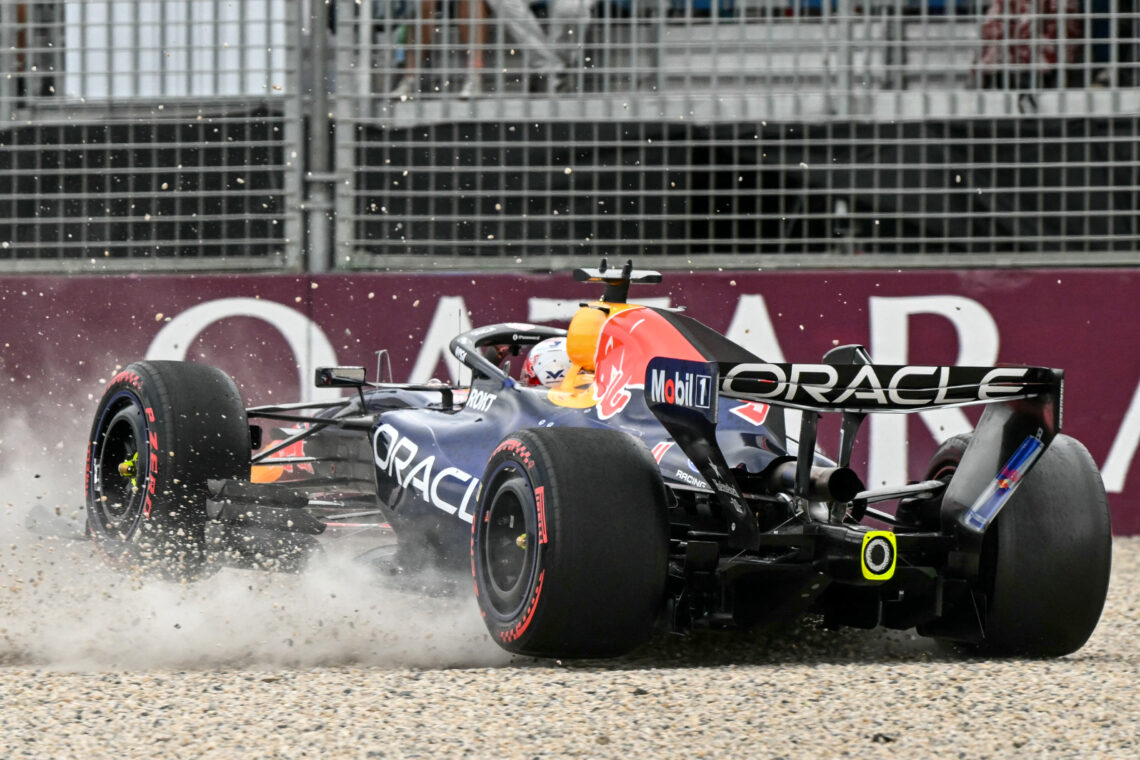


Red Bull’s Max Verstappen has started the 2026 F1 season with a shock Q1 exit after he crashed during qualifying for the Australian Grand Prix without setting a lap time.
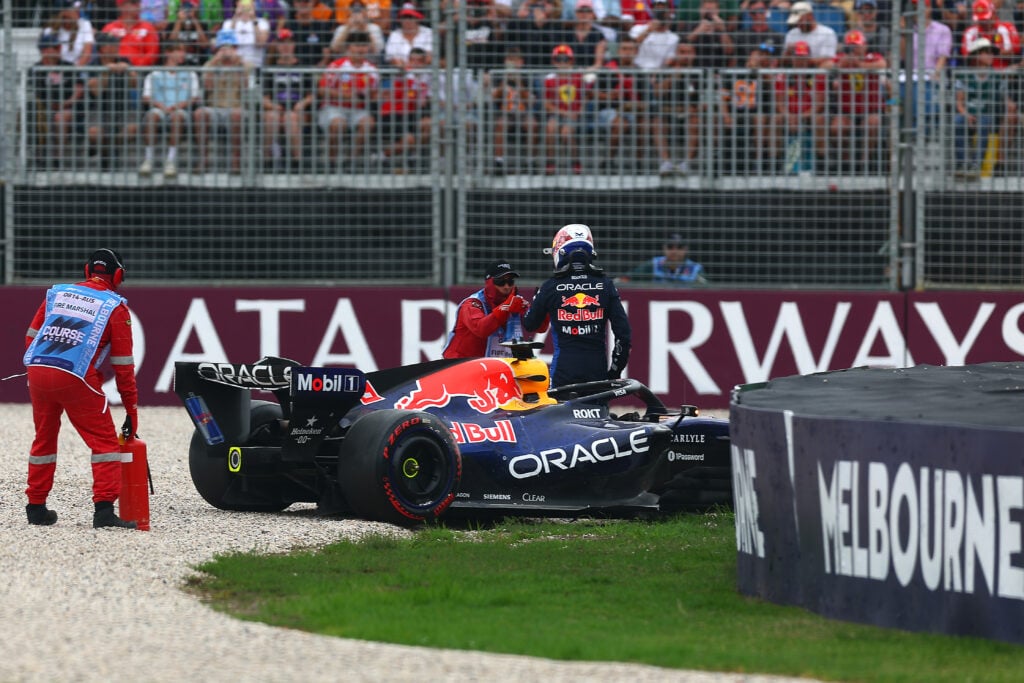
Verstappen caused the first surprise result of the year on Saturday when he spun at the first corner on his first flying lap during Q1. The 28-year-old locked his rear axle under braking at Turn 1 and was powerless to avoid reaching the barriers to bring his session to an early end.
It is the first time that Verstappen has suffered a Q1 exit due to him crashing in qualifying in a decade, having last made the lonely stroll back to the paddock at the 2016 Monaco Grand Prix. He has suffered a flurry of other Q1 exits because of a lack of speed or reliability faults.
Verstappen is now set to start the 2026 Australian GP from P20 on the grid, as Williams and Aston Martin drivers Carlos Sainz and Lance Stroll both failed to make it out of their garages during Q1. Red Bull could yet opt to let Verstappen start the Australian GP from the pit lane.
Max Verstappen CRASHES OUT of qualifying!
Is there a safety problem with the 2026 cars?
Marc Priestley thinks Max Verstappen crashed as he was ‘caught out’ by Red Bull’s energy harvesting
Verstappen’s crash was the headline incident during a qualifying session in which Mercedes rival George Russell got pole position for the Australian GP on Saturday. The Dutchman may have had a gearbox issue that caused him to spin, but Marc Priestley thinks it was a mistake.
READ MORE: All to know about General Motors’ Cadillac F1 team from engine to drivers
Priestley feels Verstappen crashed in qualifying for the Australian GP as he got “caught out” by the energy harvesting that is now needed with F1’s 2026 regulations, for which Red Bull have even built their first-ever in-house engine after Honda left them to join Aston Martin.
“Max Verstappen locked the rear wheels under braking going into Turn 1,” Priestley said on BBC Radio 5 Live.
“I think what happens is he gets caught out by the massive energy harvesting, the braking that is being done on the rear axle alone by the electric motors. A lot of people have been caught out by this in the new cars.”
Max Verstappen had been backed to utilise F1’s increased energy management in 2026
Formula 1 overhauled the rulebook for 2026 with the new engine regulations at the heart of the changes. F1 engines now feature a near 50/50 share between electrical and combustion power, having increased the electrical output from the previous 20/80 split seen since 2014.
READ MORE: Everything you need to know about F1’s 2026 engine and aero regulations
Arvid Lindblad almost crashed in the pit lane avoiding Gabriel Bortoleto during qualifying for the Australian GP
Were Audi wrong to not make Bortoleto stop on track?
F1 has even removed the expensive MGU-H from the power unit formulae, which made the role of the MGU-K more integral to energy harvesting – which Verstappen appeared to get on top of straight away during pre-season testing in Bahrain before F1 headed to Australia.
Verstappen was the first driver to adopt a high-revving cornering approach during testing in Bahrain, as well as using lower gears in the turns to harvest more energy. Red Bull’s energy management in Bahrain stunned Toto Wolff, as well, as he felt it was worth a second a lap.
Many including former Red Bull motorsport adviser Helmut Marko expected Verstappen to have a big advantage with F1’s energy management levels required in 2026. So, Verstappen crashing during Q1 at the Australian GP owing to a driver error would be rather surprising.
Receive exclusive F1 news and updates twice a week to your mailbox