Lando Norris
 McLaren
 Mercedes
 Red Bull
 Ferrari
 Williams
 Racing Bulls
 Aston Martin
 Haas
Haas Alpine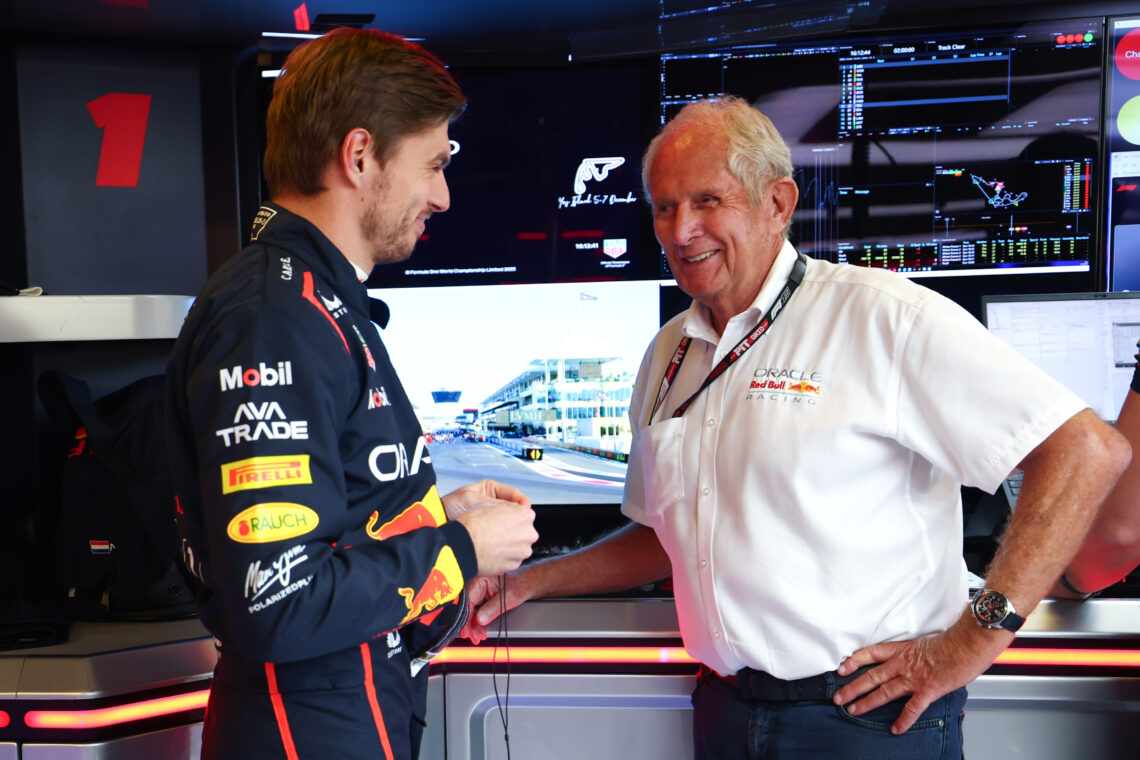


Max Verstappen lost one of his biggest allies at Red Bull following the 2025 season, as Helmut Marko left the team as they prepare for a new era under the 2026 regulations.
Marko confirmed his exit from Red Bull after 20 years as the F1 team’s motorsport adviser in December. The Austrian was one of the final long-standing pillars of the Milton Keynes crew, who head into 2026 under the leadership of Oliver Mintzlaff and team boss Laurent Mekies.
Red Bull are entering a new era in 2026 as they become power unit constructor for the first time in the team’s history. Star driver Verstappen also starts a year as the hunter rather than the hunted for the first time since 2021, after McLaren rival Lando Norris won the 2025 title.
Norris beat Verstappen by only two points to win the 2025 F1 title in the season-ending Abu Dhabi Grand Prix, which brought the curtain down on the ground-effect era and Honda’s run as Red Bull’s engine partner. Honda has joined Aston Martin in an exclusive power unit deal.
What do you think of Ferrari’s 2026 engine after Cadillac’s first F1 shakedown?
Helmut Marko thinks Max Verstappen’s energy management will be a ‘huge advantage’
Engines will be at the heart of the debate this year, with the 2026 F1 regulations set to make power units the main performance differentiator. F1 has removed the MGU-H and increased the share of electrical power from the previous 20/80 split favouring the ICE to a 50/50 split.
READ MORE: Everything you need to know about the 2026 F1 engine and aero regulations
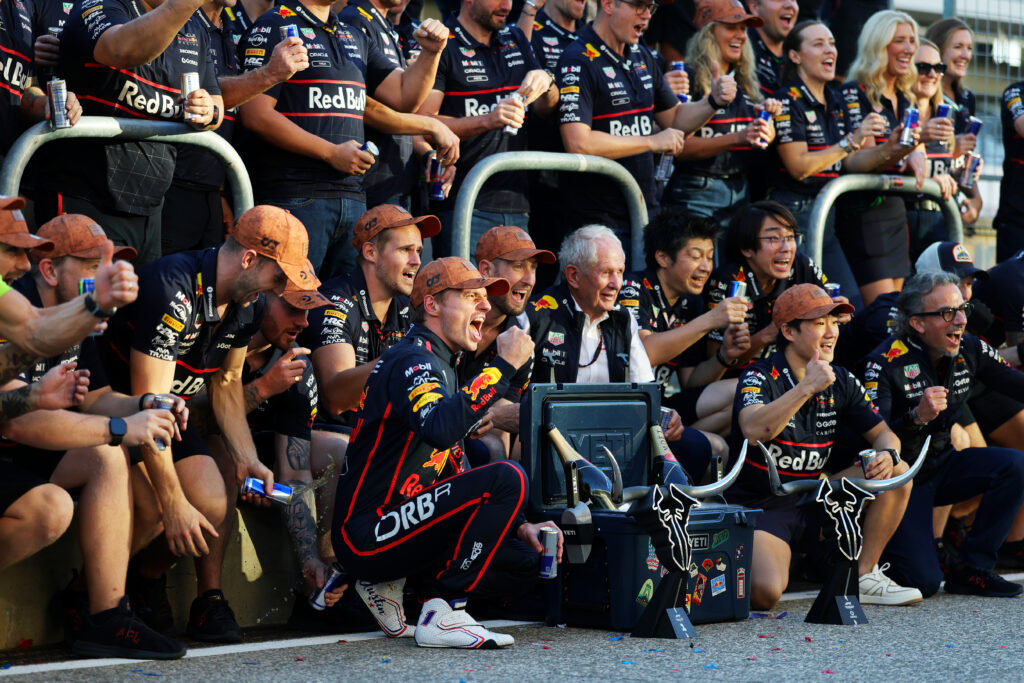
Racing Bulls driver Liam Lawson expects energy management will be “extremely important” in 2026 due to the additional electrical power. And Marko believes this will give Verstappen a “huge advantage”, as his ability to race flat-out and manage his energy supply is inspiring.
“The driver will play a crucial role in how they use energy while simultaneously driving at the limit,” Marko said on ORF, via quotes by F1 Insider. “This will be a huge advantage for him, because he can drive incredibly fast and think at the same time.”
F1’s 2026 engine regulations will test the drivers’ energy management skills
What are your thoughts on Red Bull’s first new livery since 2016?
Let us know in the comments below!

The threat of drivers needing to lift and coast at the ends of straights as they have run out of electrical power has been a regular fear since the 2026 F1 regulations were first revealed. F1 even changed the aero rules to help overcome the fears about drivers running out of power.
F1 has incorporated active aerodynamics on the front wing, as well as the rear wing, as part of the new rules, which drivers will activate in certain zones on each track. The active aero is also in addition to the new overtake mode, offering an extra +0.5MJ, which is replacing DRS.
Red Bull will hope Marko is right in suggesting that Verstappen will have an advantage over his rivals, due to the increased need for F1 drivers to manage the electrical power supply in 2026. The drivers who can optimise their energy management the quickest could gain a lot.
Receive exclusive F1 news and updates twice a week to your mailbox