Lando Norris
 McLaren
 Mercedes
 Red Bull
 Ferrari
 Williams
 Racing Bulls
 Aston Martin
 Haas
Haas Alpine


It appears Lando Norris’ inadvertent overtake of Lewis Hamilton came down to the engine software making a pre-programmed decision.
Coming into the Japanese Grand Prix, Lando Norris admitted he was behind other drivers on the grid due to a challenging start to the season.
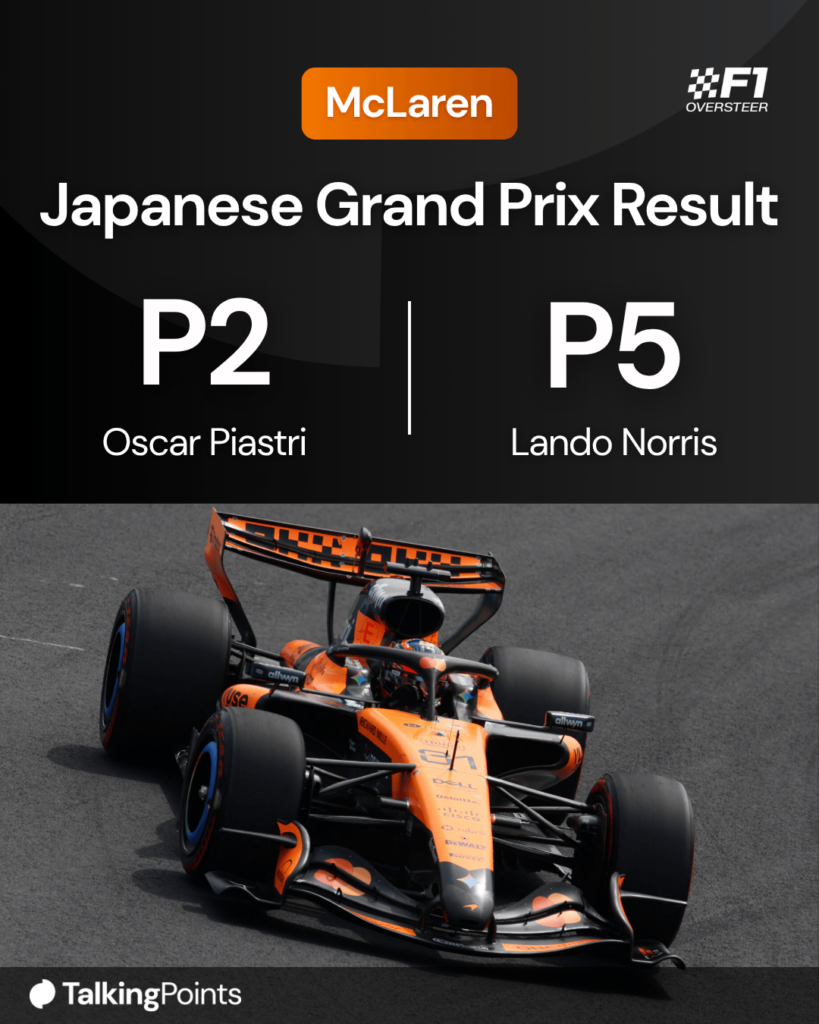
In fact, Andrea Stella even confirmed McLaren held Norris back after the race at Suzuka, despite him finishing P5 in the end.
McLaren score their first podium of 2026 at the Japanese Grand Prix!
How many will they grab in total this season?
During the race, Norris actually found himself behind Lewis Hamilton, who held P5 in the closing stages. However, Lando Norris managed to pass him to secure the position for himself at the end of the race.
After the race, Norris admitted that he wasn’t trying to overtake Hamilton, but his battery deployment led to a surge of energy that happened to get him past the Ferrari driver.
READ MORE: Jacques Villeneuve blasts McLaren for making strategy error with ‘flying’ Oscar Piastri
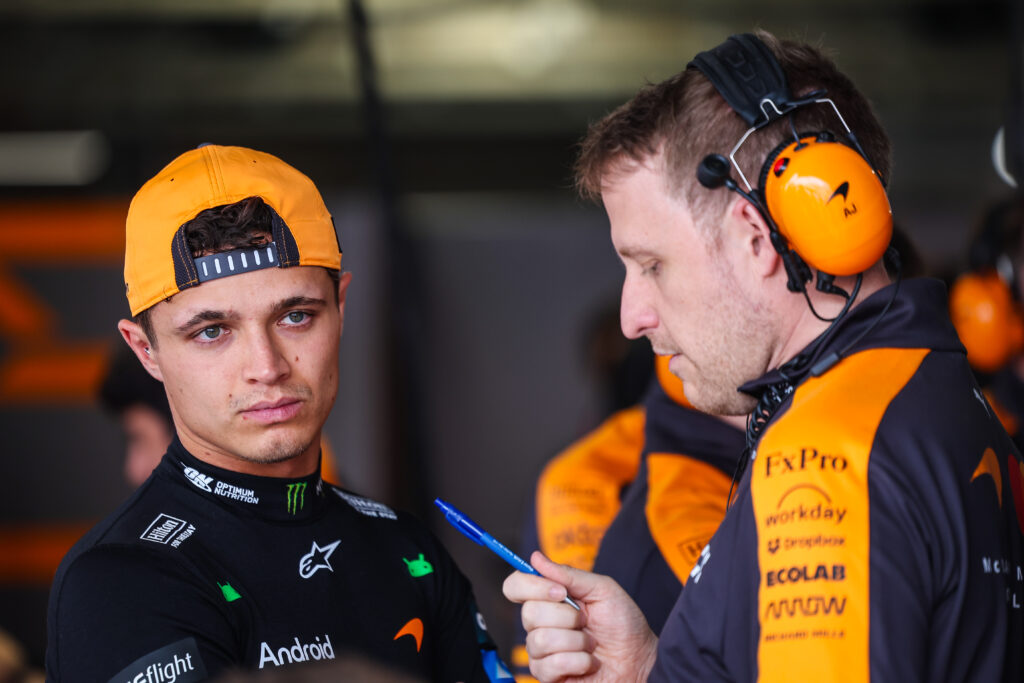
McLaren believe Lando Norris’ overtake on Lewis Hamilton decided by engine software
Speaking on the Nailing the Apex podcast, F1 reporter Julianne Cerasoli revealed that Lando Norris’ inadvertent overtake of Lewis Hamilton came down to a feature of the new engine software.
According to Cerasoli, who spoke with McLaren staffers, the MCL40’s engine software deployed more battery due to a safety trigger when the throttle isn’t at 100% during corners.
“What the team was saying about this thing that Norris said about, ‘I overtook Lewis without wanting to,’ and not having full control of the deployment. This happened last year as well…
“What happened with Norris is actually a safety trigger that those engines have. When they were doing the simulations, they realised that the energy from the engine was going to be zero by half of the race. So the system had to find a way to avoid this.
“You get to certain corners, so the 130R in Suzuka, where you have a lot of straights in succession. In this corner, if the throttle goes below 98%, then the engine resets itself… It’s not supposed to be like that because the throttle should be close to 100 there.
“By lifting, he would reset the system, and the system will deploy where he didn’t want it to deploy. It all started as a safety trigger, but now it becomes an issue. It’s two worlds colliding.
“That’s the key problem. When the driver is trying to drive, the system is going, ‘No, I need this energy for me.’ So you have a boot. But every time you use it, you pay for it.”
READ MORE: Lando Norris names his four favourite F1 drivers of all time including Lewis Hamilton
Which four drivers belong on McLaren’s Mount Rushmore? 🗻

Martin Brundle pointed to this exact issue in the aftermath of Japanese GP
Last week, Martin Brundle pointed out this exact issue, noting that F1 regulations have always maintained that drivers cannot benefit from ‘self-learning’ cars.
And given the incident with Norris fits Brundle’s description perfectly, there is concern that the essence of the sport, namely driver instinct, is being diluted.
For the software to make a decision for Norris that he wasn’t planning on making means his autonomy and agency as a driver were nullified, albeit momentarily.
This is the first instance of the 2026 regulations having a negative impact on racing beyond the safety concerns, and repeat occurrences could lead to dissatisfaction among drivers and even fans.
With the FIA set to meet during this unexpected hiatus in the season, the hope among fans and drivers is that they will address this software issue to ensure driver autonomy, along with driver safety, isn’t being compromised further.
Receive exclusive F1 news and updates twice a week to your mailbox