Lando Norris
 McLaren
 Mercedes
 Red Bull
 Ferrari
 Williams
 Racing Bulls
 Aston Martin
 Haas
Haas Alpine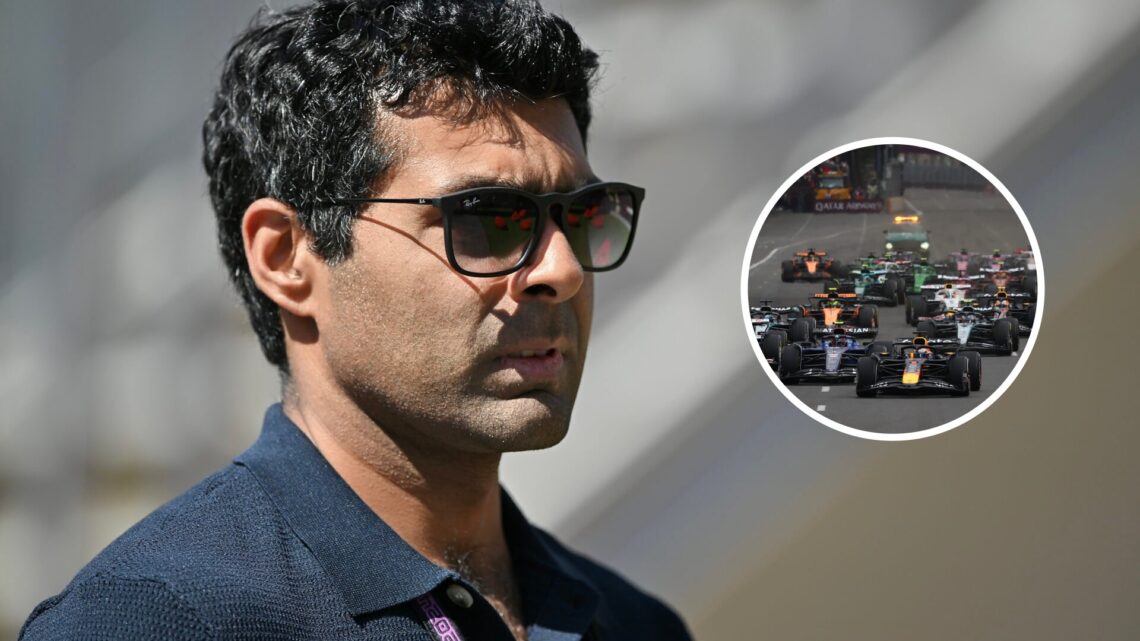


Former F1 driver Karun Chandhok has had his say on one aspect of the new 2026 regulations he would change to make the sport “more exciting” for fans around the world.
The new ruleset, which will be introduced for the upcoming season of racing, features the first new engine formula since the beginning of the turbo-hybrid era in 2014.
The changes that year are regarded as one of the biggest amendments to the regulations in modern F1 history, and it saw Mercedes emerge as a dominant force in the sport as they won eight consecutive constructors’ championships to begin it.
With the 2026 regulations, we will also see the introduction of several key team changes.
| TEAM | ENGINE |
| Red Bull | Red Bull Powertrains (in partnership with Ford) |
| Ferrari | Ferrari |
| McLaren | Mercedes |
| Mercedes | Mercedes |
| Aston Martin | Honda |
| Racing Bulls | Red Bull Powertrains (in partnership with Ford) |
| Haas | Ferrari |
| Williams | Mercedes |
| Alpine | Mercedes |
| Audi | Audi |
| Cadillac | Ferrari |
Red Bull Powertrains are developing Red Bull’s first in-house power unit in collaboration with Ford, Audi are also in the midst of creating their first F1 engine in time for their rebrand of Sauber, and Cadillac are joining the grid as a brand new entry.
READ MORE: Everything to know about the 2026 Formula 1 season: calendar, confirmed grid and regulation changes
Karun Chandhok thinks getting rid of hybrid power in F1 would make it ‘more exciting’
The reason that the 2014 regulations were so groundbreaking was due to the introduction of the hybrid power system that would see drivers utilise electrical energy to produce more straight-line speed.
The FIA’s move was seen as a step in the wrong direction for many die-hard F1 fans, as it negated the roars and screams of the preceding engines.
It’s also an opinion shared by Sky Sports F1 pundit Karun Chandhok, who recently voiced his preference on the direction that the FIA should have gone with the new 2026 F1 regulations in a question-and-answer thread on Reddit.

“For me, this is not the way I would have liked to have seen F1 go in the future,” the former F1 driver said. “These rules were committed to some time ago to get everyone ready in time. They needed three to four years to get the engines and the power units ready for next season.
“Firstly, I would have preferred F1 going down the path of V8s with sustainable fuel, and actually get rid of the hybrid system altogether.
“Go for smaller, lighter cars, much more agile, and pure sound as well. And I think that would have been more exciting for the fans.”
The weight of the hybrid system added around an extra 50kg to the weight of F1 cars in between the 2013 and 2014 seasons, forcing engineers to come up with aerodynamic solutions in order to aid tyre preservation.
READ MORE: Formula 1 bosses are now privately changing one 2026 rule that frightened Red Bull
What else is changing in the new 2026 Formula 1 regulations?
The power units are just one of many changes that will be present within the 2026 F1 challengers. Mercedes are tipped to have the best engine currently, but they will need to partner it with a synergetic aerodynamic package in order for them to replicate their past dominance.
The width and length of F1 cars will slightly decrease, with the weight of the overall package being lowered in turn. DRS has also been reworked to include two different modes, an X-mode and a Z-mode as detailed in a report from Formula 1.
Z-mode will feature wing angles that allow for faster cornering speeds with increased downforce, whereas X-mode will be more akin the traditional DRS but made to include front wings as well.
Overall, downforce is suspected to be reduced by around 15% in comparison to previous generations but will be aided by the fact that drag levels are also set to be reduced in hopes of enhancing the efficiency of the aerodynamics.
The first time that the cars will hit the track will be in a private testing week at the end of January. All 11 teams will take part in the first pre-season test at Barcelona, before the official F1 pre-season test takes place in Bahrain two weeks later.
Receive exclusive F1 news and updates twice a week to your mailbox