Lando Norris
 McLaren
 Mercedes
 Red Bull
 Ferrari
 Williams
 Racing Bulls
 Aston Martin
 Haas
Haas Alpine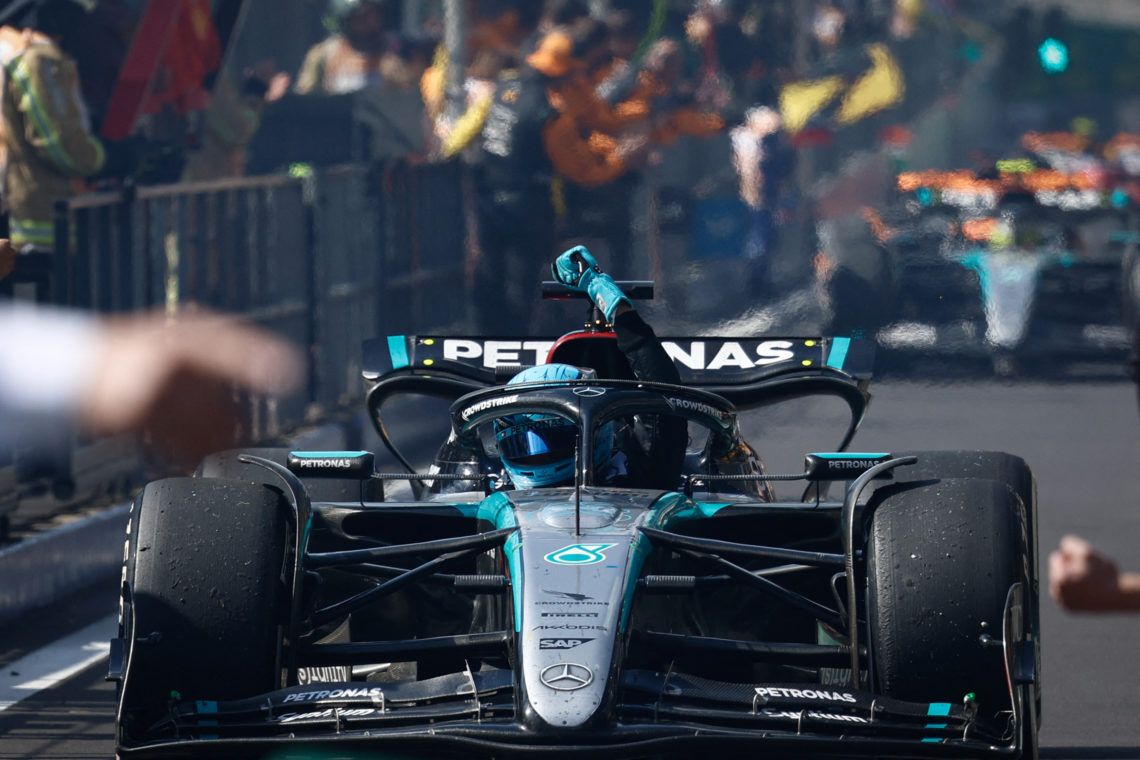


The disqualification of George Russell has put him under the spotlight after the FIA found his car to be underweight after the Belgian Grand Prix.
During the usual post-race checks, the FIA weighed Russell’s car twice after discovering that Mercedes had not emptied the entire fuel tank before submitting it to Parc Ferme.
It was subsequently discovered that the overall ‘dry weight’ of the car without the 2.8 litres of fuel onboard was 796.5kg, thus meaning he was 1.5kg under the minimum weight limit of 798kg.
Mercedes admitted that it made a mistake to the stewards while engineers are now investigating how it was underweight in the first place.
Talk has now turned to whether the underweight car gave Russell a performance advantage and enabled him to pull off his one-stop strategy. Former F1 driver Karun Chandhok has explained why he thinks it is not the case in a post on X (formerly Twitter).
Karun Chandhok explains why George Russell had no performance advantage in the Belgian GP
Much of the discussion was centred around the one-stop strategy, with suspicions being that Mercedes likely did not account for the excessive tyre wear on the hard tyre on that strategy.
Pirelli engineers believe there were potentially three factors that led to Russell’s disqualification, while Mercedes trackside engineering director Andrew Shovlin also suspected it was related to their ambitious one-stop strategy.
In a discussion over whether Russell gained any performance advantage from having an underweight car, Chandhok felt there was a mitigating factor.
“The car would never have been below the 798kg weight limit during the race as they had fuel on board so no performance advantage for him,” wrote Chandhok.
“However, clear error by the team as 798 is the minimum “dry weight” without fuel so was a slam dunk DQ once the FIA drained the car out.”
F1 TV analyst Alex Brundle felt that it was most likely a “multifaceted” error that led to Russell’s disqualification, adding that the excess fuel would be an “inefficient” way to carry weight.
“If the error is with draining the car incompletely it’s likely that Russell carried the extra fuel that they handed the car over with for the full race. In which case no. In fact, would be marginally worse because fuel is an inefficient way to carry weight,” wrote Brundle.
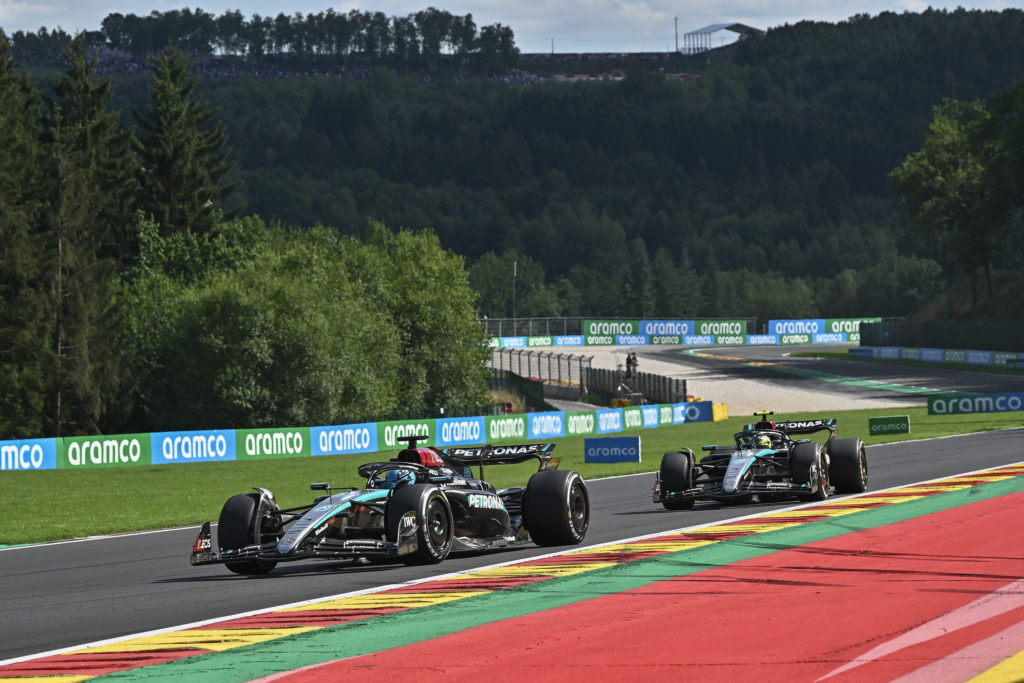
Mercedes looking to put Belgian GP disappointment behind them
With Russell’s disqualification, Mercedes missed out on a chance to take away an unlikely maximum points haul in the Belgian GP.
The team looked lost on Friday after bringing a new floor onto their car, but after reverting to the old specification on Saturday morning it appeared to give them more performance around the highspeed Spa Francorchamps.
READ MORE: Everything you need to know about Mercedes AMG F1 Team from team principal to lineage
Mercedes will be encouraged with its recent form having taken three race wins out of the last four, while showing it can keep up with McLaren and Red Bull on merit.
Toto Wolff is set to decide on who should replace Lewis Hamilton, with Carlos Sainz reportedly in the running for the second Mercedes seat.
Williams have made a bid to hire Sainz which includes a special clause that could see him drive for Mercedes in 2025. But Martin Brundle believes the Silver Arrows will be more inclined to replace Hamilton with Andrea Kimi Antonelli next season.
Receive exclusive F1 news and updates twice a week to your mailbox