Lando Norris
 McLaren
 Mercedes
 Red Bull
 Ferrari
 Williams
 Racing Bulls
 Aston Martin
 Haas
Haas Alpine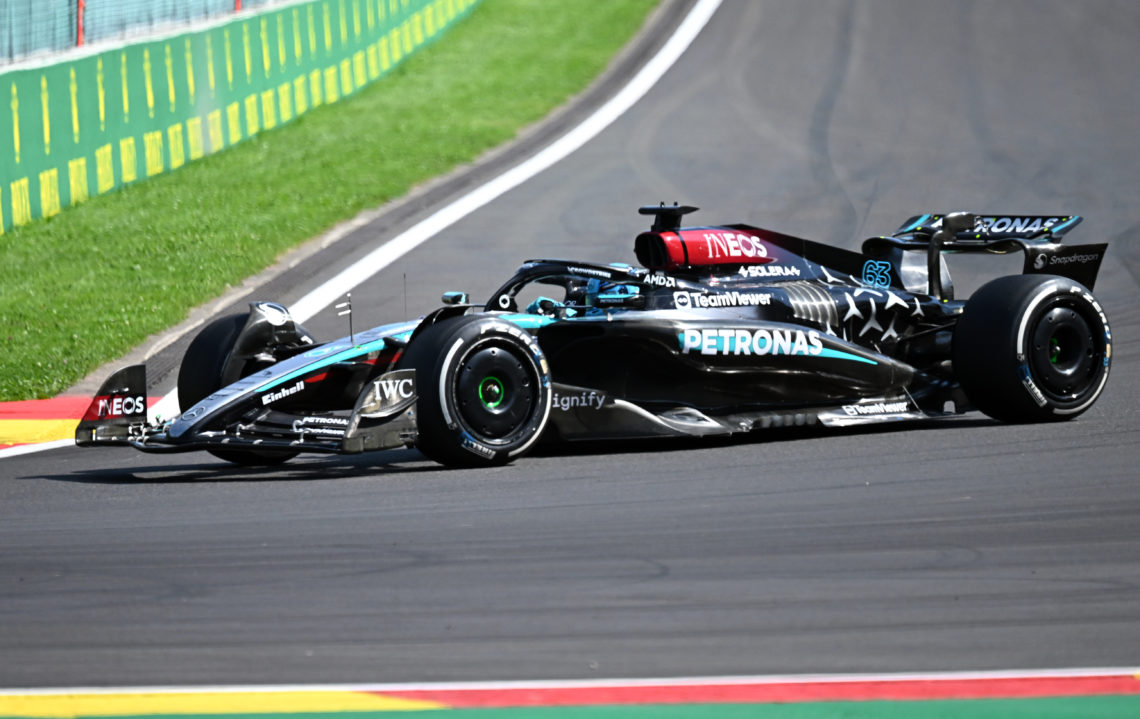


When George Russell was disqualified from the Belgian Grand Prix for having an underweight car, the focus revolved around his ambitious one-stop strategy.
A couple of hours after the race finish the FIA weighed Russell’s Mercedes twice and found that his car was under the legal weight limit of 798kg by 1.5kg.
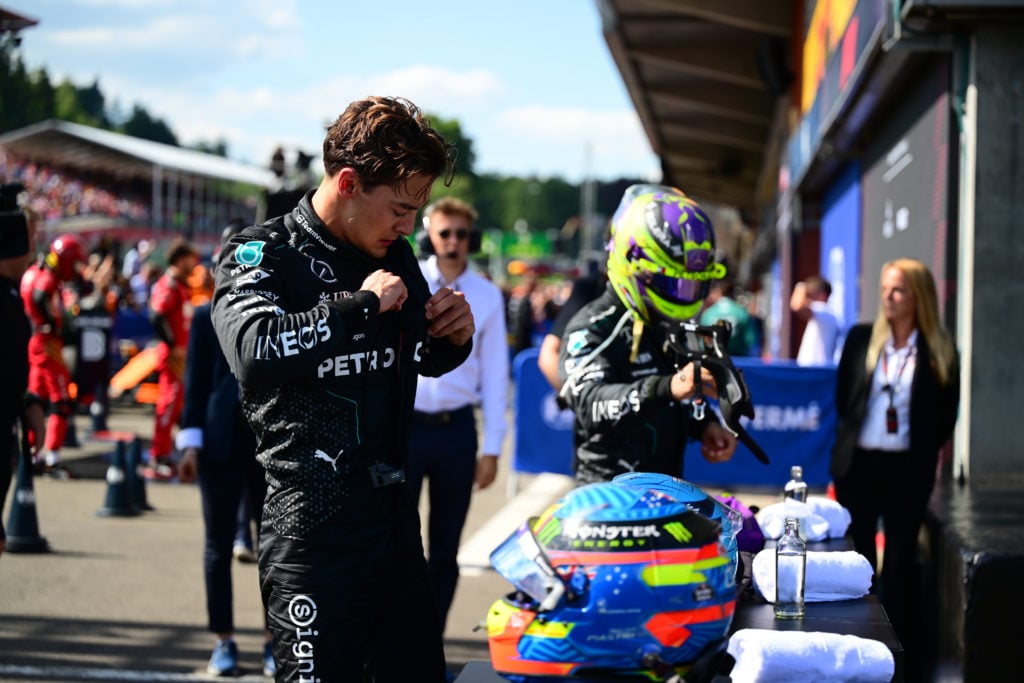
It caught the team by surprise after Toto Wolff admitted they made a mistake in a team statement, while trackside engineering director Andrew Shovlin confirmed Mercedes will investigate the cause for Russell being underweight.
There were no obvious signs such as missing parts or a technical oversight that stood out for the team, although several factors can be ruled out as the car must meet the minimum weight without any fuel onboard.
As the team begins its analysis, there are some suspicions about the main contributing factors and the consequences of going on a one-stop strategy. Pirelli director of motorsport, Mario Isola, has offered three potential factors that might have led to Russell’s car being under the limit in a press release.
Pirelli offers a theory on George Russell’s disqualification
Russell’s win came as a result of switching to a one-stop strategy midway through the race, electing to skip the final pit stop that many opted to take.
After his pace looked consistent on the hard tyre following his first stop, Mercedes engineers allowed Russell to stay out and manage his pace for 34 laps until the end of the race.
With an extra stop, Russell likely would have finished in fifth place. But the decision to run longer might be the very thing that cost him the win and the opportunity to leapfrog Sergio Perez in the Drivers’ Championship.
Looking at the factors after the race, Isola has offered a theory as to why Russell might have been under the weight limit.
“For a preliminary explanation, at least in terms of tyre behaviour, there are some factors that stand out. First of all, the track temperature was around 10 degrees higher than during FP2 and that probably contributed to very limited graining on the hard, which on the other hand was very significant on the mediums on a long stint,” said Isola.
“Furthermore, we can assume that the teams worked hard on defining car set-up to find the best compromise between a wet qualifying and a dry race and to try and protect the front axle, which was most prone to graining. A third element to consider is that many drivers made a point of looking after their tyres very carefully, especially in the quickest corners.”
Mercedes will seek answers that led to Belgian GP disqualification
Mercedes made a key specification change to their car between Friday and Saturday having swapped back to their original floor.
F1 teams usually take into consideration expected tyre wear when calculating their race weight, but this change was complicated by the fact that it rained on Saturday and gave them no dry running.
This could have made it harder for them to predict the effect it would have on the tyre mass during the race, therefore impacting the car’s overall weight.
READ MORE: Mercedes driver George Russell’s life outside F1 from net worth to height
Another unique factor to consider is track-specific at Spa Francorchamps: there is no opportunity to pick up tyre ‘marbles’ at the end of the race. This is a tactic drivers usually do on the slow-down lap to add extra weight to the car.
However, because Spa is such a long lap there is no opportunity to do this. Instead, the cars are ushered into the pit lane as soon as they cross the line at La Source.
Whether it was a case of simply miscalculating the tyre wear through the one-stop strategy or lack of post-race marbles, it is likely to lead to a lot of head-scratching for Mercedes. Their only consolation is that Lewis Hamilton was there to seal the win having finished second on the road.
Receive exclusive F1 news and updates twice a week to your mailbox