Lando Norris
 McLaren
 Mercedes
 Red Bull
 Ferrari
 Williams
 Racing Bulls
 Aston Martin
 Haas
Haas Alpine


Sky Sports pundit Karun Chandhok has admitted that the existence of Toyota within Formula 1 as a manufacturer never lived up to expectations.
The F1 grid has been limited to ten cars now ever since Haas joined back in 2016.
However, speaking on an episode of Bring Back V10s, Karun Chandhok examined the interesting history of Toyota within the sport.
Toyota were better known throughout their history as a rallying team, winning several drivers and constructors titles.
However, in 2002, Toyota finally made their debut in F1, with Scot Allan McNish and experienced Finn Mika Salo as their chosen drivers.
Salo scored a remarkable point on their debut in Australia that year, but only managed one other points finish throughout the campaign.
Both drivers were replaced heading into 2003 by former race winner Olivier Panis and the exciting Cristiano da Matta.
Results very slowly improved and they enjoyed their best season in the sport in 2005 when Jarno Trulli and Ralf Schumacher scored regular podiums.
However, Toyota left Formula 1 in 2009 and Chandhok admits their aims were never quite in line with what their car could achieve.
They finished on the podium on 13 occasions, achieved three pole positions and three fastest laps.
Unfortunately, that tantalising first win in Formula 1 was always just out of reach and they never achieved their goal of standing on the top step of the podium.
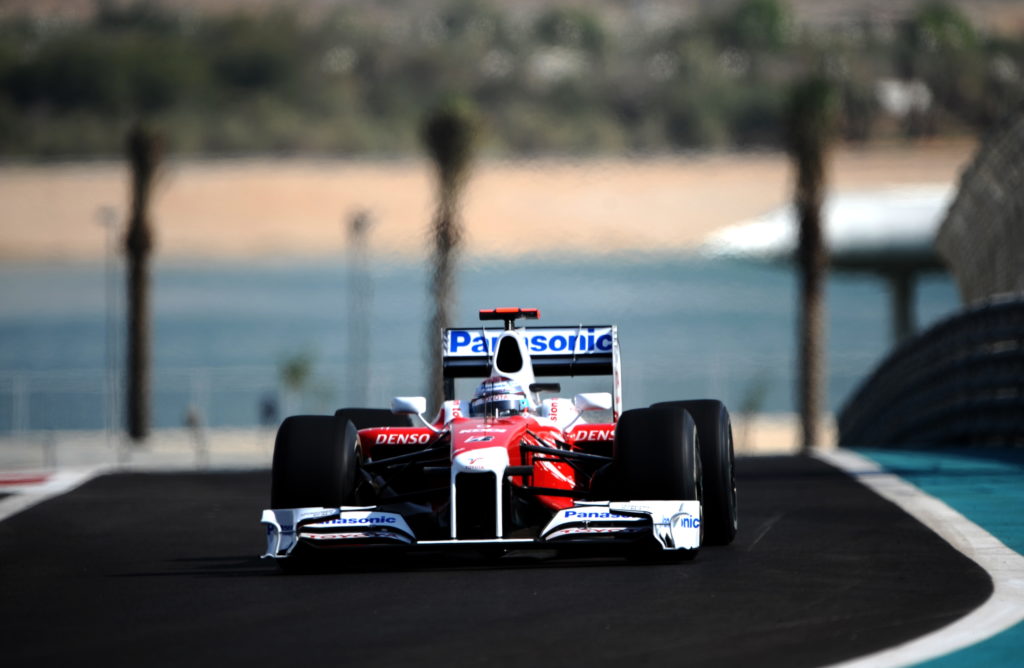
Chandhok admits ‘bizarre’ Toyota involvement in Formula 1
Speaking about the Japanese team, Chandhok said: “But like the whole thing is just bizarre isn’t it? Their decisions across their entire period of Toyota in Formula 1, because they didn’t win, not because of their drivers, they didn’t win because the car wasn’t quick enough.
“[Allan] McNish, top-quality driver, [Mika] Salo showed in 1999 that given the right circumstances, that was only two years before, he could be there or thereabouts in a fight if he needed to be.
“You know, they had Ralf [Schumacher], they had Jarno [Trulli], they had [Cristiano] Da Matta, they had solid drivers, [Olivier] Panis, they had drivers who were if they had the tools, they would have been capable enough to get the car regularly in the points and do a good job.
“In reality, you’re only going to attract M. Schumacher instead of R. Schumacher if you produce a car that was good enough to win the world championship.”
Toyota sold their engines to other Formula 1 teams during their time in the sport, but as Chandhok says, they never could ever challenge as a serious manufacturer.
With Toyota withdrawing before the start of the 2010 season, Bernie Ecclestone had to find some additional teams to make up the grid.
In the end, four new manufacturers arrived, but only one remains on the grid now.
HRT, Virgin and Lotus all came and went but Mercedes became one of the most dominant teams in F1 history.
Longevity in Formula 1 is incredibly difficult to achieve and unfortunately for Toyota, it wasn’t something they could manage.
Receive exclusive F1 news and updates twice a week to your mailbox