Lando Norris
 McLaren
 Mercedes
 Red Bull
 Ferrari
 Williams
 Racing Bulls
 Aston Martin
 Haas
Haas Alpine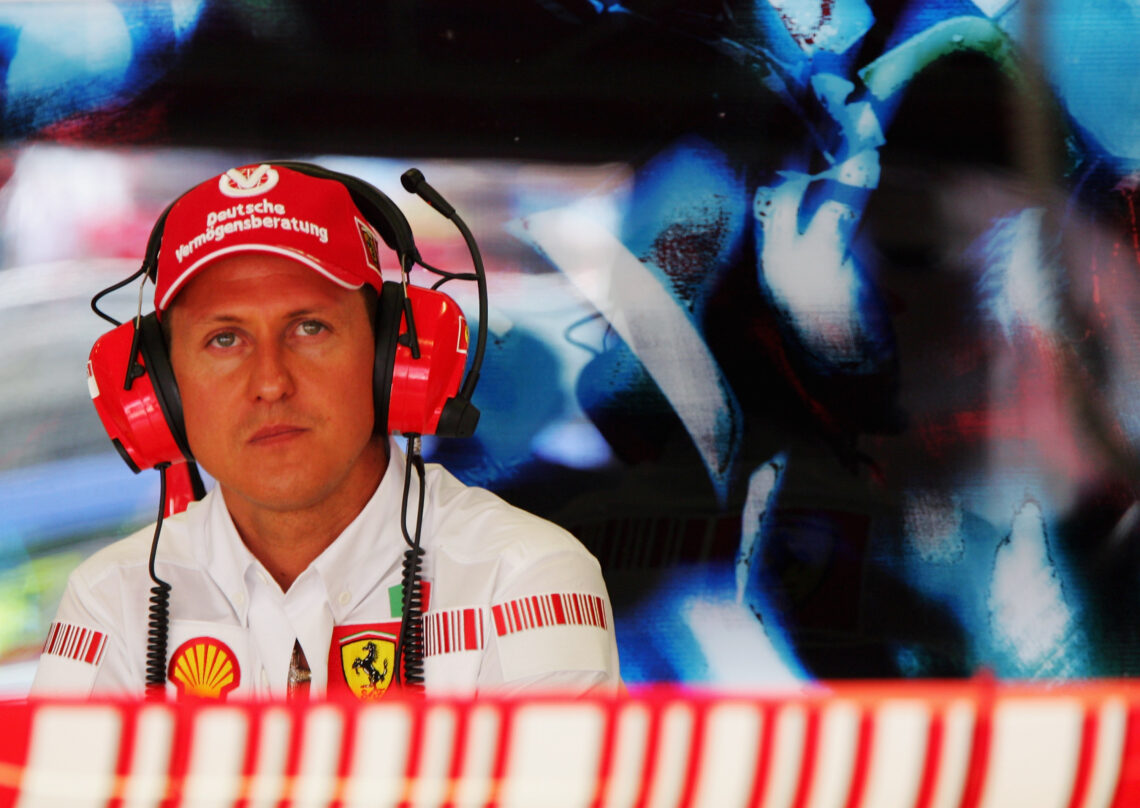


It’s amazing to think that Michael Schumacher won his first Formula 1 title as a Ferrari driver 25 years ago.
The 2000 Japanese Grand Prix witnessed Michael Schumacher become Ferrari’s first champion since Jody Scheckter in 1979, and started an unprecedented run of title wins for the German.
Schumacher and Ferrari were unstoppable throughout the early 2000s until Fernando Alonso finally ended his run of five straight drivers’ championship wins.
Kimi Raikkonen quickly followed Schumacher’s victories up in 2007, but since then, Ferrari have endured a barren run of title wins.
| FERRARI F1 DRIVERS’ CHAMPIONS | YEAR |
| Alberto Ascari | 1952 |
| Alberto Ascari | 1953 |
| Juan-Manuel Fangio | 1956 |
| Mike Hawthorn | 1958 |
| Phil Hill | 1961 |
| John Surtees | 1964 |
| Niki Lauda | 1975 |
| Niki Lauda | 1977 |
| Jody Scheckter | 1979 |
| Michael Schumacher | 2000 |
| Michael Schumacher | 2001 |
| Michael Schumacher | 2002 |
| Michael Schumacher | 2003 |
| Michael Schumacher | 2004 |
| Kimi Raikkonen | 2007 |
Fernando Alonso and Sebastian Vettel both came close, and Charles Leclerc finished second to Max Verstappen in 2022.
Leclerc and his newest teammate, Lewis Hamilton, have failed to win a single Grand Prix in 2025, putting more pressure on team principal Fred Vasseur.
Ferrari chairman John Elkann is continuing to back Vasseur, but he will be desperate to find a way to emulate the days when Schumacher’s Ferrari team were an unstoppable force in Formula 1.
Guenther Steiner was in the paddock during Schumacher’s heyday and has now spoken about the change he made that every Ferrari staff member he spoke to has since raved about.
READ MORE: Everything you need to know about F1 legend Michael Schumacher from net worth to career stats
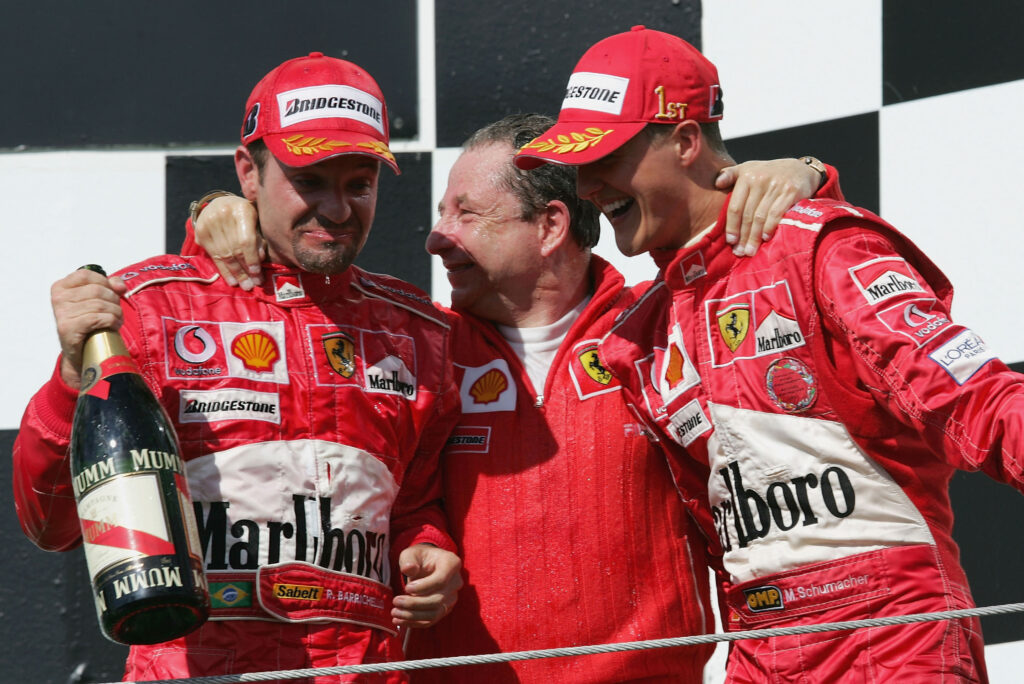
Michael Schumacher ‘changed the work ethic’ at Ferrari to achieve Formula 1 greatness
Steiner was speaking on The Red Flags Podcast after naming Schumacher as his fifth-favourite Formula 1 driver.
He said: “His persistence to work there and not taking the easy way out and say, I’ll go to a team which is winning.
“At the time, the world was at his feet. He wanted to make it happen at Ferrari.
“And I know people who worked with Michael, and they all tell me that when he came there, he changed the work ethic. It became a different Ferrari. It became different.
“I speak with these people, and they all, at Ferrari, the people who were there when he was there, they all love him.
| Grand Prix starts | 306 |
| Pole positions | 68 |
| Wins | 91 |
| Podiums | 155 |
| Fastest laps | 77 |
| Career points | 1566 |
| World championships | 7 (1994, 1995, 2000, 2001, 2002, 2003, 2004) |
“There is this love for Michael because they know what they owe him. He brought them back to success when they were obviously not seen as good. They were mediocre in racing and all that stuff.
“And then Michael came, and with hard work, he was the first one in the morning at the racetrack to motivate the others.
“He didn’t say to the other people, you need to be there at seven and then didn’t show up at nine. He was there before them to show them what they needed to do. And I think that made him this legend in racing.”
READ MORE: How Michael Schumacher won the fastest race in the history of Formula 1 at Ferrari’s home track
How Michael Schumacher won Formula 1’s most controversial race at the 2005 United States Grand Prix
The United States Grand Prix moved to the Circuit of the Americas in 2012, as F1 returned to the country for the first time in five years.
Schumacher finished 16th on his one and only race at COTA, with Hamilton taking victory.
However, one of the reasons F1 disappeared from America for so long was because of the 2005 United States GP.
| Grand Prix starts | 8 (7 @ Indianapolis, 1 @ COTA) |
| Pole positions | 4 |
| Wins | 5 |
| Podiums | 7 |
| Points | 62 |
Schumacher won from teammate Rubens Barrichello, which doesn’t sound surprising until you realise they were joined by Jordan’s Tiago Monteiro on the podium.
Only six cars started the race due to an issue with Michelin’s tyres, causing outrage in the crowd at Indianapolis and severely damaging F1’s reputation in the country.
Ross Brawn later admitted he had no sympathy for the teams who missed out, and Schumacher would win again at Indianapolis the following year, although it would be the final time he stood on the podium in the USA.
Receive exclusive F1 news and updates twice a week to your mailbox