Lando Norris
 McLaren
 Mercedes
 Red Bull
 Ferrari
 Williams
 Racing Bulls
 Aston Martin
 Haas
Haas Alpine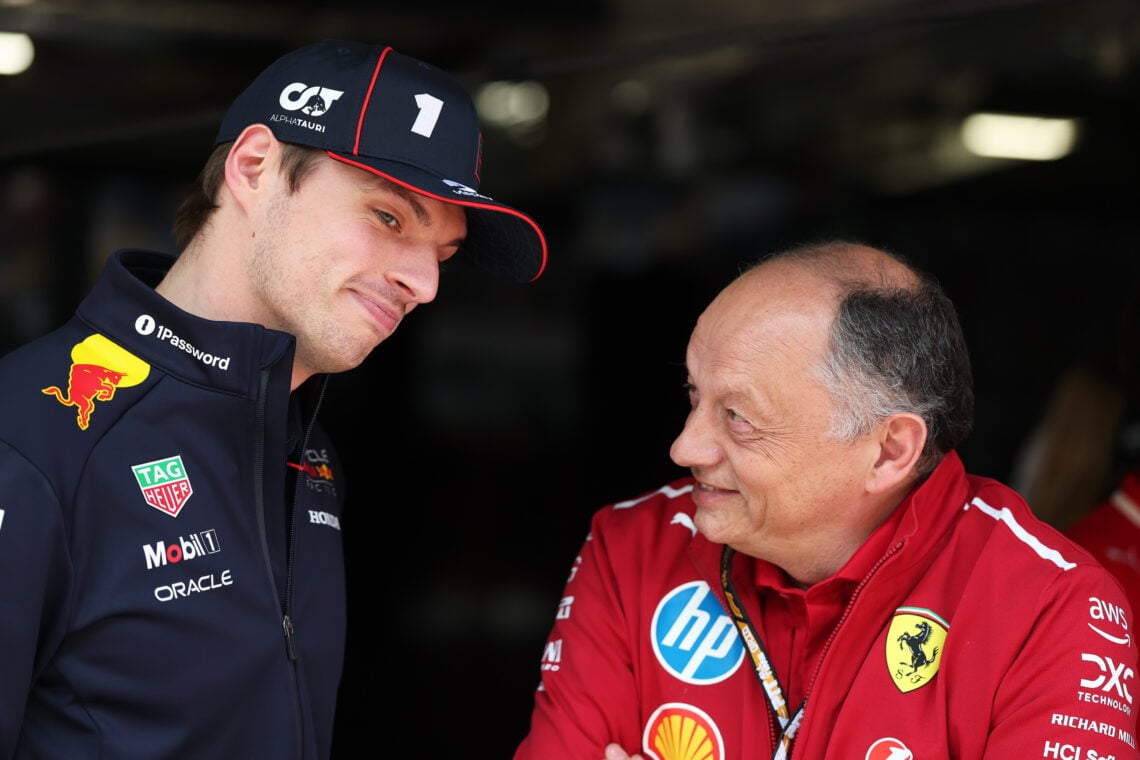


Ferrari found themselves in a difficult period of performance at the end of the 2025 season, one that Red Bull may also face at the beginning of F1’s new era of regulations in 2026.
After battling for second place in the constructors’ championship for most of the recently concluded F1 campaign, Ferrari slipped in the latter stages of the season and ended the year in fourth place.
The Scuderia’s final top-three finish of the season came at the Mexico City GP at the hands of Charles Leclerc.
The Monegasque’s seven podiums were far from the calibre of results that were necessary, and Lewis Hamilton’s first podium-less season of his career definitely didn’t help their cause either.
Team principal Fred Vasseur was ‘paranoid’ about starting the new regulations on the wrong foot and opted to switch the development focus of Ferrari engineers solely to the new rulebook well before their fellow rivals on track.
The decision may have been a masterstroke, with the Italian racing outfit now already holding an advantage over Red Bull because of it.
- READ MORE: Fred Vasseur warns Lewis Hamilton and Charles Leclerc what they must not do at Ferrari in 2026
F1’s 2026 regulations front wing design has drawn comparisons to cars from the 2000s
Let us know your favourite car from the 2000s, and why, in the comments!
Fred Vasseur outlines how difficult it was for Ferrari after switching development focus to 2026
In an interview with L’Equipe, the Scuderia chief answered several questions regarding Ferrari’s poor performance in the second half of the 2025 season and the reasons behind it.
Asked if engineers at Maranello could have spent the whole of 2025 on development of their 2026 challenger, the Frenchman said, “Not at first, because the changes we have to make to a car at the beginning are big changes.
“Especially with these new regulations that we are discovering. When we start, the new parts are large parts that also take time to manufacture.
“So, at the beginning of the year, we launched a 2026 project, and then we had time to look at the 2025 car.
“It’s only when we start to get a clearer picture of the new car that we can choose to spend all our time on it and forget about the current season.”
Vasseur was then asked if switching focus entirely to the new regulations was a difficult decision to make, to which he replied, “Of course, it’s not easy to tell the team and the drivers that we won’t have any new developments.
“We knew it was going to be tough, but I didn’t imagine it would be this tough. I hadn’t anticipated how difficult it would be, whether in Maranello, at the track or even for me personally. But don’t think that our car in the spring is the same as the one in Abu Dhabi.
“We didn’t work on the aerodynamics after our last parts arrived in Austria, but the SF-25 continued to evolve, with the suspension, the settings, the work on tyre heating and the flat bottom skid. It’s not as if we’ve been sitting idle.”
- READ MORE: Fred Vasseur ‘doesn’t have very long’ to fix Ferrari issues as F1 paddock exit rumours emerge
Fred Vasseur will not be team principal at Ferrari by the end of the 2026 season – prove us wrong
Comment below

Red Bull’s decision to continue upgrading their 2025 F1 car may come back to bite them next season
Vasseur’s admission about how difficult the switch to fully focus on the new 2026 F1 regulations was doesn’t bode well for Red Bull’s chances of having a competitive car at the start of next season.
The Milton Keynes-based racing team decided to continue to upgrade the RB21 well into the latter stages of the season so that Max Verstappen had a shot at a fifth consecutive drivers’ world title.
Red Bull’s decision sparked a ‘worrying’ theory in the F1 paddock over the calibre of F1 car that they were building for 2026.
There were already talks of the RB22 being sub-optimal, and the late switch in focus only fuelled the rumours that the Austrian constructor wouldn’t be battling among the frontrunners next season due to it.
The biggest difference for Red Bull heading into 2026 is the fact that they are producing their own engine for the very first time through their Red Bull Powertrains department.
Performance was already understood to be taking a hit next season because of teething issues, but the lack of prioritisation for the aerodynamic sides of things may throw another spanner in the works for them.
Receive exclusive F1 news and updates twice a week to your mailbox