

 Lando Norris
 McLaren
 Mercedes
 Red Bull
 Ferrari
 Williams
 Racing Bulls
 Aston Martin
 Haas
Haas Alpine


The 2026 Formula 1 season is going to see a brand new set of cars take to the grid as the ground-effect era comes to an end.
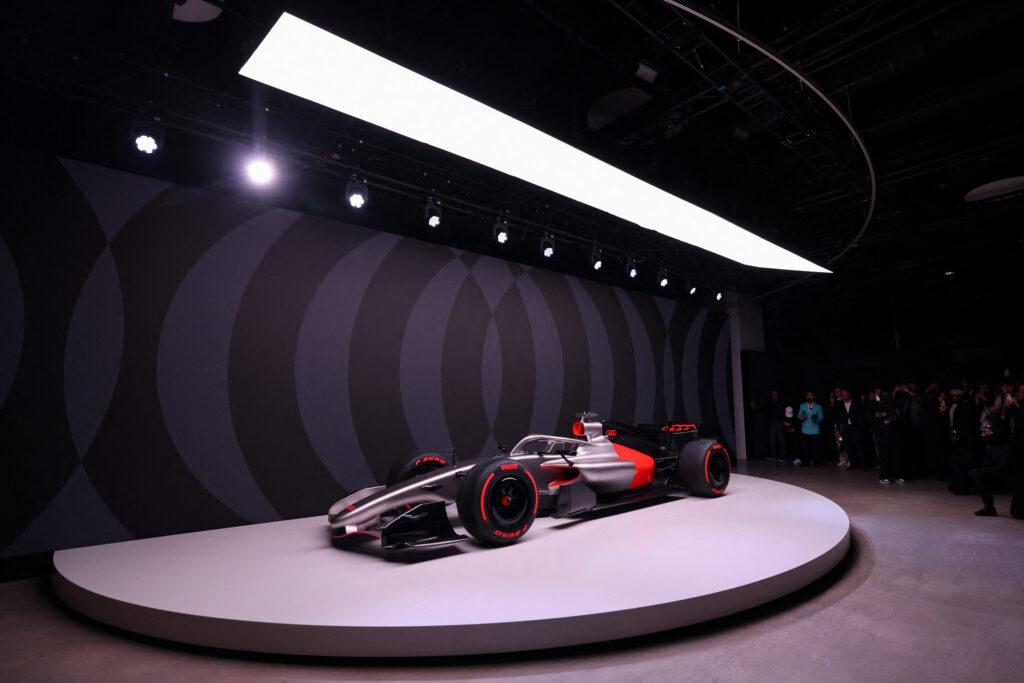
Audi gave fans a first glimpse of what the new era of Formula 1 cars will look like, but you can guarantee every team will be keeping plenty of their smartest innovations secret until the end of testing, or even the Australian Grand Prix.
A whole host of changes have been made to the 2026 regulations, meaning teams have had to design brand new cars with all-new power units.
The countdown is on — which 2026 challenger are you most excited to see? 👀

Red Bull and Audi are becoming engine suppliers for the first time, while the car’s aerodynamics are also going to be very different.
This includes the removal of DRS (drag reduction system) as we know it, and the introduction of a new boost system that is hoped will aid overtaking.
However, technical expert Matthew Somerfield has explained that one term that has surfaced since the announcement of the new aerodynamic system is already trying to be ditched by Formula 1.
READ MORE: Ferrari already plan to throw away two parts on Lewis Hamilton’s 2026 F1 car before the first race
Formula 1 don’t want people saying ‘straight line mode’ ahead of the 2026 season
Somerfield was speaking about the upcoming rule changes on the Missed Apex Podcast, and he explained: “OK, so think of what we had with flexi wings.
“If you want to have an idea of what’s going to happen with the front wings, they’re simply just going to back off, i.e. the flaps are going to drop, and that will reduce the drag and downforce on the front wing.
“On the rear wing, it’s very similar to DRS, albeit you can have up to three elements in the rear wing now rather than two.
“So, it’s very dissimilar to DRS in many ways [because it’s a passive system, rather than driver-activated].
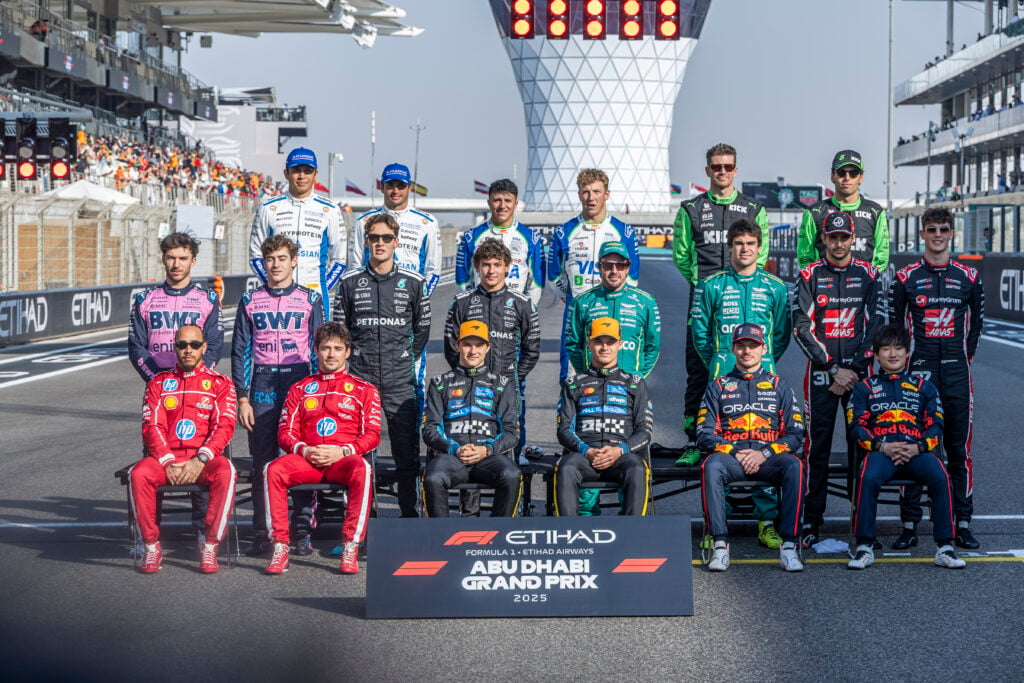
Which drivers can count themselves LUCKY to be on the 2026 F1 grid?
“But I also think that it’s important to remember that we’ve had both systems in place in different ways before in Formula 1.
“So, in 2009 and 2010, we actually had an adjustable front wing flap design that was pretty much useless, to be perfectly honest.
“It would have worked if we hadn’t had double diffusers. Double diffusers killed that design aspect. It would have allowed the drivers to have a balance shift on the car, essentially.
“I don’t think it was ultimately very powerful back then, but in line with also having the rear wing solution that we’re going to have this time around. I think it sort of helps in terms of rebalancing the car for both modes, let’s call them, straight line and cornering modes.
“Although Formula 1 wants to ditch that lexicon already.
“The advantage for me will come down to how much downforce can I generate when we’re in cornering mode and how much drag can I strip off the car when I’m in straight line mode?”
READ MORE: Red Bull think they’ve found the key for Max Verstappen to beat his rivals’ 2026 F1 engine dominance
How are Formula 1’s new aerodynamic changes going to work?
Next season’s cars are going to look slimmer and will be lighter than last year’s machines.
On top of this, both sets of wings will look different, including a new adjustable front wing.
This new ‘active aero’, as described in an explainer on F1’s official YouTube channel, will see cars in two different ‘modes’ during a lap.
Going into corners, flaps on both wings will shut to create downforce, but on higher speed areas of the track, these will open, similarly to DRS, to produce more acceleration.
This is also going to be available to every driver on every lap, as opposed to needing to be within a second of the car in front in the previous ruleset.
The confusion for fans about calling it ‘straight line mode’ as Somerfield described, if some drivers might choose to use the lower downforce set-up going through corners, and so a new term is going to be needed.
The new design is also hoped to discourage ‘outwashing’, which is when turbulent air disrupts the cars behind, making it difficult to follow and therefore gain a slipstream and overtake.
One of the most interesting aspects will be the ‘boost mode’ that any driver can use, provided their battery is charged, while an ‘overtake mode’ will replace DRS as it will only be available if a driver is within a second of the car in front.
The ‘overtake mode’ has a single detection point during a lap, but can then be used in various different sections of the circuit.
Receive exclusive F1 news and updates twice a week to your mailbox


