Lando Norris
 McLaren
 Mercedes
 Red Bull
 Ferrari
 Williams
 Racing Bulls
 Aston Martin
 Haas
Haas Alpine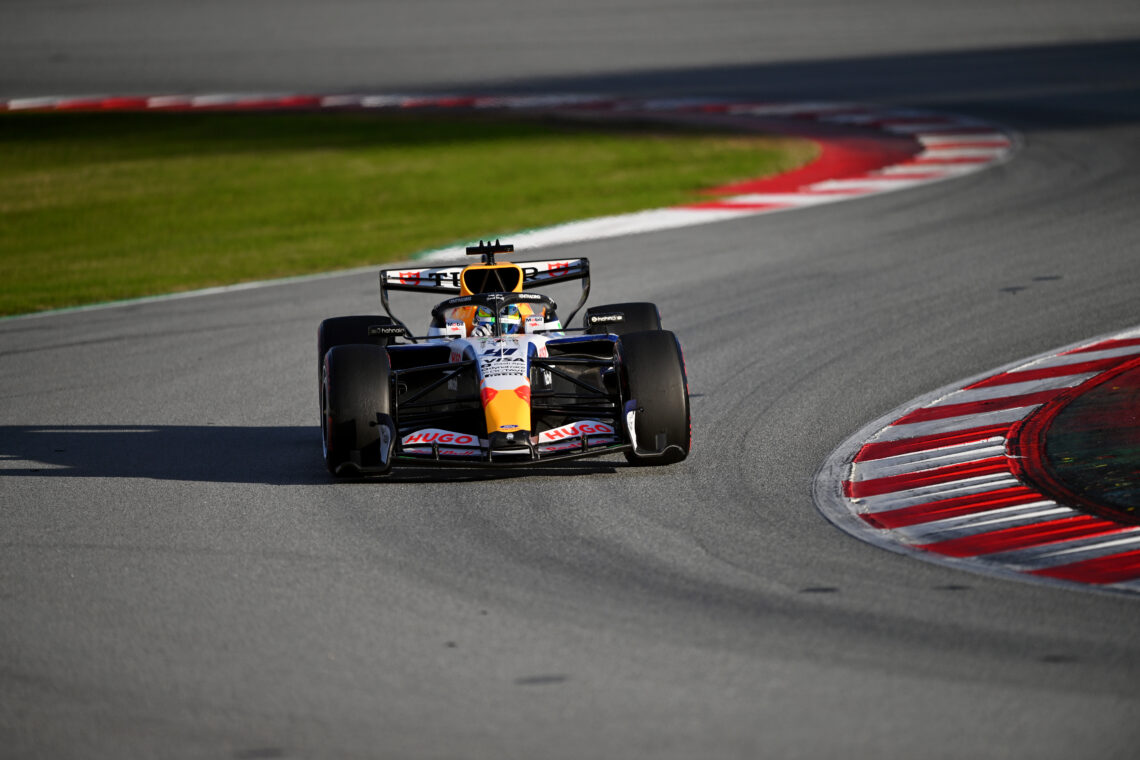

Formula 1’s 2026 regulation era has officially begun with a private test at the Circuit de Barcelona Catalunya.
Ten of the Formula 1 teams completed the first on-track running of the radically new cars, with several outfits, including Red Bull Racing and Audi, trialling brand-new power units for the first time.
Whilst the behind-closed-door shakedown offered little in the way of official performance data, unofficial information, combined with what the teams were willing to disclose, has already provided early clues about the reliability and readiness of the 2026 machinery.
Williams was the only team to miss the early shakedown, following reports that the FW48 had struggled to pass the FIA’s mandatory crash tests.
Midway through the Barcelona shakedown, team principal James Vowles confirmed that the team had fallen “a bit behind” in production, but revealed that the car had since passed the necessary tests and would be ready for the Bahrain test in two weeks’ time.
Here are five things we have learnt about the 2026 Barcelona shakedown.
Reliability shapes early order as Red Bull causes surprise
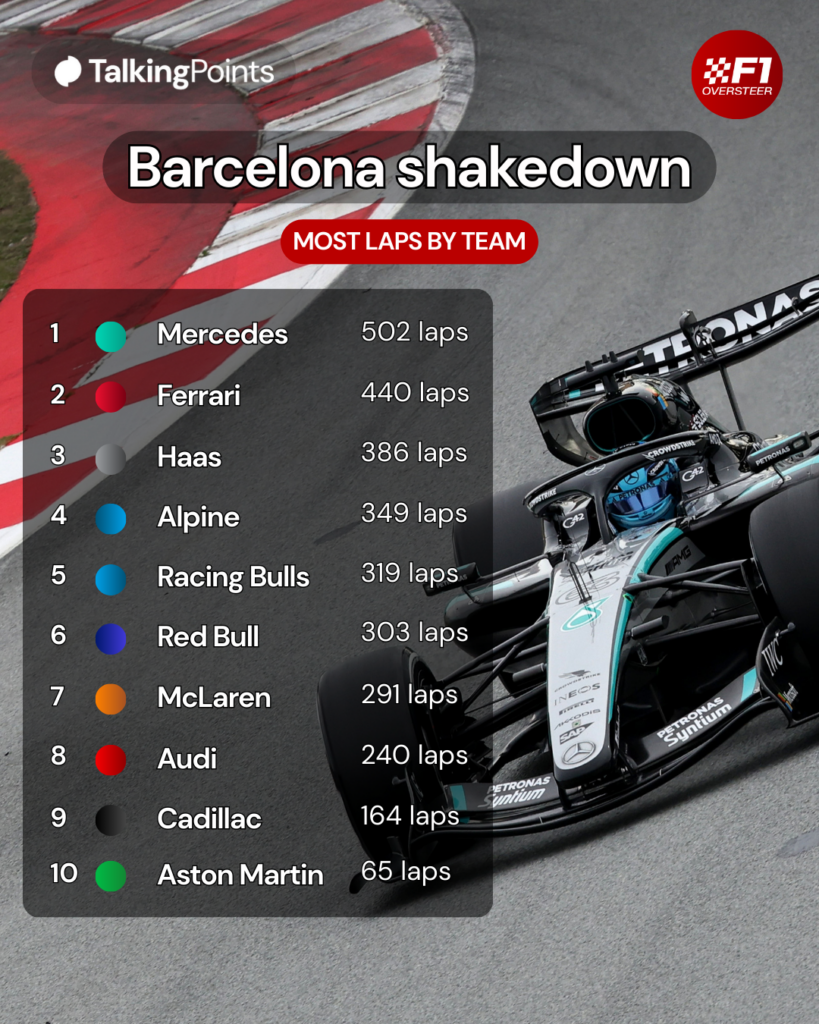
One of the most notable takeaways from the Barcelona shakedown was the significant amount of mileage some of the teams were able to complete.
Mercedes led the way with 502 laps of the Circuit de Barcelona-Catalunya, while Ferrari and Haas also ran consistently across their allotted days with minimal interruptions. It proved to be an impressive achievement given the scale of the technical overhaul for 2026.
The Red Bull-Ford Powertrains engine also stood out, completing a combined 622 laps across the Red Bull Racing and Racing Bulls Cars. Mercedes driver George Russell admitted he was impressed by the early reliability of the new Red Bull engine, noting that “a lot of people anticipated the new suppliers to struggle”.
While the primary focus is on Bahrain testing in mid-February, the Barcelona running demonstrated that several teams have already risen to the challenge posed by the new regulations.
Those able to complete long runs, with only minor hiccups, will begin the next test from a much stronger position than the teams such as Aston Martin, Cadillac and Audi, who are still working through early teething issues.
A crash for Red Bull’s Isack Hadjar on the second day of the Barcelona shakedown prevented the team from returning to the track until the final day of running. While the incident did not appear to cause any lasting issues, Red Bull was forced to fly spare parts in from Milton Keynes, delaying their return until Friday.
McLaren also encountered setbacks during the test, with a fuel system issue on their second day costing Oscar Piastri a valuable half-day of running. The team’s technical director for performance, Mark Temple, described the situation as a “shame” adding that the problem meant McLaren had “not been able to do all the running we would like.”
Barcelona shakedown complete ✅ Which team has surprised you the most? 👇
Mercedes’ early benchmark boosts 2026 reputation
Mercedes were already considered favourites heading into this season before even turning a wheel in Barcelona.
The Brackley-based team were the first out of the garage for the Barcelona shakedown and completed an impressive total of 2,325 kilometres across their allotted three days of running.
Despite not running on the final day of the shakedown, when conditions appeared most stable, Russell and Kimi Antonelli were still able to showcase the potential of the W17 E Performance.
The pair finished several sessions at the top of the unofficial timing charts, and although Mercedes did not take to the circuit on Friday, Russell still set the second-fastest lap of the entire test.
Russell spoke positively about the car after the final day, saying the team encountered “no major issues,” while stressing that the W17’s true performance would not become clear until official testing in Bahrain.
Leaked lap times offer intrigue, not answers
Unsurprisingly, unofficial lap times did emerge during the Barcelona shakedown despite the test being held behind closed doors.
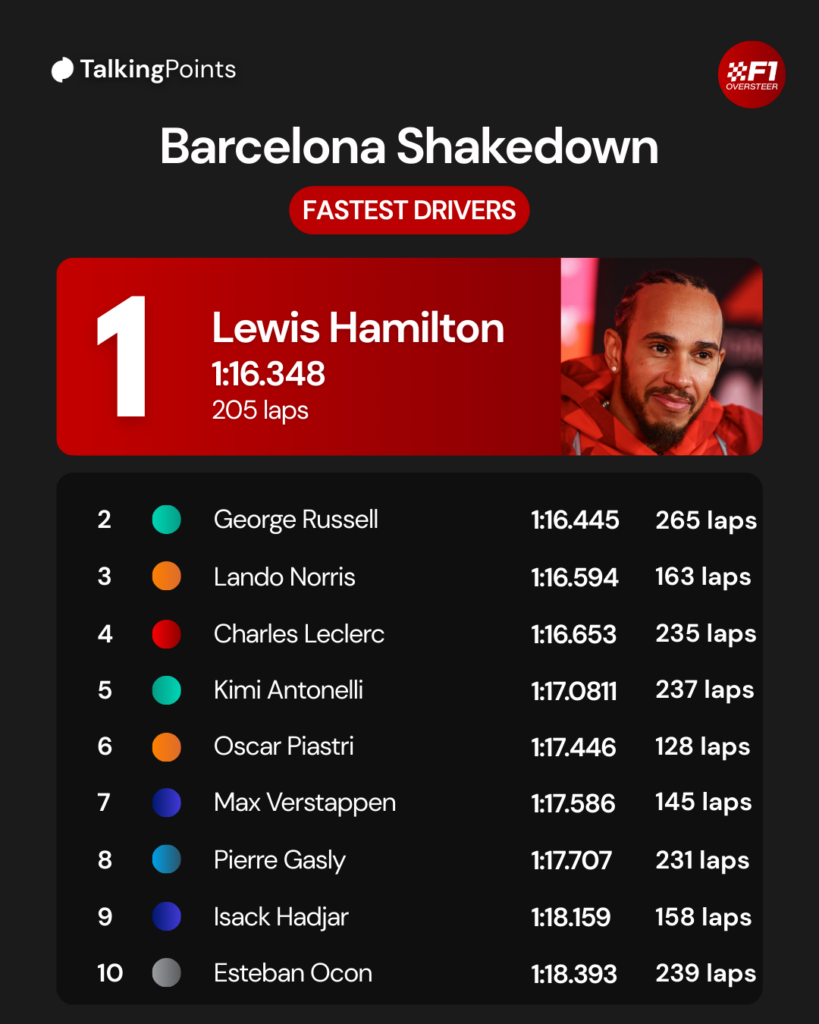
Lewis Hamilton set the fastest time of the week in his Ferrari SF-26, recording a 1:16.348 during the last half of Friday. Even before that late display of pace, Ferrari had remained close to the top of the unofficial order, with Charles Leclerc running just behind both Mercedes drivers on Day 4.
Hamilton praised the work of the Maranello-based squad, noting that this year’s pre-season programme already felt stronger compared to his debut with the team in 2025.
However, lap times offer little genuine insight at this stage, with teams prioritising reliability, whilst running vastly different programmes throughout the week to try and identify any niggles.
Several teams stressed the importance of completing test plans and identifying weaknesses rather than chasing headline lap times ahead of Bahrain. Ferrari team principal Fred Vasseur echoed that view, saying the team completed a “significant amount of running each day” and that it was “crucial at this stage to collect data and check reliability”.
Variable weather conditions, including rain on Tuesday, further influenced how the teams opted to run, whilst also providing valuable data for the two teams who chose to run in those conditions, Red Bull and Ferrari. The rain meant the teams were able to assess how their cars behaved in less predictable scenarios, although this was slightly marred for Red Bull when Hadjar crashed during the afternoon.
Lewis Hamilton led the way in Barcelona but the gaps were tight!
Who impressed you most in the shakedown? ⬇️
2026 cars represent a genuine reset for drivers
Feedback from the majority of those who ran in Barcelona underlined just how different the new generation of cars feels.
Lando Norris expressed excitement about learning how to drive McLaren’s MCL40, describing the car as “pretty different”. The 2025 world champion noted that it “always takes a bit of time to figure out the best way to look at it, to manage it, to use it,” while also highlighting that the car reaches “340, 350kph quite a bit quicker than we did in previous years”.
Valtteri Bottas, who returns to the grid with Cadillac in 2026, also pointed to the significant changes in driving characteristics. “They handle different” he explained, “there’s less load in the high-speed corners, but so much torque out of the corners. Then you have to manage the battery. It’s a big learning curve.”
While most drivers echoed the sentiments about the 2026 machinery representing a clear change, Hadjar offered a contrasting view. The Frenchman, who moved up to Red Bull’s main team in 2026, said the car “doesn’t really feel too different from before” adding that the RB22 “feels a bit more predictable than last year”
Attention settles on Adrian Newey’s maiden Aston Martin design
Aston Martin arrived in Barcelona on the back foot, with the team only landing in Spain late on Wednesday night for the private shakedown.
Aston Martin is understood to have encountered similar FIA crash-test issues to those faced by Williams, while other reports suggested its new engine partner, Honda, was not fully ready for the shakedown.
Sky Sports’ Martin Brundle suggested the delays may have been a result of Newey pushing the development “to the absolute limit”, speculating that deadlines had been deliberately stretched in order to maximise development time.
As a result, the Silverstone-based squad only managed meaningful running with the AMR26 on the final day, when Fernando Alonso took to the track. Lance Stroll had earlier provided the first glimpse of Adrian Newey’s debut Aston Martin design late on Thursday afternoon, completing just a handful of laps before breaking down on the circuit.
Despite its late appearance, the AMR26 immediately drew attention, with the radically different design compared to the rest of the field. Newey’s first car designed for Aston Martin appears to feature a distinctive interpretation of the 2026 regulations, including dramatic differences in sidepod architecture and the rear upper wishbone layout.
The car’s true potential remains unclear, however, with Aston Martin running a blue rear light throughout its limited mileage, we know that the AMR26 was operating below full power and at reduced speeds compared to its rivals.
Receive exclusive F1 news and updates twice a week to your mailbox