Lando Norris
 McLaren
 Mercedes
 Red Bull
 Ferrari
 Williams
 Racing Bulls
 Aston Martin
 Haas
Haas Alpine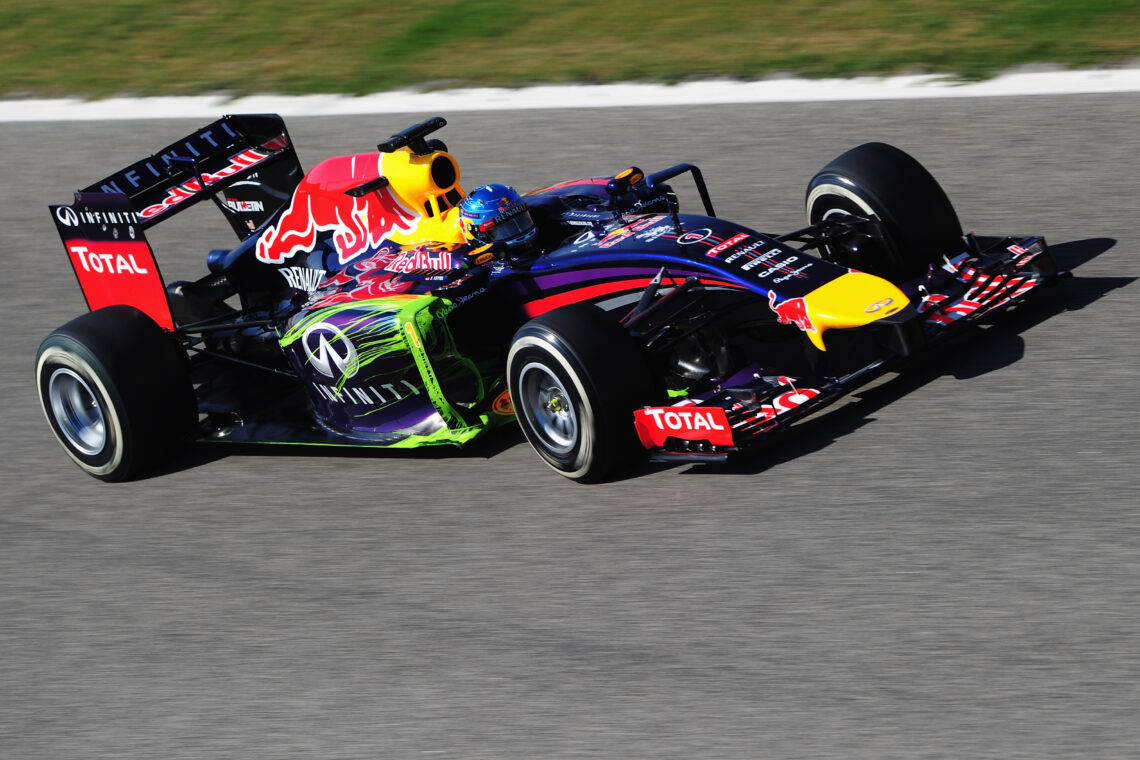


Formula 1 heads to Bahrain for two three-day pre-season tests ahead of the 2026 campaign, following a closed-door shakedown in Barcelona in January.
The Bahrain sessions will mark the first official opportunity to see the new generation of Formula 1 cars on track, after the private running in Spain where Lewis Hamilton topped the timesheets.
Williams were the only team to skip the Barcelona shakedown, with team principal James Vowles pointing to key “priority” issues the Grove-based outfit must address before heading to Bahrain.
With limited coverage of the first Bahrain test set to be broadcast, before full live coverage begins for the second week, here are some key things and words you need to know as pre-season testing gets underway.
Read More: How to watch F1 2026 pre-season testing in Bahrain including full schedule and live TV times
The 2026 F1 liveries are all locked in 🔥
Which team nailed it and which team REALLY missed? 👇
Why are F1 cars sprayed with paint during testing?
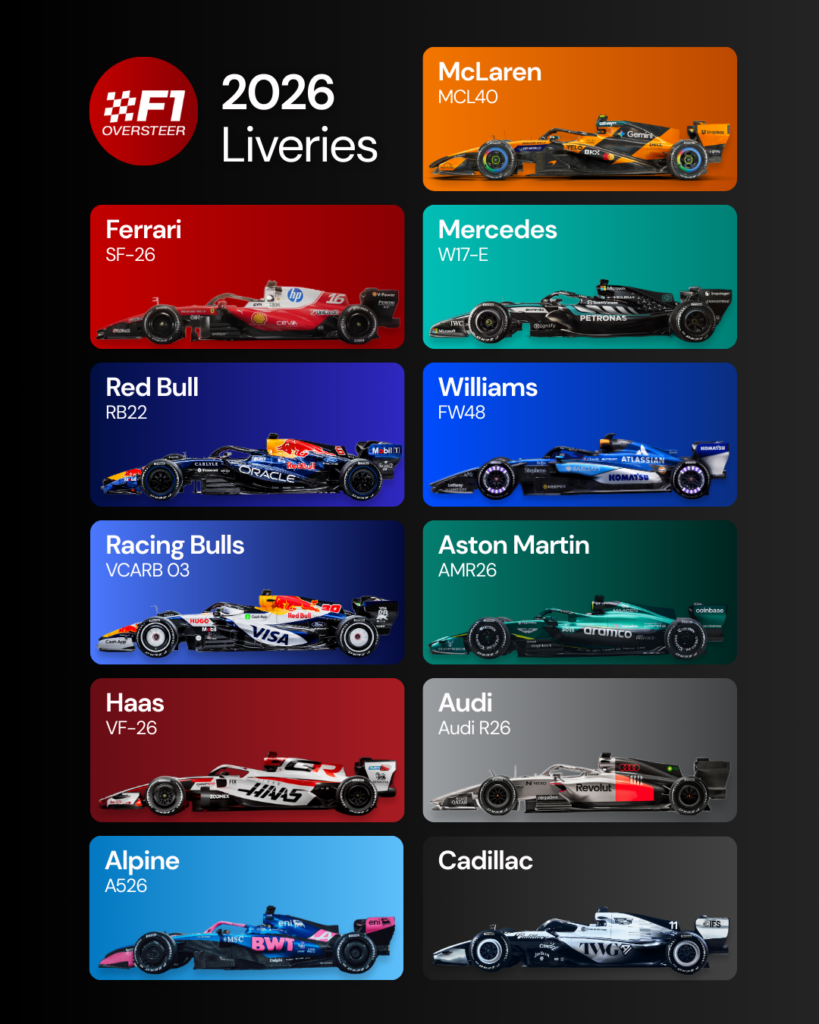
It is common to see Formula 1 teams coat their cars in a bright paint, known as flow-vis, during pre-season testing and, occasionally, practice sessions.
Flow-vis is created by mixing fluorescent powder with oil and is applied to specific areas of the car before it leaves the garage. While the paint is typically bright, neon green, some teams choose versions that are only visible under ultraviolet light to prevent rival teams from gleaning valuable information.
The purpose of flow-vis is to gather data on a car’s aerodynamic performance as it runs on track. As the car circulates, the paint is drawn across the bodywork by the airflow, gradually drying and leaving behind distinctive streaks.
These patterns reveal how air moves over the car’s surfaces, providing a clear visual representation of airflow direction and behaviour. Once the car returns to the garage, engineers photograph the dried paint before it is removed, allowing the data to be analysed in detail.
With wind-tunnel time heavily restricted since 2021, flow-vis has become an increasingly valuable tool for teams to assess real-world airflow and identify areas for aerodynamic improvement.
Former engineer Rob Smedley, who worked with Williams, Ferrari and Jordan, explained its value on Formula 1’s official website: “You paint it liberally on the car, the car then goes out and as it’s moving up to speed and going through a cornering condition, the paint dries as the light oil evaporates and you end up being able to visualise, very clearly, what sort of flow structures you’ve got.”
What is an aero rake and why are they used during F1 testing?
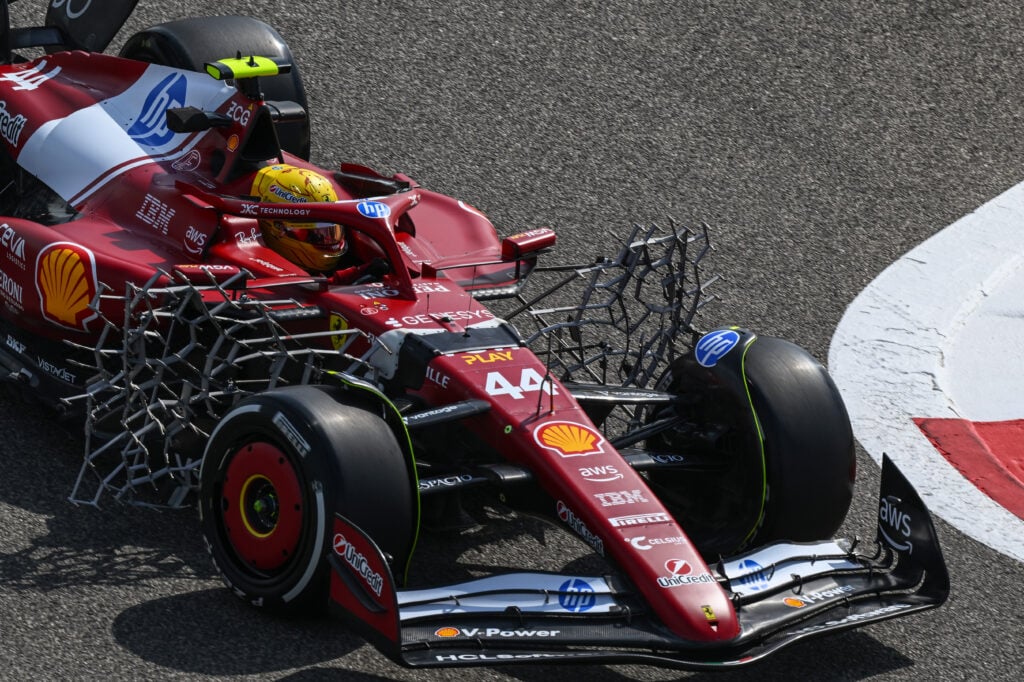
Formula 1 teams use aero rakes during testing to measure airflow around the car in greater detail. The structures resemble scaffolding and are fitted with sensors known as Kiel probes, which record airflow around key areas such as the front wing and wheels.
Data gathered on the track is then compared with results from wind tunnel testing and simulation runs to evaluate the aerodynamic performance of the car.
Aero rakes vary in size, with smaller versions often going unnoticed by fans. During testing, however, teams are more likely to run larger rakes, positioned near either the front or rear axles.
Engineers analyse how the fence-like structure reacts to airflow, using the measurements to calculate factors such as air pressure and velocity in order to refine the car’s aerodynamic setup.
What is sandbagging and why is it used in F1 testing?
Sandbagging refers to the practice of Formula 1 teams deliberately disguising their true performance during testing, ensuring their full pace is not revealed until the opening race of the season.
Teams may do this to avoid drawing attention to a particularly competitive car or to prevent rivals from closely studying specific successful components that could be copied.
While the term is metaphorical, sandbagging typically involves running heavier fuel loads to produce slower lap times, or even instructing drivers to lift off at certain points on the circuit.
Opinions within the sport remain divided. Former engineer, Smedley, told F1’s official site: “I don’t think people actively sandbag. Because frankly, what’s the point?”
However, ex-Renault driver Jolyon Palmer offered a contrasting view, stating: “Everyone’s doing it in Formula 1. It’s just a question of how much you sandbag.”
What is a glory run and why do we see them in F1 testing?
In contrast to sandbagging, a glory run occurs when a team, often one that typically sits lower in the constructors’ standings, suddenly appears near the top or even at the top of the timing sheets during testing.
These headline-producing times are usually achieved by running on a low fuel load and the softest tyre compounds, creating the lightest possible car and allowing for optimal single-lap performance.
Glory runs often take place while leading teams are focused on long runs or experimental set-ups, which usually result in slower lap times, whereas the midfield or backmarker teams may choose to simulate qualifying conditions.
This was evident in pre-season testing in 2025, when Carlos Sainz placed the Williams FW47 at the top of the timesheets ahead of Lewis Hamilton and Charles Leclerc in their Ferraris. While the result was not necessarily representative of Williams’ overall performance, Sainz went on to secure two podium finishes for the team during the season.
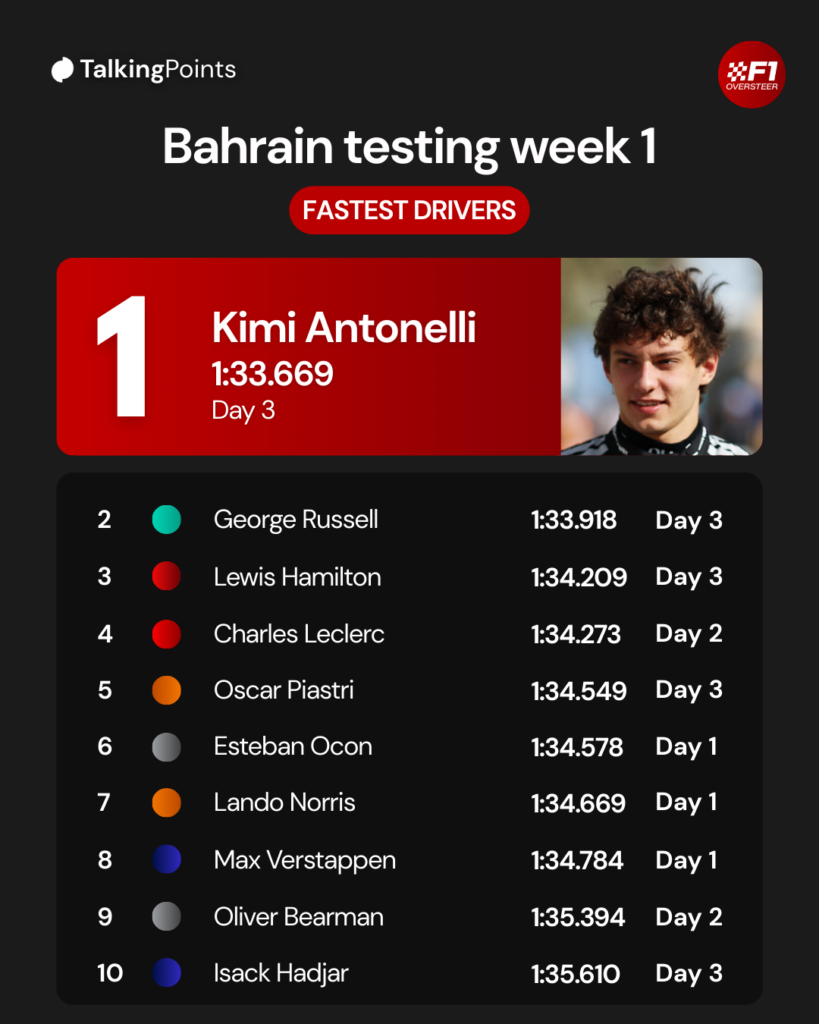
Kimi Antonelli made a serious statement on Day 3 at the first 2026 Bahrain test – Who looks strongest heading into Round 1?
How are installation laps used during F1 testing?
Installation laps are most commonly seen at the start of a testing session and are used to confirm that a car is functioning correctly.
During an installation lap, the driver will leave the garage and circulate at a controlled pace, avoiding full performance runs before peeling back in to the pits. The aim here is not speed, but verification.
These laps allow teams to check that all the critical systems, including the throttle, brakes and electronics, are operating as intended before more demanding running begins.
Installation laps are not exclusive to testing and are also used during race weekends, with drivers often completing one or two gentle laps before lining up on the grid for the grand prix, to ensure everything is working as expected.
Receive exclusive F1 news and updates twice a week to your mailbox