Lando Norris
 McLaren
 Mercedes
 Red Bull
 Ferrari
 Williams
 Racing Bulls
 Aston Martin
 Haas
Haas Alpine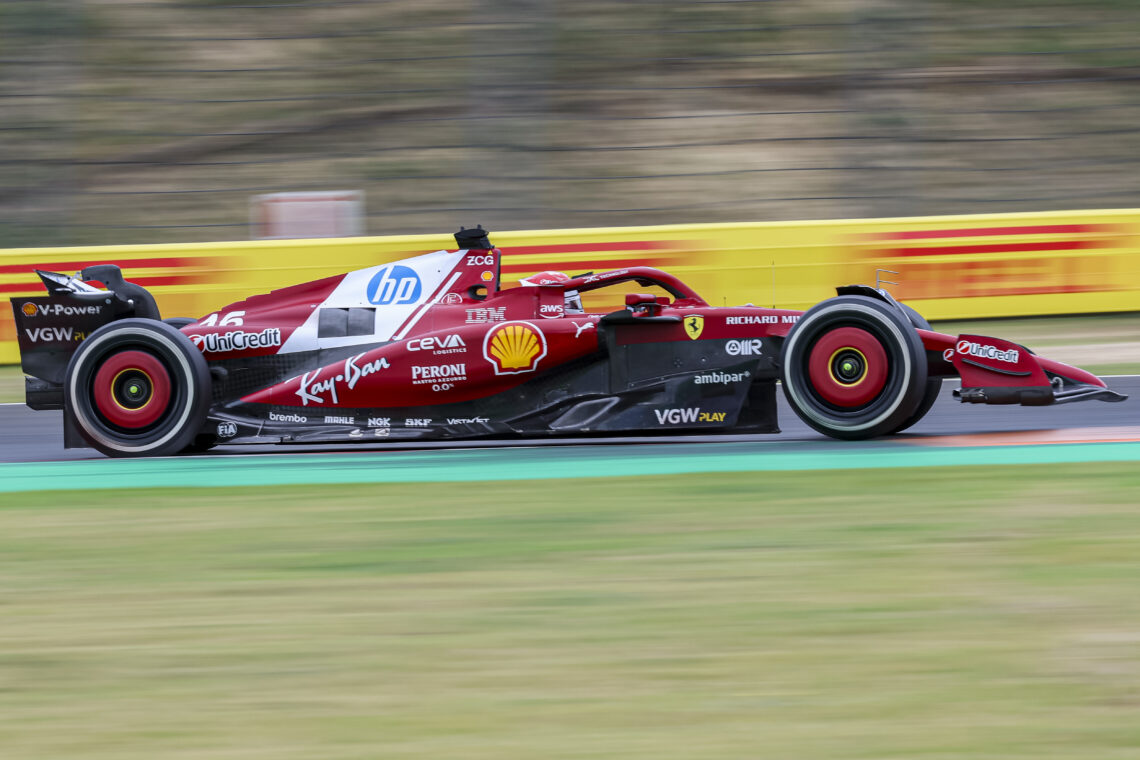


Ferrari might have already snagged a small advantage heading into next season’s Formula 1 regulation changes.
Formula 1’s ruleset is being overhauled in 2026, with a host of changes coming.
New power units are being introduced, brand new aerodynamic regulations have been developed, and even the tyres Pirelli will bring to each circuit are going to be different.
Although a 2026 spec car hasn’t appeared on track yet, each team has been helping Pirelli test their new compounds, with tyres set to be 25 mm narrower on the front axle, and 30 mm narrower on the rear axle.
| Position | Constructors' Standings | Points |
| 1 | McLaren Racing | 617 |
| 2 | Scuderia Ferrari | 280 |
| 3 | Mercedes-AMG Petronas | 260 |
| 4 | Red Bull Racing | 239 |
| 5 | Williams F1 Team | 86 |
| 6 | Aston Martin F1 Team | 62 |
| 7 | Racing Bulls | 61 |
| 8 | Stake F1 Team Kick Sauber | 55 |
| 9 | Haas F1 Team | 44 |
| 10 | Alpine F1 Team | 20 |
Ferrari took part in a Pirelli tyre test after the Hungarian Grand Prix alongside Alpine.
Fans reacted to Franco Colapinto crashing during his test, piling more pressure on the young Argentinian.
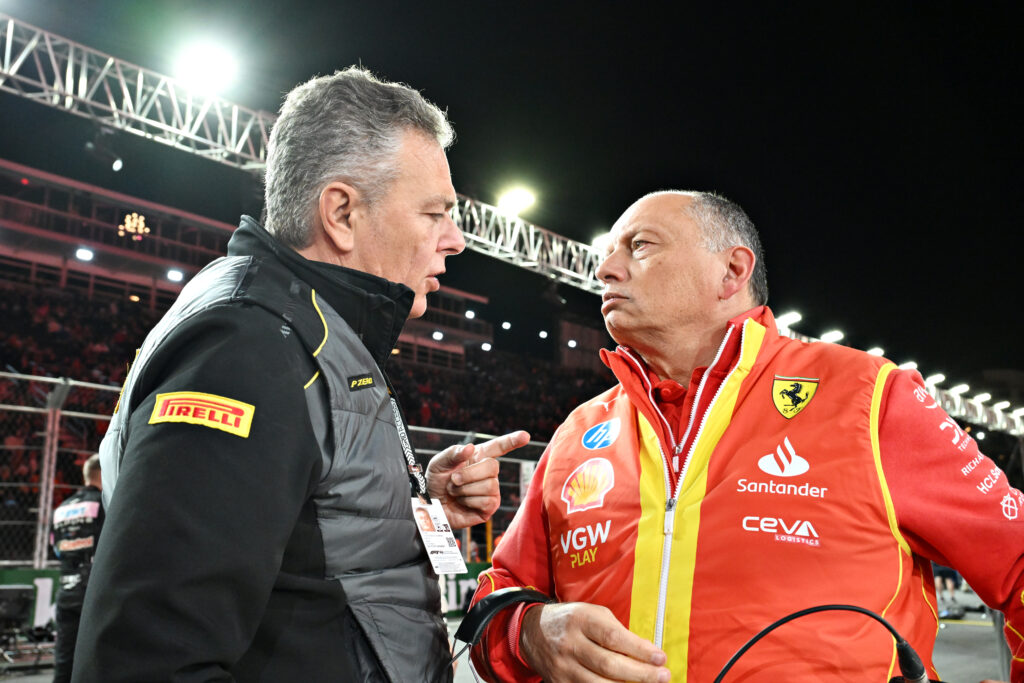
Head of Pirelli Motorsport, Mario Isola, has now spoken about that test at the Hungaroring.
He’s pointed out how useful it was in terms of the development of next year’s tyres, but also why Ferrari might have benefited when it comes to the development of their 2026 car.
Ferrari benefited from ‘extremely useful’ 2026 Pirelli test in understanding next year’s aerodynamics
In an interview with Formula Passion, Isola was talking about last month’s outing.
He explained: “There are still differences among the teams regarding what they expect in 2026.
“However, this is fairly inevitable; it has always been this way. It was the case with the 18-inch tyres in 2022 and with the wide tyres in 2017; it’s not a surprise. The most difficult part for us is understanding how the active aerodynamics will work.
“After the publication of the FIA technical directive that allowed teams to develop a system simulating a mobile front wing, some teams modified their spare cars to use it.
“We used it with Ferrari in Budapest, and it was extremely useful. It gave us an idea of the load variation at the front and rear when the device was deployed.
-
to
Azerbaijan Grand Prix
-
1st Practice
-
2nd Practice
-
3rd Practice
-
1st Qualifying
-
2nd Qualifying
-
3rd Qualifying
-
Race
-
“What was interesting for us was being able to create a bridge between the spare car with the classic DRS at the rear and the one that also had it at the front, so we could draw parallels with all the previous tests.”
Ferrari have question marks over their 2026 power unit, which is expected to be vitally important to how competitive they are next year.
However, if they can better understand the aerodynamic demands of next year’s car compared to their rivals, then they might have less to worry about.
READ MORE: Everything you need to know about Scuderia Ferrari from team principal to factory
Pirelli chief suggests ‘higher’ loads from tyres in 2026 which could encourage more pit stops
Isola went on to talk about how the tyres might react differently to next year’s cars, and what they’re doing behind the scenes to try and create a set of competitive compounds.
He explained the challenges they’re facing and said: “We’re primarily interested in understanding the expected top speeds, which will likely be higher, but with lower load than now.
“In the end, it’s always a question of the combination of speed and load, because if you have an extremely fast car with a high load, it stresses the tyres a lot.
| TEAM | ENGINE |
| Red Bull | Red Bull Powertrains (in partnership with Ford) |
| Ferrari | Ferrari |
| McLaren | Mercedes |
| Mercedes | Mercedes |
| Aston Martin | Honda |
| Racing Bulls | Red Bull Powertrains (in partnership with Ford) |
| Haas | Ferrari |
| Williams | Mercedes |
| Alpine | Mercedes |
| Audi | Audi |
| Cadillac | Ferrari |
“[In 2026] the speeds [on the straights] will be higher, but with lower loads, as we expect. In the corners, however, we’ll probably have distances and loads comparable to those now.”
If more load is going through the tyres, that could encourage more wear and therefore more pit stops.
The last thing F1 needs is for Pirelli to create another range of tyres that allow for constant one-stop strategies.
However, the cars are unlikely to be as close as they are today, and Formula 1 might not need pit stops to make the racing more exciting.
Receive exclusive F1 news and updates twice a week to your mailbox