Lando Norris
 McLaren
 Mercedes
 Red Bull
 Ferrari
 Williams
 Racing Bulls
 Aston Martin
 Haas
Haas Alpine


The FIA’s proposal to close a loophole in the 2026 F1 regulations that rival teams think Mercedes exploited with their new engine might not be Ferrari’s only political victory.
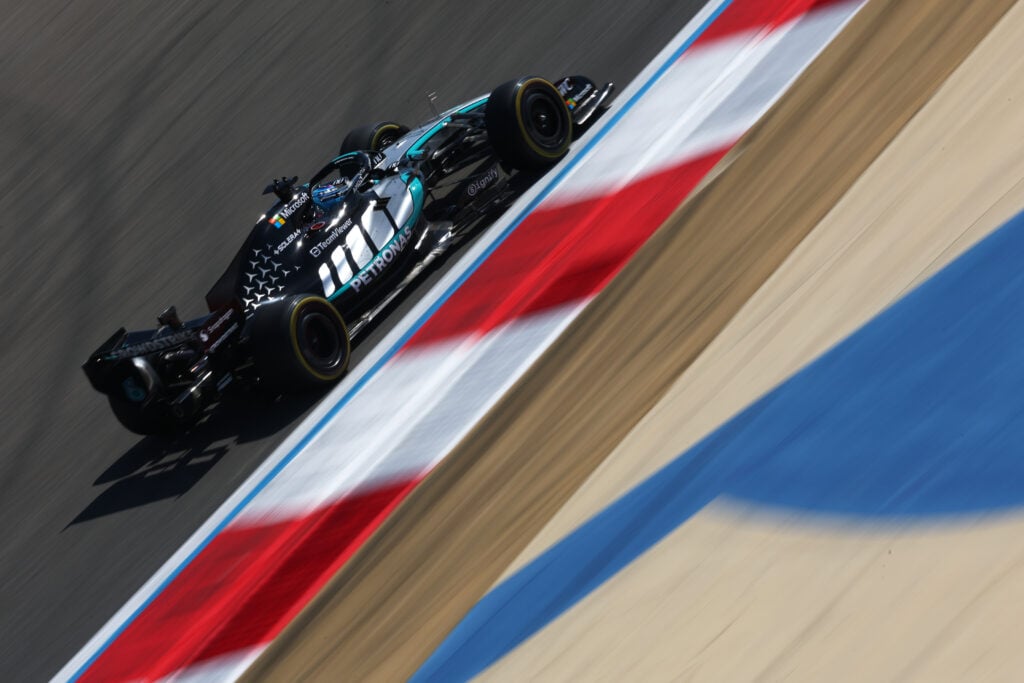
Ferrari had urged the FIA to investigate Mercedes’ engine, as the Scuderia, Audi and Honda have long feared that the Silver Arrows can increase their rate of compression from 16:1 to 18:1 during operation. F1 had lowered the threshold to 16:1 as part of the new regulations.
The FIA repeatedly cleared Mercedes’ 2026 F1 engine ahead of the new rules cycle starting, as their V6 engine passes the checks carried out in ambient conditions as stated in the rules. But the FIA has proposed changes to F1’s 2026 engine regulations to test in hot conditions.
Following discussions with the F1 engine manufacturers in Bahrain on Wednesday, the FIA is holding a formal vote to also introduce extra compression rate tests taken at 130°C. The new engine tests will come into effect from August 1, if ratified by the World Motorsport Council.
George Russell starts Week 2 at the 2026 F1 Bahrain test on top! But what stood out the most?

The FIA has yet to rule on any Mercedes engine changes counting towards their 2026 F1 cost cap
As Ferrari are one of the main teams that opposed Mercedes’ alleged use of the loophole in the 2026 F1 regulations, the FIA’s proposed additional engine tests would mark a ‘significant political victory’ for the Scuderia. And it might also not be the only victory that Ferrari enjoy.
READ MORE: Everything you need to know about F1’s 2026 engine and aero regulations
According to Gazzetta dello Sport, Ferrari would ‘especially’ celebrate if the FIA decides that any changes that Mercedes ultimately have to make to ensure their V6 internal combustion engine (ICE) clears the new compression rate test count towards their cost cap calculations.
The FIA has not yet ruled on whether Mercedes, or any other team that would currently fail a compression rate test under hot conditions, would have to include any additional research and development (R&D) costs in their eventual budget calculations for the 2026 F1 season.
The cost cap has been increased from £122m to £159m for the 2026 F1 season
George Russell starts Week 2 at the 2026 F1 Bahrain test on top! But what stood out the most?
Formula 1 introduced the cost cap in 2021 to control the amount that teams spent on their cars over any given season. It was initially decided that the cost cap would be set at $175m (£129m) before the Covid-19 pandemic, after which it was set at $145m (£107m) for 2021.
F1 also lowered the cost cap to $135m (£100m) in 2023, but the figure increases by $1.8m (£1.3m) for every additional race over a 21-round calendar. The Athletic also notes that F1 set the cost cap at circa $165m (£122m) in 2024 to account for inflation and other factors.
But as the 2026 regulations are the biggest regulatory overhaul in history, the cost cap is set at $215m (£159m) to allow for the additional engine, chassis and aero R&D costs. Mercedes may hope that the FIA allows any further changes to their engine to fall outside the cost cap.
Currently, the only aspects that F1 allows teams to omit from their cost cap calculations are driver wages, the wages of the top three highest-paid staff members, travel costs, marketing and hospitality expenses, entry and licence fees and employee bonuses and sick leave pay.
Receive exclusive F1 news and updates twice a week to your mailbox