Lando Norris
 McLaren
 Mercedes
 Red Bull
 Ferrari
 Williams
 Racing Bulls
 Aston Martin
 Haas
Haas Alpine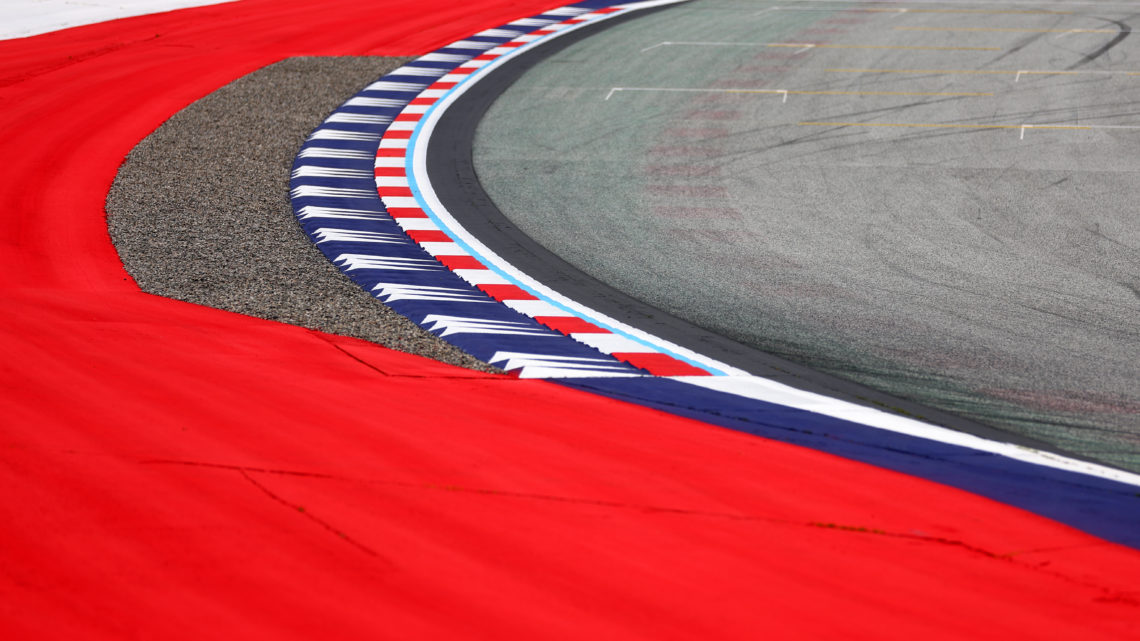


The Red Bull Ring will feature an important track limits deterrent for drivers after last year’s race saw well over 1,000 instances reported to the FIA stewards.
The FIA stewards were busy post-race when they investigated several drivers for track limit abuse and handed out 12 penalties to eight of them. Esteban Ocon racked up 30 seconds worth of penalties across four reprimands, setting the record for most penalties incurred during a Grand Prix.
The amount of track limit warnings issued by Race Control prompted widespread criticism among drivers and teams, with various factories contributing including tyre fatigue and the nature of the undulating circuit.
Several drivers also went unpenalised due to an “unprecidented situation” according to the stewards, which prevented them from investigating all track limits infringements.
READ MORE: History of the Austrian Grand Prix including all winners and controversial moments
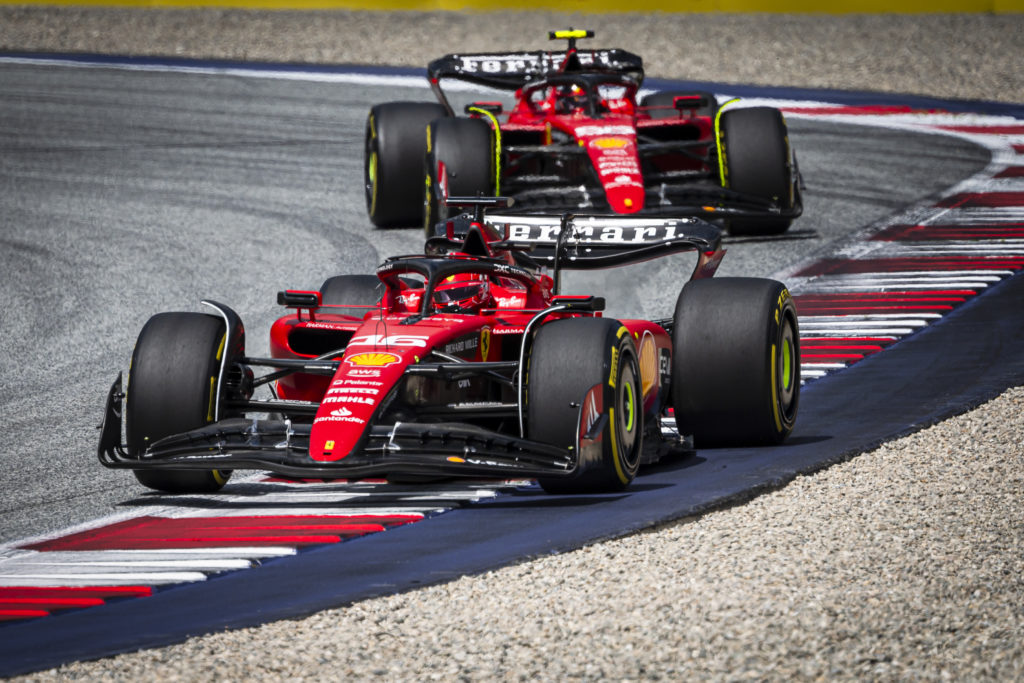
Charles Leclerc weighs in on the Austrian GP track changes
A change to the 2.6-mile Red Bull Ring has been made between Turns 9 and 10 with strips of gravel introduced to prevent drivers running wide and potentially outside of the white lines.
These white lines define the track edge and drivers must keep all four wheels within them or they risk having lap times deleted and a potential penalty.
Leclerc was asked whether the changes will make a difference in the drivers’ press conference ahead of the race weekend.
“It’s interesting, I’ve seen pictures. These two corners were quite tricky already before the gravel trap that we have now in those corners in Turn 9 and 10,” said Leclerc.
“But I guess that now it is pretty clear where the track limit is and we won’t have this type of problem anymore.”
FIA explain track limits ‘problem’ at Austrian GP hotspot
Coming up with a fix was not easy according to FIA Race Director Niels Wittich. In China they introduced a one-meter kerb to go with gravel on the exit of a corner, which worked as an effective deterrent for the two-meter wide cars.
However, the width of the kerbs at the Red Bull Ring is two meters, which meant it was too short to take away the kerbs and add gravel behind.
Instead, there is another solution being implemented by the FIA according to Wittich: “We have a slightly different solution, which is to artificially shorten the width of the kerb by moving the white line on the kerb, as the first part of the kerb is almost flat.
“What you’ll see is that white line on the kerb has moved and now there a light blue line behind just to make it easy for the marshals, for the guys at the Remote Operations Centre (ROC) and for us in Race Control to identify when a driver’s over the limit, because then you have the white line, the light blue line, black tyre – there a clear visual difference.”
The blue line was used at the last race in Barcelona at Turns 5, 9, 12, and 13 which acts as an easy way to spot whether a driver is off the track or not. If it proves to be successful, the FIA hopes it can utilise this solution where necessary at other track limits intensive circuits.
Receive exclusive F1 news and updates twice a week to your mailbox