Lando Norris
 McLaren
 Mercedes
 Red Bull
 Ferrari
 Williams
 Racing Bulls
 Aston Martin
 Haas
Haas Alpine

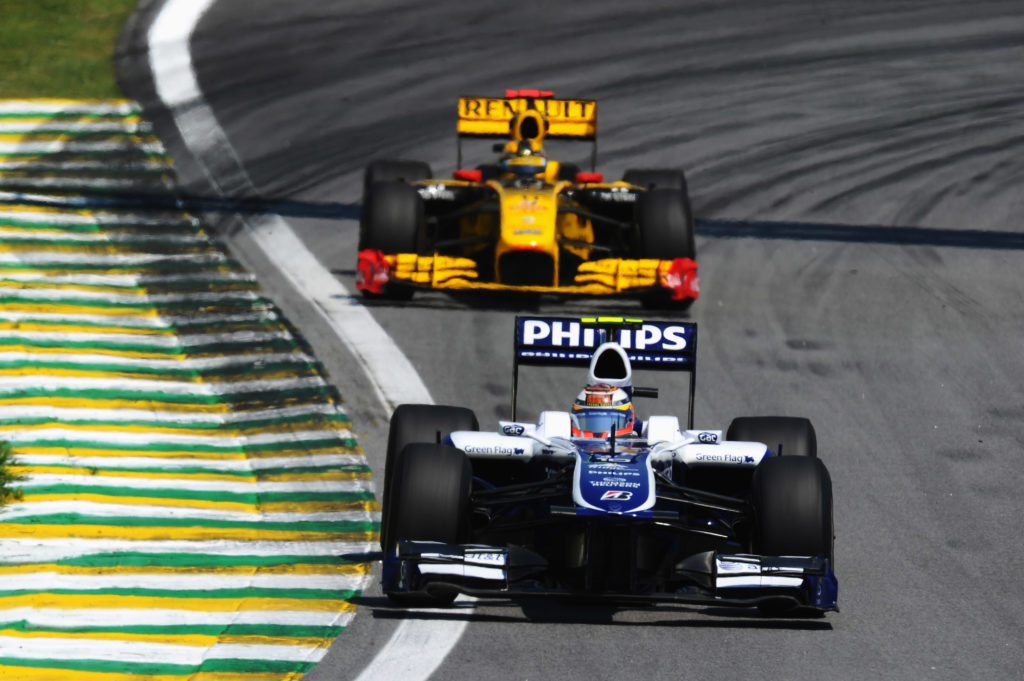
It will be the first time since the 2010 season that F1 has welcomed six rookie drivers to the grid.
It was a unique year because there were an additional three teams that joined the grid, with many of the 2010 alumni now going on to have different careers.
Teams have already kickstarted their plans for the 2025 season with private tests for their drivers, with Oliver Bearman getting his first outing with Haas in an older-spec car at Jerez.
Most recently, Sauber’s Gabriel Bortoleto and Racing Bull’s Isack Hadjar took to Imola for their first tests with their respective teams. Andrea Kimi Antonelli also had an outing in a 2021 Mercedes recently, having also run throughout last year.
This type of preparation not only gets them used to driving an F1 car, as they can be very different to junior formula cars and simulators but enables them to get a feel for what it will be like working with their engineering team on a race weekend.
Only Nico Hulkenberg went on to survive beyond more than three seasons in F1 out of the crop that made their debut in 2010, so will we have the same scenario in 2025?
The differences between 2010 and 2025
The main difference between now and 2010 is the current state of economic affairs in F1.
Back in 2010 there was no cost cap and pay drivers, which is drivers who bring a significant amount of financial backing either through personal wealth or sponsors, were a regular occurrence.
Vitaly Petrov brought significant backing from Russian sponsors, while this was also the case for Bruno Senna and Lucas Di Grassi. Although this does not reflect their talent on the track, it does put into context how teams were often siding with the highest bidder rather than those who had raw speed.
The three teams that joined F1 in 2010; HRT, Lotus, and Virgin Racing, were promised that a cost cap would be introduced by the governing body. It was only later that teams struggled to come to an agreement on how to implement it.
The idea was shelved and with it all three of those teams folded by the end of the 2016 season. It was only in 2017 when Liberty Media took over the rights from CVC that CEO Chase Carey brokered a deal with teams to implement a cost cap by 2021.
With the cost cap coinciding with F1’s boom worldwide, it means teams can be more selective on the talent they put behind the wheel.
Who will be under pressure the most?
Mercedes has been keen not to overhype Kimi Antonelli through fears that he could need more time either in a team further down the grid or in junior formulas.
The Italian was fast-tracked to F1 by Toto Wolff who believes he is the next Max Verstappen, having failed to sign the Dutchman in 2014. His first outing in the car at Monza might have ended in disaster, but Antonelli showed all the qualities that justify why Mercedes rate him so highly.
He has big shoes to fill replacing Lewis Hamilton, and if George Russell’s first season is anything to go by they will be expecting him to be fighting for the top positions if the car is capable.
This will be the case for Liam Lawson, who will be expected to plug up all the problems that Sergio Perez created at Red Bull. It’s unclear whether the team has fixed the problems that plagued their RB20 last season, but they appeared optimistic after a strong weekend in Qatar.
Lawson has the mental strength to go up against Verstappen, but the results on track will be the key decider for Red Bull on whether they think he is the future.
Hadjar has a tough job replacing Lawson at Racing Bulls, given Red Bull’s track record of ousting underperforming rookie drivers (Alex Albon and Pierre Gasly).
The Frenchman was impressed with his consistency at the recent Imola test, although footage from the day did show he made a mistake on one of his runs. Hadjar will have pressure from F2 rookie Arvid Lindblad, while also needing to prove that he can be a team leader if Yuki Tsunoda jumps ship at the end of the season.
Jack Doohan’s time at Alpine looks like it will be borrowed before he’s even started after Flavio Briatore signed Franco Colapinto to their test/reserve driver roster.
He probably has six races at best to prove he is the right man for the job, but it won’t be easy when the consensus is that the team didn’t want him in the car in the first place. Alpine has another Jolyon Palmer situation on its hands at the start of 2025, and you wonder how long they’ll delay the inevitable.
Both Bearman and Bortoleto seem like safe bets for the future, given the Briton impressed already in his three outings last year and the Brazilian has been picked to spearhead Audi’s first season in F1 alongside Nico Hulkenberg.
A crash-ridden season for either might lead to second thoughts, although Haas team principal Ayao Komatsu has been full of praise for Bearman, who is seen as the next big driver for Ferrari post-Hamilton.
Receive exclusive F1 news and updates twice a week to your mailbox