Lando Norris
 McLaren
 Mercedes
 Red Bull
 Ferrari
 Williams
 Racing Bulls
 Aston Martin
 Haas
Haas Alpine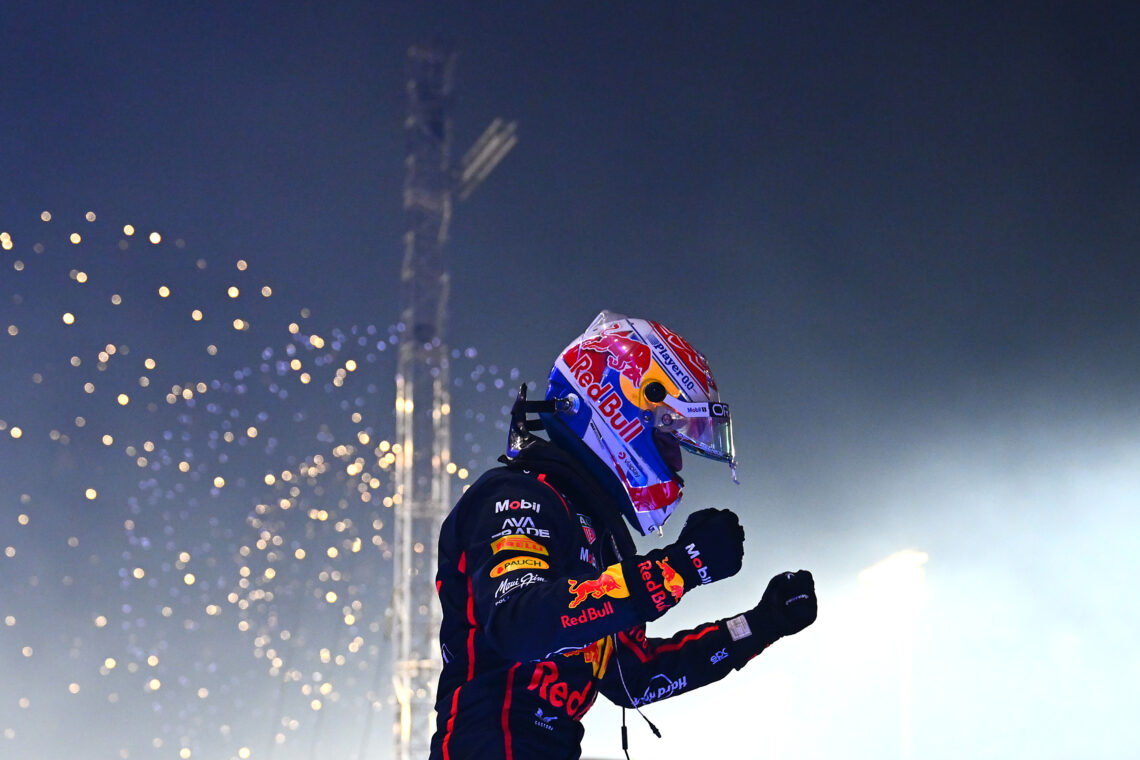


The debate on Max Verstappen’s standing in the list of the greatest ever Formula 1 drivers will never subside, but when comparing his stats from the first 10 years of his career, he certainly has a strong argument for one of the top spots.
Max Verstappen’s performance in the second half of the 2025 campaign gave the Dutchman even more ammunition to make a claim for the title of the best Formula 1 driver ever.
However, given that it was his 11th season in the sport, it holds no weight when comparing it to the first 10 seasons of his fellow legends.
Luckily for the Red Bull star, his best season yet came in 2023, where he managed an incredible 19 Grand Prix victories and 21 total podiums from 22 races.
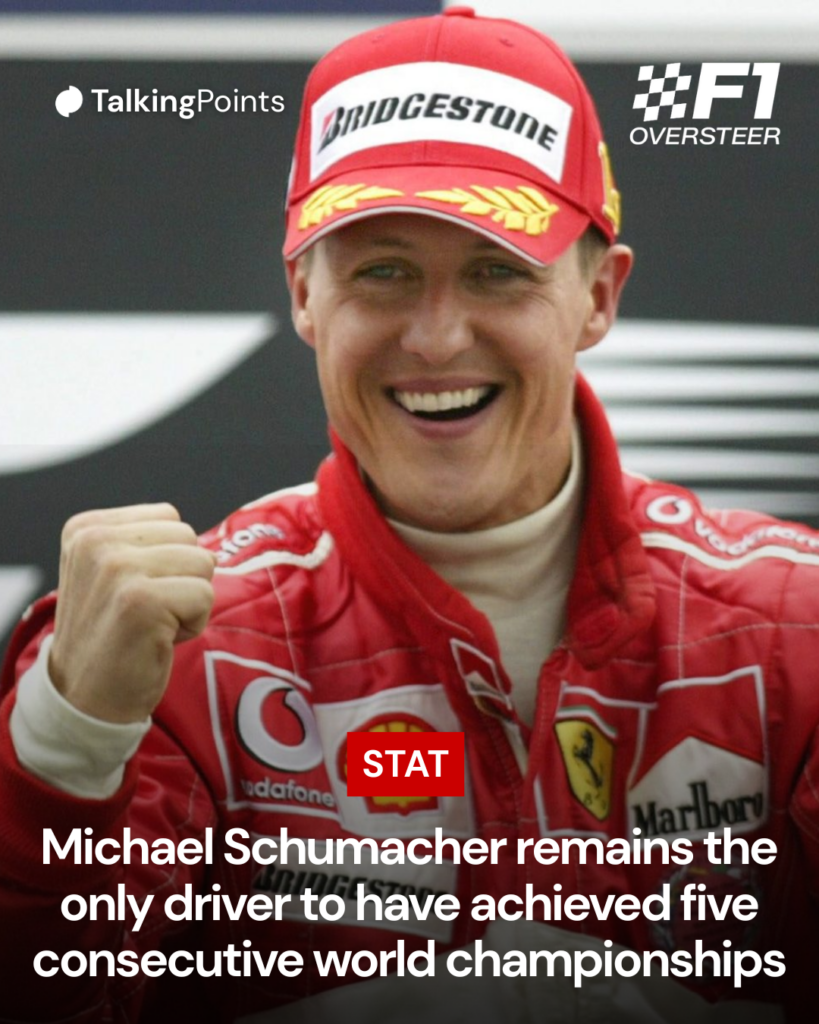
It’s hailed as the most dominant season ever, surpassing Michael Schumacher’s previous win percentage record from his title-winning campaign in 2002, where the German driver finished every single race on the podium.
- READ MORE: Ralf Schumacher makes Max Verstappen comparison when naming Michael Schumacher’s ‘greatest strength’
Niki Lauda knew talent when he saw it. Did Mercedes make a mistake not signing Max Verstappen?

How Max Verstappen’s first 10 years in F1 compare to Michael Schumacher’s
The statistical comparison between Verstappen and Schumacher highlights a rather close resemblance.
In his first decade, Verstappen competed in 209 races, significantly more than Schumacher’s 145 starts due to the obvious logistical differences in F1’s calendar nowadays.
The added volume of entries allowed Verstappen to amass a total of 63 wins, dwarfing the German legend’s 44. Despite this, their win percentages remain remarkably similar at roughly 30%.
One discrepancy in Schumacher’s early statistics is his late arrival in the sport. Unlike Verstappen, who debuted at the 2015 season opener with Toro Rosso, Schumacher missed the first ten races of 1991.
Reliability also played a massive role in their respective podium rates. Schumacher’s era of motorsports was plagued by mechanical failures, and the six races he missed in 1999 due to a broken leg also don’t help his stats.
However, Schumacher maintained a 55.17% podium rate over the course of the 10 years, proving that he was almost always in the hunt when the car held together.
Verstappen, on the other hand, held a percentage of 53.59%, even though he secured 32 more top-three finishes than the Ferrari legend.
The 28-year-old’s dominance from 2022 to 2024 represents the most concentrated period of success in F1 history. By taking four titles in his first ten years, he slightly edges Schumacher’s three in the same period of time.
Arguably, Schumacher did have a more difficult task of rebuilding a fractured Ferrari team, whereas Verstappen grew within a stable Red Bull environment, benefiting from the developments that those who came before him had made.
In the qualifying head-to-head, a more noticeable edge is revealed in favour of the German legend. Schumacher secured 32 poles (22.07%), and whilst the Dutchman’s 40 poles (19.14%) are impressive, the percentages don’t lie.
- READ MORE: Max Verstappen attracts Lewis Hamilton comparison after ‘suddenly’ mounting Red Bull title charge
Do you think another driver will ever be able to match Schumacher’s feat?
How Lewis Hamilton’s first 10 years in F1 compare to Max Verstappen’s
Comparing Verstappen to Lewis Hamilton’s first ten years reveals two different paths, both leading to their standings as two of F1’s greatest drivers.
Hamilton entered the sport in 2007 with a front-running McLaren, while Verstappen spent a formative year-and-a-half in the midfield with Toro Rosso (now Racing Bulls).
This gave the Brit an immediate statistical boost that Verstappen had to make up for later down the line.
Hamilton’s qualifying record is the standout metric here. With 61 poles in his first 188 races, his 32.45% pole rate dwarfs Verstappen’s 19.14%, as well as Schumacher’s 22.07%.
In terms of race wins, Verstappen’s recent dominance with Red Bull has allowed him to leapfrog Hamilton’s early totals.
The Dutchman ended his tenth year with a total of 63 wins, while the current Ferrari driver stood at 53 after his tenth season in 2016.
The podium percentages for both are the closest metric between the two current drivers, with Hamilton’s 55.32% edging out Verstappen’s 53.59%.
A major discrepancy in their careers often centres around their teammates. Hamilton spent his first decade fighting against champions like Fernando Alonso, Jenson Button, and Nico Rosberg in equal machinery.
Whereas Verstappen, while facing tough teammates like Ricciardo, has largely been the undisputed lead driver at Red Bull for the overwhelming majority of his tenure at the team.
By the end of their tenth years, Verstappen held four titles to Hamilton’s three. However, 2016 marked the beginning of Hamilton’s most dominant era, much like 2021 did for the Red Bull star.
Receive exclusive F1 news and updates twice a week to your mailbox