Lando Norris
 McLaren
 Mercedes
 Red Bull
 Ferrari
 Williams
 Racing Bulls
 Aston Martin
 Haas
Haas Alpine


The 10 Formula 1 teams on the grid are highly trained operations, and the bigger outfits in the field, such as Mercedes, employ more than 1,000 people.
Considerable efforts have been made in recent years to level the playing field, such as a cost cap that was introduced to keep the 10 teams working with the same maximum budget.
This has allowed the racing on the circuit to be more competitive, while teams such as McLaren have escaped the midfield to battle at the front.
Some teams, such as Haas who joined the grid in 2016, have competed in Formula 1 with a unique approach, collaborating with Dallara and Ferrari.
F1 is in a very different place than in previous years as all of the teams aren’t struggling financially, and privateer teams are less common than before.
A trio of teams on the grid are significantly smaller than the rest of the field but occasionally fight against bigger outfits.
Haas, Sauber and Williams have the fewest personnel on the Formula 1 grid
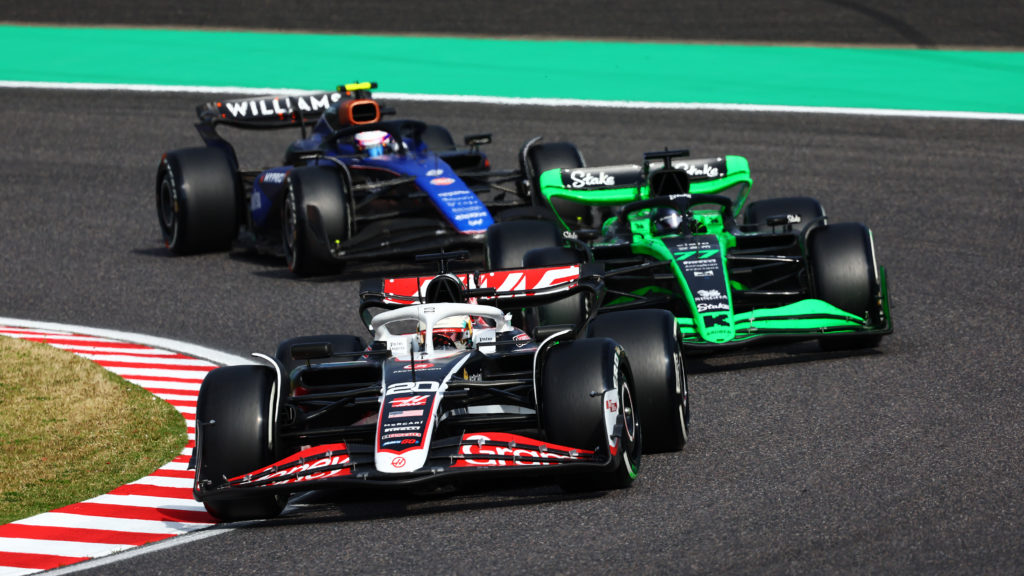
Haas are the smallest team on the Formula 1 grid, employing just 129 people according to motorsinside, which is significantly less than the top teams who employ more than 1,000 people.
The American team joined the grid in 2016, with Romain Grosjean and Mexican driver Esteban Gutierrez driving for the team.
They have been in the midfield for much of their time in Formula 1 but did have moments of brilliance in 2018, when they challenged in the top five at some races.
Their team principal, Ayao Komatsu, oversees the team’s development and also led Haas in an unprecedented recruitment push during 2024.
He said in August 2024, via quotes by Motorsport.com: “Now, even though we are on a huge recruitment [drive] that we’ve never seen before in the history of Haas F1 Team, we haven’t actually got those people on board yet, so we are largely still the same size.”
READ MORE: Where are the top 10 from Pastor Maldonado’s only F1 win now?
Sauber have had a storied history, but their current guise is failing to deliver results ahead of becoming the works Audi entry in 2026.
The Swiss team will be taken over by Audi after the German manufacturer secured 100% control of Sauber in March 2024, and this could boost the team’s fortunes with extra backing and being a works team.
Audi joining the grid will be a big boost for F1 and according to their LinkedIn page, they are already hiring a significant number of people ahead of their debut to increase the reported 201-500 employees currently working at Sauber.
Williams have suffered a slump in recent years, rooted to the back of the field. The British team used to be very successful, and last won the world championship with Jacques Villeneuve in 1997.
They still employ around a reported 974 people, according to Pitchbook, but haven’t won a race since 2012 when Pastor Maldonado took a memorable victory at the Spanish Grand Prix.
Haas, Williams and Sauber have had differing levels of success in Formula 1
The three teams have had varying levels of success in Formula 1 as only Williams have won the world championship.
Williams have won multiple Drivers’ Championships and were a consistent frontrunner in the 1980s and 1990s. They were very successful and won back-to-back championships in 1996 and 1997 with Damon Hill and Villeneuve.
They missed a chance to win the championship in 2003 with Juan Pablo Montoya while they were collaborating with German manufacturer BMW.
Haas have had a very different history in Formula 1, only making its debut in 2016 towards the early part of the turbo hybrid era.
The American team ran well at some races in 2018 and were on target to score points at the Australian Grand Prix before two consecutive errors in pit stops, causing a double non-finish.
Sauber initially joined Formula 1 in 1993 and have been a team using many different names since their firs season in the championship.
They were taken over by BMW in 2006 and steadily built a sharp racing team that finished second in the Constructors’ Championship a year later after McLaren were excluded.
The team also won the Canadian Grand Prix in 2008, but as BMW Sauber’s target of winning a Grand Prix had been achieved, they switched their focus to 2009.
Sauber suffered financially in the mid-2010s as they floundered at the back of the field, but they have helped develop successful talent such as Charles Leclerc.
Receive exclusive F1 news and updates twice a week to your mailbox