Lando Norris
 McLaren
 Mercedes
 Red Bull
 Ferrari
 Williams
 Racing Bulls
 Aston Martin
 Haas
Haas Alpine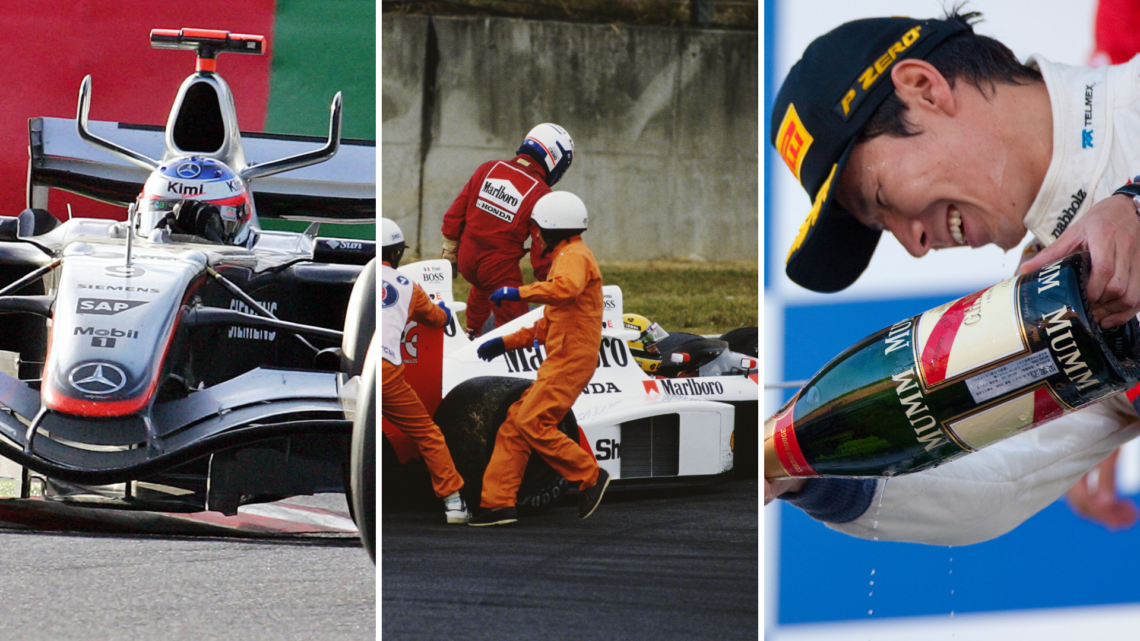


Suzuka has produced many iconic occasions since it first held an F1 race in 1987, so here are five of the best moments from the Japanese Grand Prix over the years.
The Suzuka Circuit is the only figure-of-eight track on the Formula 1 calendar, and it has been the stage for the Japanese GP between 1987 and 2006, 2009 to 2019 and 2022 to present.
F1 had to abandon plans to stage the Japanese GP in 2020 and 2021 due to local restrictions owing to the Covid-19 pandemic.
F1 also initially held the Japanese GP at the Fuji Speedway in 1976 and 1977, as well as during the 2007 and 2008 seasons.
But since Suzuka’s debut race, the Japanese GP has been a mainstay on the calendar. And since the race was usually held towards the end of the season, Suzuka has often been the scene of controversy as well as F1 title deciders over the years.
Ayrton Senna and Alain Prost collided in the 1989 F1 title showdown in Japan

One of the most controversial moments in the storied history of the F1 Japanese GP occurred in 1989, when championship rivals Ayrton Senna and Alain Prost collided while battling for the title.
It was the first major incident between Senna and Prost while they were teammates at McLaren, after the Brazilian attempted to send his car up the Frenchman’s inside at the penultimate corner.
The two cars collided, and Prost was out on the spot while Senna initially continued with a bit of help from the marshals and by cutting the chicane.
Senna crossed the line in first place, but he was later disqualified by the FIA stewards for rejoining the track illegally and thus for failing to complete the full race distance.
The Brazilian felt it was a conspiracy from then-FIA president Jean Marie Balstre to favour fellow Frenchman Prost, as the decision automatically handed the 1989 title to him.
Ayrton Senna and Alain Prost collided again in the 1990 F1 title showdown at Suzuka
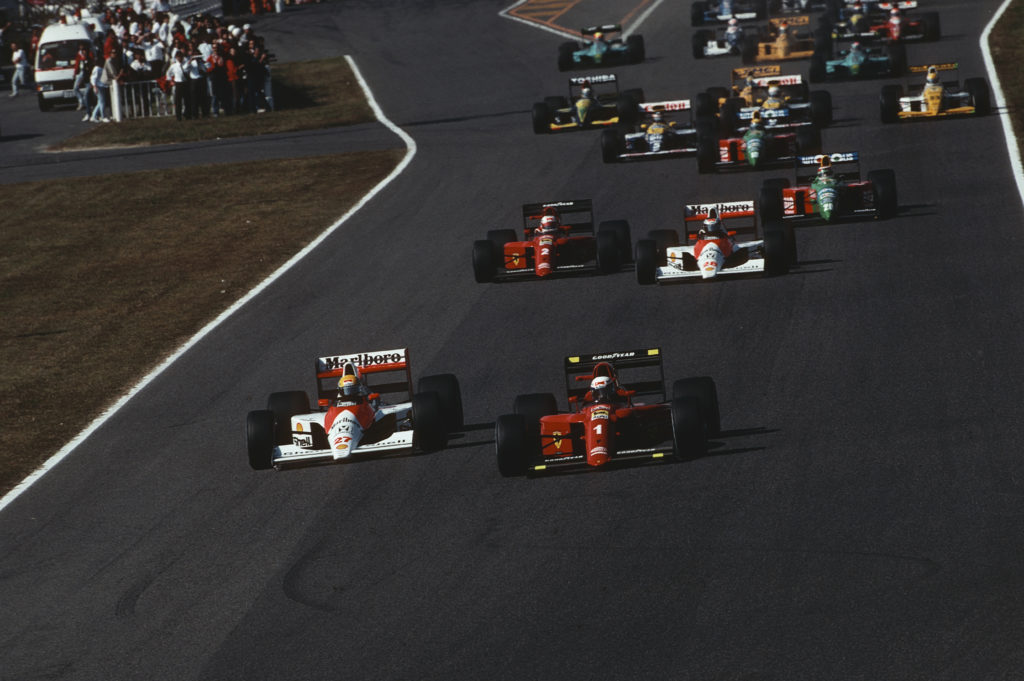
Senna would get his revenge on Prost for how the 1989 F1 title was decided the following year at Suzuka, with the Japanese GP again setting the stage for the championship decider.
Prost had left McLaren and joined Ferrari for the 1990 season, and he was once again in a title showdown with Senna by the time that F1 returned to Japan.
The penultimate race of the 1990 season was at Suzuka, where Senna entered with a points advantage and could clinch the title if Prost failed to finish.
But after he scored pole position, Senna complained to the race officials that he was starting on the wrong side of the grid. He argued that all the debris and discarded rubber would leave him at a disadvantage off the line, unlike Prost starting from P2.
The stewards did not change the starting positions, and Senna duly lost out to Prost off the line as he feared. So, heading into the first corner, Senna attempted a move up the inside but collided with his championship rival, taking them both out on the spot.
Senna would controversially be crowned the champion of the 1990 season, in what many fans felt was redemption (and revenge) for what had happened in Japan in 1989.
Kimi Raikkonen produced an overtaking masterclass in the 2005 Japanese GP
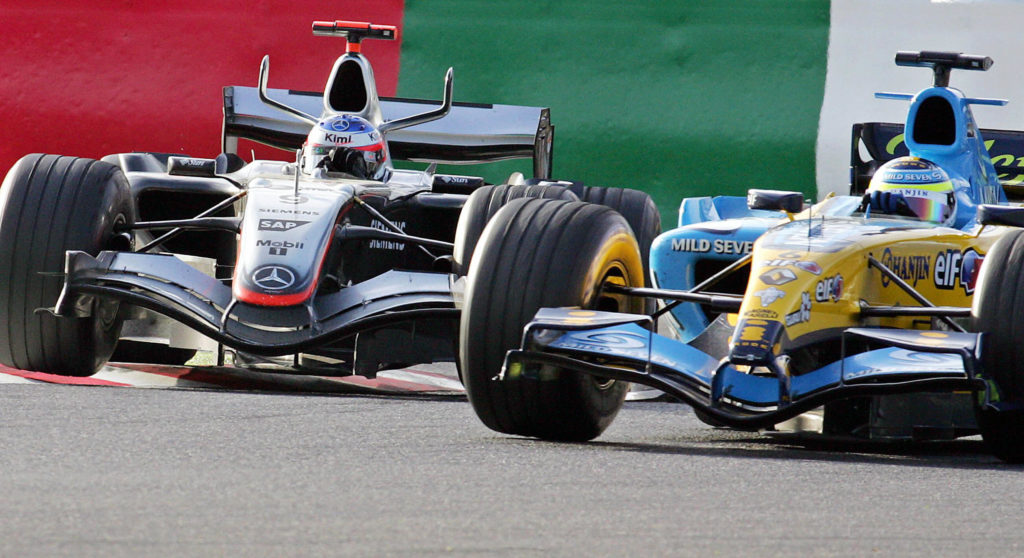
The Honda-owned Suzuka Circuit is a tough track to overtake on due to the circuit being narrow and having close barriers. But Kimi Raikkonen showed everyone how overtaking is possible with his iconic comeback drive in the 2005 Japanese GP.
McLaren’s season was dominated by reliability problems in 2005, with designer Adrian Newey later admitting that the MP4-18 was a ‘clumsy’ design.
And thanks to a wet qualifying session, Raikkonen only started the 2005 Japanese GP down in P17, although his rivals Fernando Alonso and Michael Schumacher were also out of position on the grid in P16 and P14.
After keeping out of trouble in the opening laps, Raikkonen went on to battle with Alonso, who produced one of the most iconic overtakes in F1 history on Schumacher through the high-speed 130R en route to finishing in third place.
But while Alonso’s overtake was the standout move of the race, Raikkonen rose from P17 on the grid to win the 2005 Japanese GP. The Finn also produced an iconic overtake of his own to pass Giancarlo Fisichella for the lead.
Raikkonen charged up behind Fisichella on the run through 130R, which forced the Renault racer to cover the inside line for the end-of-lap chicane.
But the Italian’s ultimately unnecessary defensive move put him off line, and Raikkonen took advantage to get the superior exit before pulling alongside at the end of the pit straight and turning in ahead for the lead.
Max Verstappen won the 2022 F1 title in Japan after late confusion about the points being scored
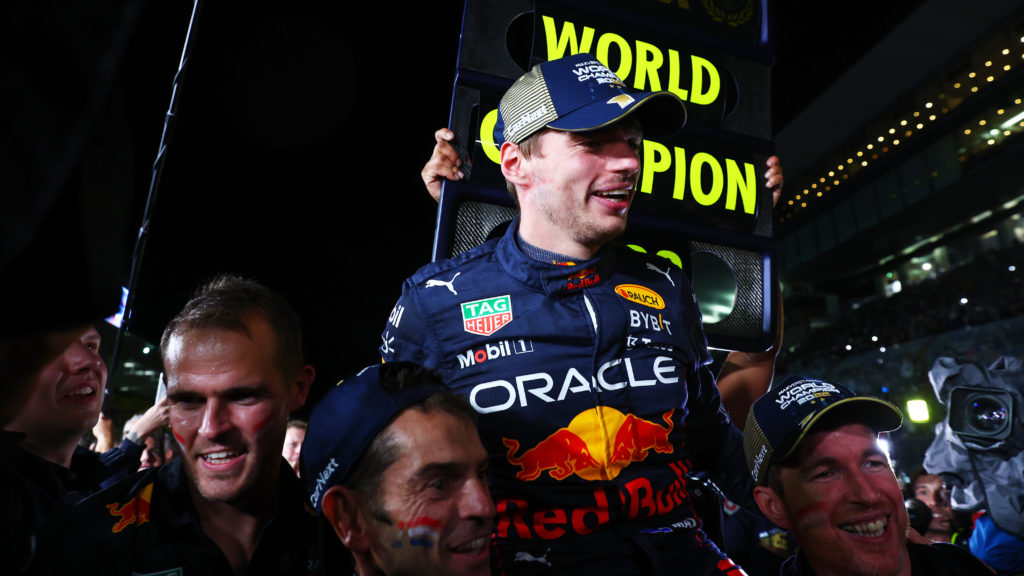
A year on from his controversial 2021 F1 title showdown with Lewis Hamilton in Abu Dhabi, Max Verstappen was subject to another bizarre end to a title-winning campaign in Japan in 2022.
The wet race was red-flagged after just two laps of running and because of the rules around the maximum allowed time, the race distance was eventually shortened to just 28 laps.
Red Bull racer Verstappen won the 2022 Japanese GP with ease ahead of Ferrari’s Charles Leclerc once the race resumed, but there was then some confusion over whether he was actually the world champion.
As less than 75% of the race distance was completed, everyone was under the impression that full points would not be awarded – which would have left Verstappen one point short of claiming the title.
The confusion arose after a rule change was introduced for the 2022 season, which stated that only a race that is ‘suspended and cannot be resumed’ would see the points allocation reduced if less than 75% of the race distance had been completed.
But as the 2022 Japanese GP was restarted, albeit shortened, it did not fall under the new remit. So, the FIA decided to award full points that year, although tweaks were made to ensure the desired outcome would happen in the same circumstances from 2023.
Home hero Kamui Kobayashi scored his only F1 podium in the 2012 Japanese Grand Prix
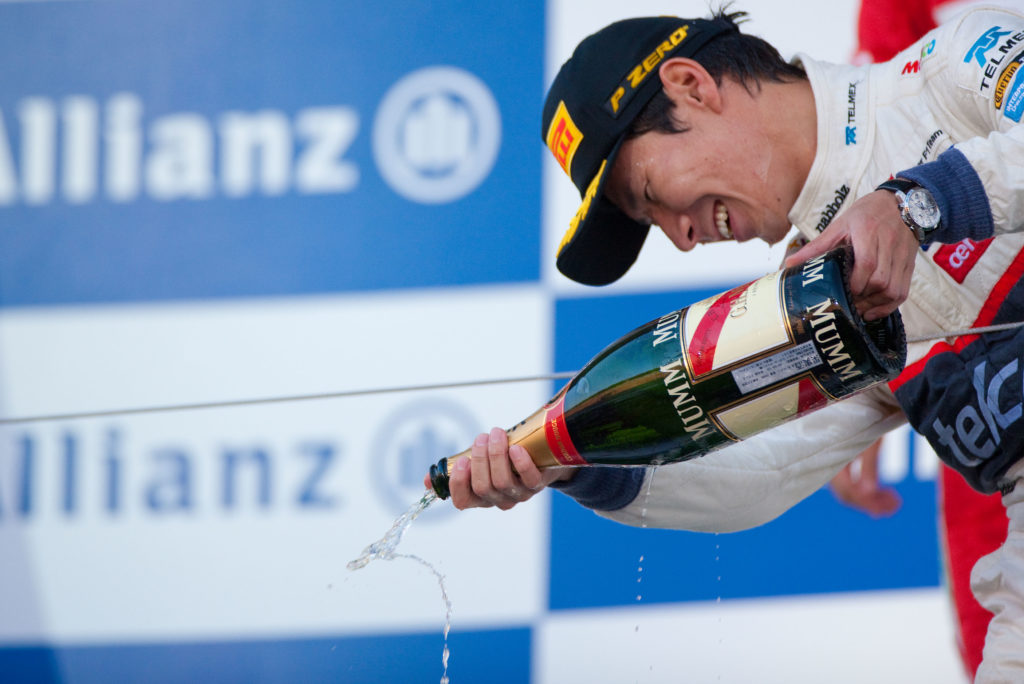
One of the more iconic fan moments at Suzuka came in 2012, when home hero Kamui Kobayashi took his first and ultimately only podium in F1 in the Japanese Grand Prix.
The Amagasaki, Hyogo native contested the 2012 season with Sauber, who were having a good year after also achieving podium finishes earlier in the campaign with Mexican star Sergio Perez in Malaysia, Canada and Italy.
Kobayashi started the 2012 Japanese GP from third place on the grid, having moved up one place after qualifying P4 as McLaren star Jenson Button served a five-place grid penalty for an unscheduled gearbox change.
Sauber even saw Kobayashi move up to P2 off the grid, as his quick start shot the home hero ahead of Red Bull driver Mark Webber.
But Kobayashi later lost time stuck in traffic behind Toro Rosso’s Daniel Ricciardo after making his first pit stop of the race, which allowed Ferrari’s Felipe Massa to overcut the Japanese star for P2.
Kobayashi could not find a way to respond to Massa for P2, or stay with Red Bull’s Sebastian Vettel in the lead. But Kobayashi had the speed to cover off Button, who eventually finished the 2012 Japanese GP just 0.560 seconds behind the Sauber star.
Suzuka erupted with chants of “Kamui! Kamui! Kamui!” as the Japanese GP crowd serenaded their home hero after Kobayashi scored his first career Grand Prix podium finish. The scenes went down in F1 history as one of the best moments of the modern era.
Receive exclusive F1 news and updates twice a week to your mailbox