Lando Norris
 McLaren
 Mercedes
 Red Bull
 Ferrari
 Williams
 Racing Bulls
 Aston Martin
 Haas
Haas Alpine


Diehard Formula 1 fans will be glued to the pre-season testing that will take place in Bahrain over the next few weeks before the season begins in Australia.
However, for many F1 fans, the race in Melbourne will be the first time that they see a set of brand new cars designed for the 2026 regulations.
The cars are narrower, lighter and have brand new aerodynamic systems as well as hybrid power units.
On top of this, DRS has been removed, and now teams have adjustable front and rear wings as well as unseen changes like sustainable fuels.
What one change would YOU make to the way Formula 1 is broadcast going into the 2026 season?
Let us know in the comments!

One of the most interesting developments is the boost mode and overtake mode that will be available to drivers due to the electric batteries.
The power of the battery is still up for debate, as it’s yet to be seen whether a 50/50 split with the ICE is going to happen.
But fans are already recognising the importance of the energy recovery that’s going to take place each lap and want broadcasters to provide this data during a race, even if teams are unlikely to be on the same page.
READ MORE: Alpine chief stunned by the ‘massive’ aspect they had ‘not seen’ before Mercedes F1 engine switch
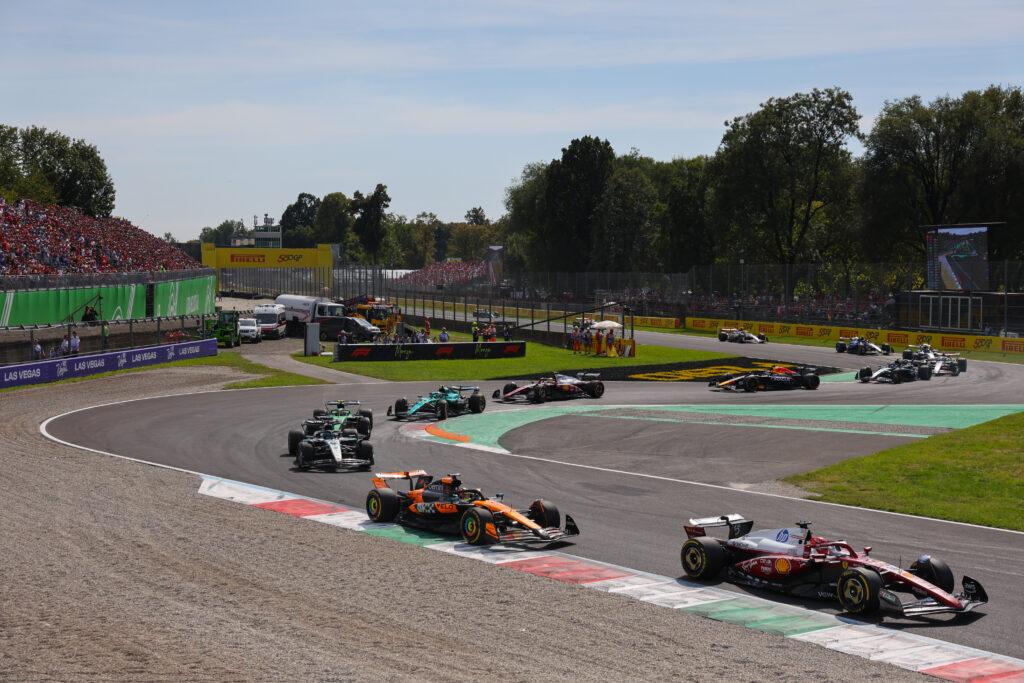
Formula 1 fans want battery charge graphic to be available during races this season
A discussion took place on Reddit asking fans about the energy recovery system and how vital it will be in deciding battles between drivers.
One comment read: ‘With energy becoming so important, it should be displayed for viewers.
‘The new engines are about 50% electric, and battery charge is going to play a massive role in strategy and overtakes. It would be a shame for viewers if it were not displayed properly and at all times.’
Another response said: ‘Hoping for a revamp of the live timing page, considering they need to remove DRS from there. Let’s see what they come up with. But I am expecting new graphics.’
‘I’m shocked nobody mentioned the fact that we had this back in the day when KERS was a thing,’ read another comment. ‘Of course, it’s a bit more complicated than that these days, but I’m sure they could find a way to display it at least roughly so you would know the situation between the cars.’
To which someone replied, ‘Teams hated it. That’s why they removed it.’
Another response added, ‘I thought it made watching the races way more interesting, especially when someone was chasing, and you could see they were deploying at different parts of the track.
‘Way more exciting than “here comes the DRS zone.. oh wow, another DRS overtake.’
‘Considering the battery will go from 80% to 20% and back multiple times in the lap, I see that becoming an annoying graphic,’ highlighted one fan.
READ MORE: Lewis Hamilton will absolutely love what’s being said about Ferrari’s 2026 engine after latest test
Why displaying battery charge might be an issue for Formula 1 ahead of the Australian Grand Prix
F1 fans have previously been given battery charge data before, with deployment and charging information available.
However, these new hybrid engines are far more complicated, and being able to clearly display when cars are recovering and deploying energy might be extremely difficult.
For example, a driver could be in overtake mode, but that will still allow a driver to recover energy more quickly than when they’re in boost mode.
Additionally, after a car reaches 345 kph (214mph), that power becomes unavailable, and even the depletion rate will change.
It’s also understandable why teams wouldn’t want this data to be public, so that their rivals can’t see exactly what they’re doing during battles on track.
Each circuit is going to see the rate of recovery of energy change due to the number of braking zones and the amount of time spent at full throttle.
It means some drivers will be recharging far more than others during a lap, which is still useful information for a fan, but will not be easy for commentators to accurately describe to people who aren’t experts in the new regulations.
Receive exclusive F1 news and updates twice a week to your mailbox