Lando Norris
 McLaren
 Mercedes
 Red Bull
 Ferrari
 Williams
 Racing Bulls
 Aston Martin
 Haas
Haas Alpine

Few races on the Formula 1 calendar reward sheer speed like Monza, the venue for the Italian Grand Prix.
It is one of the longest-running races on the calendar, having hosted the Italian GP every year apart from the 1980 season, when it was closed due to renovations. The current version of Monza features chicanes, but pre-1972, it was chicane-free at 3.5 miles.
Drivers would be mostly racing flat-out through the Curva Grande, up to the first braking zone at the Lesmo corners, before blasting through the left-hander at Ascari and the Parabolica.
It was made for slipstreaming, and the cars were also easy to run close to each other as downforce was yet to be exploited by the teams. This was the perfect recipe to produce the closest finish in F1’s 75-year history at the 1971 Italian GP.
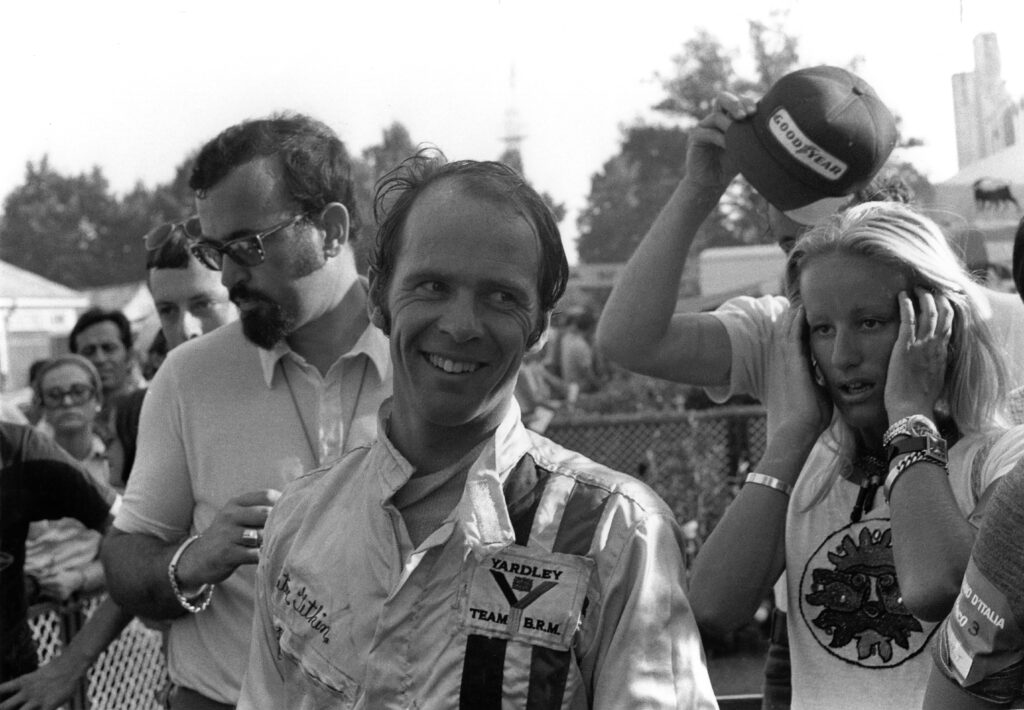
Who were the main contenders in the 1971 Italian Grand Prix?
Jackie Stewart was the main favourite in his Tyrrell-Ford, having won six races that year, which secured him his second world championship.
Ferrari’s favourites were Clay Regazzoni and Jacky Ickx, while Jo Siffert went into the race as the previous winner in Austria in his BRM. His teammate was a certain Helmut Marko and another driver called Peter Gethin.
The BRMs were considered favourites because they had V12 engines, a massive plus at a power-intensive circuit. Chris Amon took pole in his Matra ahead of Ickx’s Ferrari, while Siffert and Ganley lined up on the second row, with Gethin and Marko lining up 11th and 12th respectively.
Amon managed to make use of the slip stream in qualifying, confirming that this would be an important tactic in the race to win.
Monza produces F1 classic with 0.01s finish
Regazzoni led after getting a great start from eighth on the grid, with Ronnie Peterson managing to get up into contention for the lead in his March along with Stewart in the opening stages.
A lot of teams pushed the limits at Monza because it was such a power-hungry circuit, which led to it being a race of attrition for some. Stewart, Regazzoni and Ickx all fell foul of engine problems in the first 18 laps of the race.
Peterson swapped places with Tyrrell’s Francois Cevert up front, followed by Amon, Ganley and Gethin. The final 25 laps of the race would provide the most action, with the five drivers all scrapping for first at 180mph.
Amon led briefly before he mistakenly took off his helmet visor while reaching for a tearoff. That put him out of contention as he dropped back, with Gethin making a final push for the lead with three laps left.
| Driver | Team | Time |
| Peter Gethin | BRM | |
| Ronnie Peterson | March-Ford | +0.01s |
| Francois Cevert | Tyrrell-Ford | +0.09s |
| Mike Hailwood | Surtees-Ford | +0.18s |
| Howden Ganley | BRM | +0.61s |
On the final lap, Gethin dropped to fourth and Ganley also lost ground in fifth, while Cevert attempted to overtake Gethin and Peterson for the lead. As Cevert went for the move, he ran both himself and Peterson wide, allowing Gethin to sneak into the lead for the run to the finish line.
Gethin crossed the line flanked by Peterson and Cevert, who used the slipstream to make it a dead heat at the line. Gethin was declared the winner over Peterson by 0.01s, while the top four were all covered by 0.18s.
It was the fastest F1 race recorded with an average speed of 150mph, until it was beaten in 2003 at Monza. It was also the one and only win in F1 for British driver Gethin, who would take part in three subsequent seasons in F1 before retiring in 1974.
Receive exclusive F1 news and updates twice a week to your mailbox