Lando Norris
 McLaren
 Mercedes
 Red Bull
 Ferrari
 Williams
 Racing Bulls
 Aston Martin
 Haas
Haas Alpine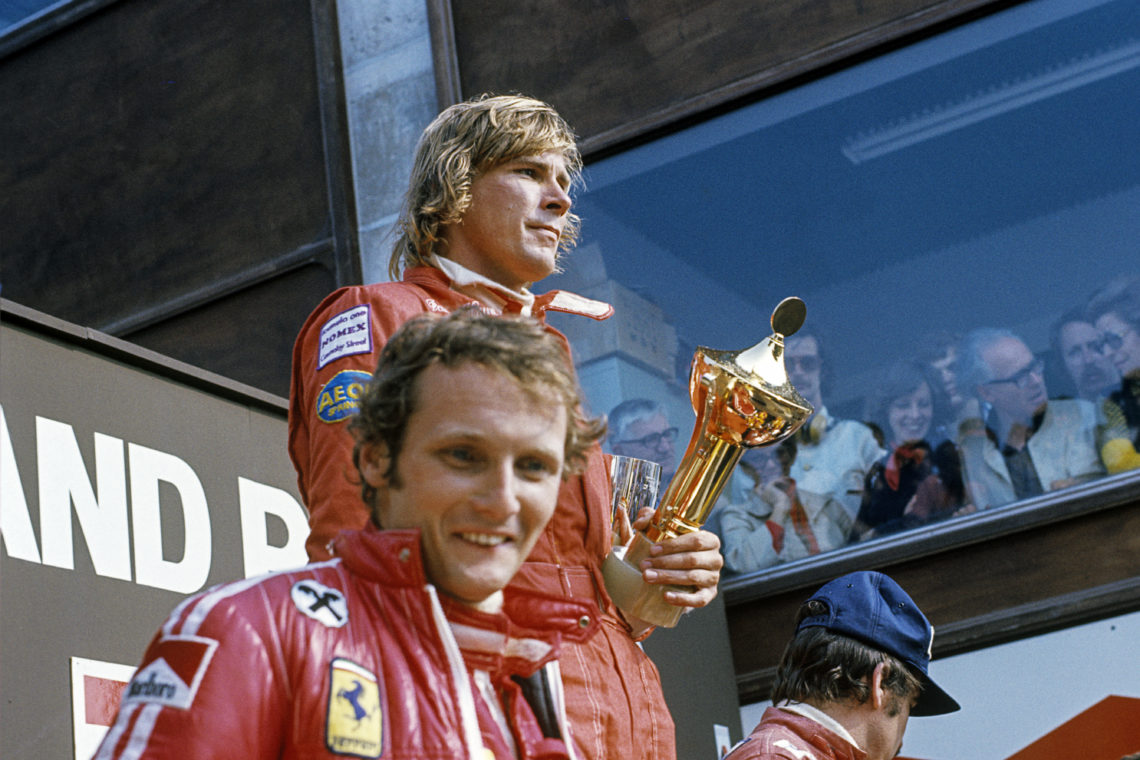


The Dutch Grand Prix has held an inconsistent place on the Formula 1 calendar since 1952 but has yielded some unforgettable moments, so here are five of its best races.
F1 first visited the European nation during its third-ever season and has also always held the Dutch Grand Prix at Circuit Zandvoort. But the track only appeared intermittently during the 1950s before it became a mainstay through the 1960s, 1970s and the first half of the 1980s.
It was then not until 2021 that Formula 1 cars returned to the sand dunes next to the North Sea. The emergence of Max Verstappen as a title contender saw interest in the Netherlands grow and the return of the Dutch GP become a reality, plus a hugely popular race each year.
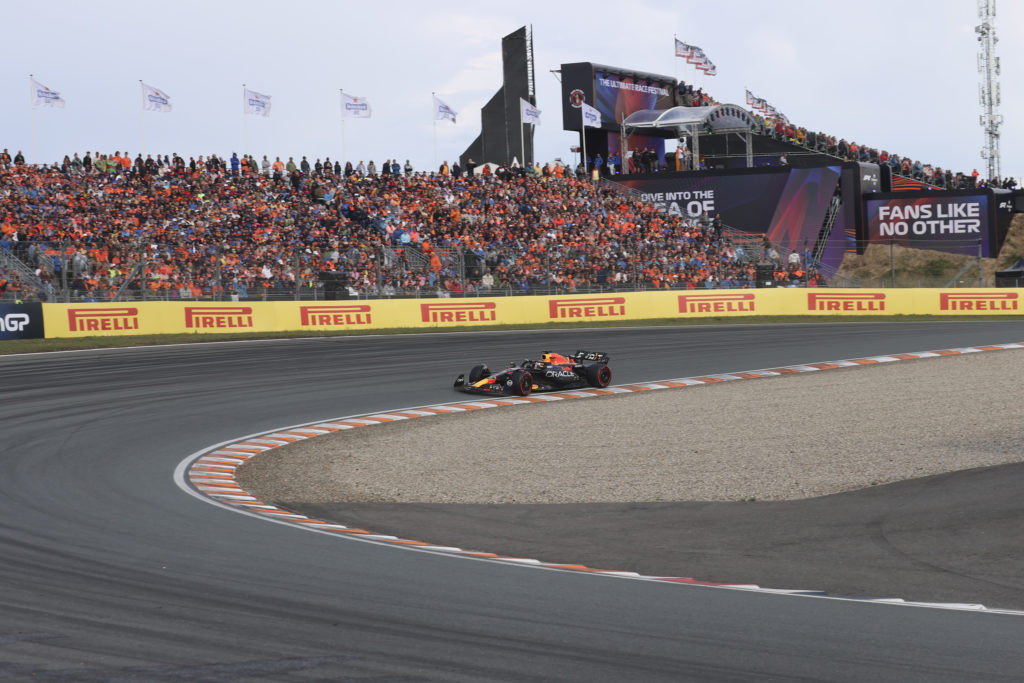
Giants of Formula 1 are even intertwined with the history of the Dutch GP as Alberto Ascari won the first running of the race in 1952 for Ferrari. But Zandvoort quickly emerged as one of the most dangerous circuits on the Formula 1 calendar, leading to the series scrapping it.
Zandvoort had to make several modifications to the track to return to F1 in 2021. Even one of its most iconic corners, Tarzan, was altered to introduce positive camber. It was through the 180° Tarzan corner where Mario Andretti took James Hunt out of the Dutch GP in 1977.
So, with that in mind, F1 Oversteer takes a look at five of the most unforgettable moments from the Dutch Grand Prix and the best races that Formula 1 has witnessed at Zandvoort…
Jacky Ickx and Pedro Rodriguez dominate in the rain at the 1971 Dutch GP

Rain drenched Zandvoort as Formula 1 prepared for the 1971 Dutch Grand Prix, where Jacky Ickx of Ferrari had beaten BRM driver Pedro Rodriguez to pole position by 0.04 seconds. The pair did not let the miserable conditions prevent a titanic tussle at the front of the field, too.
Thanks to the superior grip that the Firestone tyres gifted them over the Goodyear runners, Ickx and Rodriguez flew clear of the pack. They even had a lead of almost nine seconds over third-placed Jackie Stewart after just two laps as it became a two-horse race for the victory.
History already unfolded that weekend as McLaren made their 50th Grand Prix entry at the 1971 Dutch GP. But the spotlight was on Ickx and Rodriguez, who seized the lead into Tarzan on Lap 9 after his rival slowed to avoid the crashed cars of Francois Cevert and Nanni Galli.
Rodriguez charged away once in the lead of the Dutch GP, but the conditions then improving swung the race in Ickx’s favour. The Belgian found greater traction exiting the slower corners and regained the lead on Lap 30, and again on Lap 32 after a fast response from Rodriguez.
His move on Lap 32 of 70 at Zandvoort ultimately proved decisive as Ickx went on to win the 1971 Dutch GP by almost eight seconds to Rodriguez. While the Ferrari star favoured a more cautious style to lap every driver up to third place, the Mexican could not stay close enough.
James Hunt shocks Formula 1 to win the 1975 Dutch Grand Prix with Hesketh
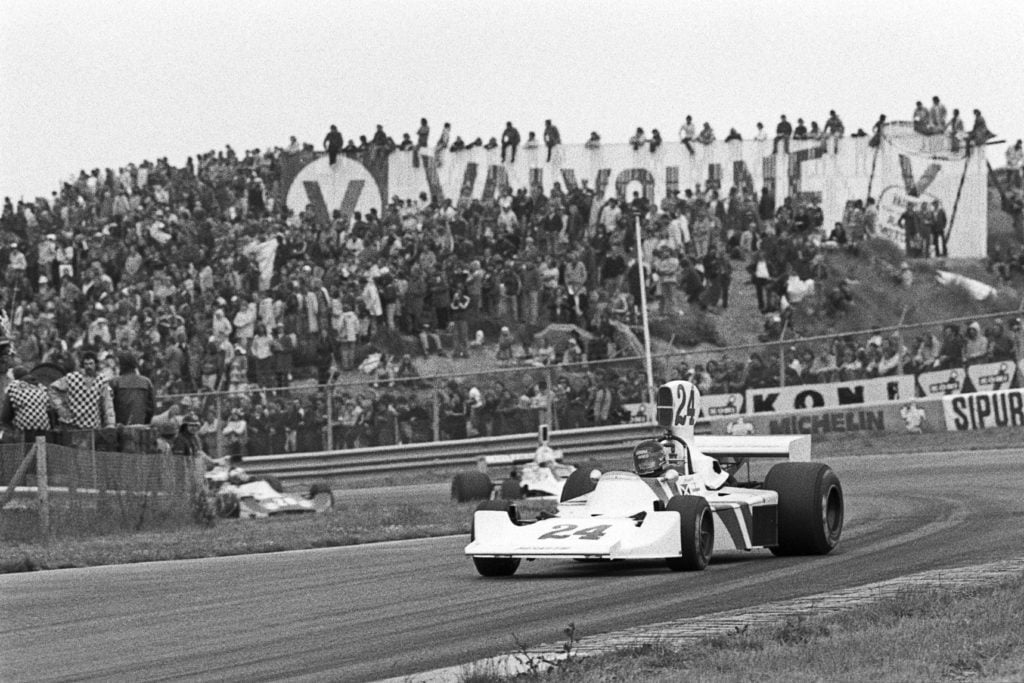
The 1973 Dutch Grand Prix saw Hunt get his first podium finish as a Formula 1 driver in only his fourth outing as a rookie with Hesketh. But Zandvoort staged an even bigger triumph for the Briton in 1975 when Hunt overcame pole-sitter Niki Lauda for his first Grand Prix victory.
Lauda had secured pole position in a Ferrari one-two and lapped Zandvoort four-tenths of a second faster than Hunt managed in his Hesketh. But the Austrian would end the Dutch GP staring at his arch-rival’s gearbox with Hunt holding on to win for the first time by a second.
Ferrari were the favourite to win the Dutch GP with Lauda topping the three prior podiums before heading to Zandvoort. He also controlled the conditions when rain came in from the North Sea as the race neared to lead the opening laps, whereas Hunt slipped back to fourth.
But Hunt was braver than his rival drivers and stopped for dry tyres long before the likes of Lauda peeled into the pit lane. It meant that by the time the Austrian did stop for slicks, he returned to the track well behind Hunt – who created a 10-second lead after stopping early.
Hesketh and Hunt even favouring a dry set-up also meant the Briton could withstand heaps and heaps of pressure from Lauda through the final third of the 1975 Dutch GP. Ferrari had favoured a mixed set-up after the pre-race rain shower, which proved to be a crucial factor.
Mario Andretti crashes into James Hunt to deny the Briton a Dutch GP hat-trick
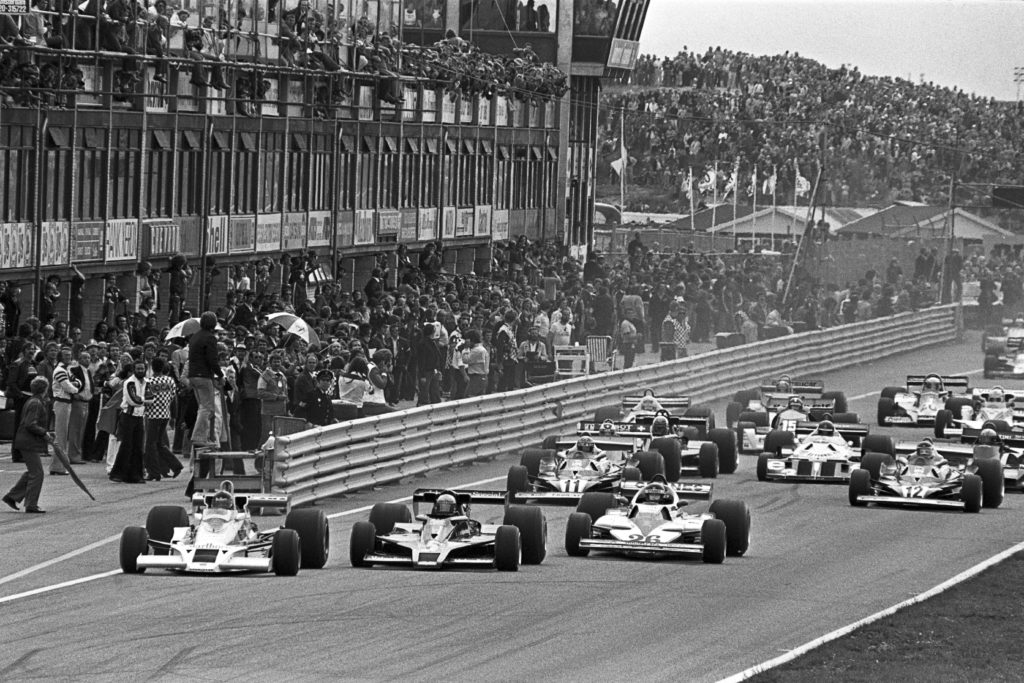
While the 1973 Dutch GP saw Hunt claim his first podium in Formula 1 with third place and the 1975 running delivered his first win, the 1977 edition proved to be a disappointing time for the Briton. Especially after Hunt had returned to Zandvoort to win the Dutch GP in 1976.
His quest for a hat-trick of wins at Zandvoort started on the wrong foot when Hunt only set the third-fastest time in qualifying. The McLaren driver was even 0.85 seconds off the pace that Andretti set in his Lotus for pole position, with Ligier driver Jacques Laffite claiming P2.
But Andretti and Laffite had no answer for Hunt’s speed off the line as the defending world champion stole the lead into Turn 1. Robust defending from the Briton also saw Andretti fall to fourth place after the American tried to launch a reply before the end of the opening lap.
It was not long before Andretti saw his second chance to claim the lead as they approached Tarzan, though. But as the Lotus driver clung on around the outside exiting T1, Hunt tried to push Andretti out wide and the McLaren racer’s rear-left tyre touched Andretti’s front right.
The contact pitched Andretti into a spin as Hunt initially continued with the lead of the 1977 Dutch GP. But the Briton soon realised that his McLaren M26 sustained too much damage to continue and retired on Lap 5. Andretti would also later retire on L14 due to an engine issue.
Title rivals Alain Prost and Nelson Piquet crash at the 1983 Dutch Grand Prix

The 1983 Formula 1 season took the title fight to Zandvoort in round 12 of the 15 races that year. Alain Prost even arrived at the Dutch GP with a 14-point advantage over Nelson Piquet as the Frenchman chased his first title, while the Brazilian was battling for his second crown.
In the end, the title swung Piquet’s way by just two points after a late-season collapse which started at the Dutch Grand Prix cost Prost dearly. The Renault driver would finish just one of the final four races, whereas his rival gave Brabham two wins and one additional third place.
Neither of the title rivals would finish the 1983 Dutch GP, though, as Rene Arnoux picked up the pieces to win by nearly 21 seconds to Patrick Tambay in a Ferrari one-two. Prost saw his chance to take the lead of the race away from Piquet into Tarzan on Lap 41 but got it wrong.
Prost tried in vain to pass Piquet into Turn 1 with a late-braking move which saw the Renault driver ram his rival off into the tyre barriers. While he was initially able to continue as Piquet retired on the spot, the Frenchman’s race also came to an end half a lap later in the barrier.
Niki Lauda wins for the final time in Formula 1 at the 1985 Dutch GP
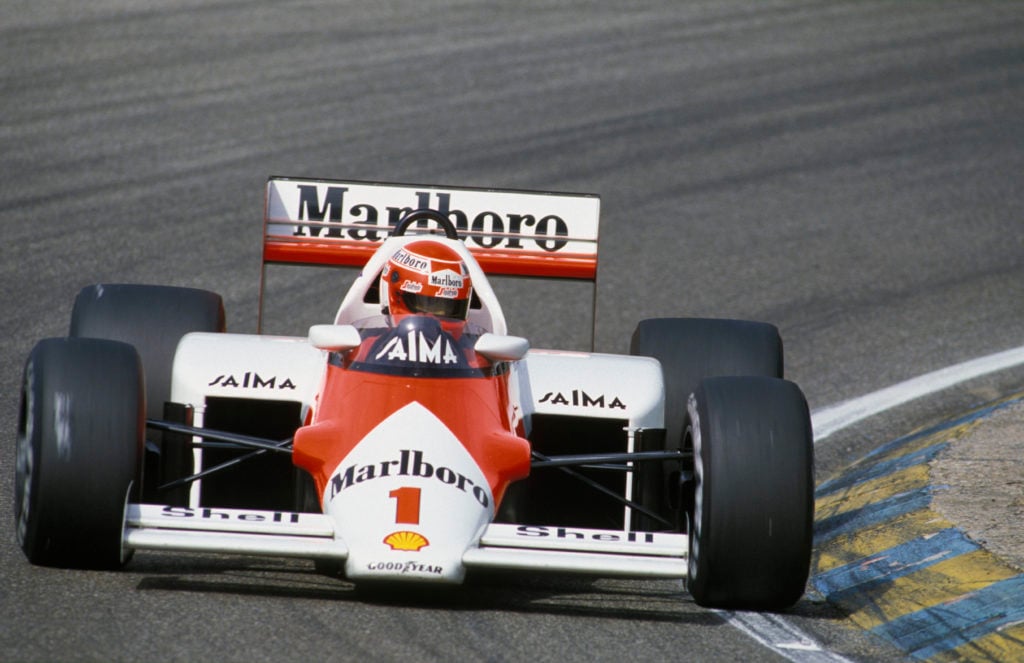
Lauda enjoyed a hugely successful Formula 1 career between his debut at the 1971 Austrian Grand Prix and bowing out after the 1985 running of his home race. During that time, Lauda won three drivers’ championships and recorded his 25th and final win at the 1985 Dutch GP.
The 1985 season had been a year to forget for Lauda as he retired from all but two of the 10 rounds before F1 headed for Zandvoort. He did not finish another race after Lauda won the Dutch Grand Prix, as well, as the Austrian’s career ended on a whimper racing with McLaren.
It was nearly his McLaren teammate, Prost, who triumphed at Zandvoort, too. Lauda had set just the 10th fastest time in qualifying nearly two seconds slower than pole-sitter Piquet. Yet the Austrian took the chequered flag two-tenths ahead of Prost, who had started from third.
Lauda made a tremendous start to shoot from 10th into fifth on the first lap alone. Stopping earlier than his rivals also helped the Formula 1 legend get a surprising lead when a slow pit stop cost Prost, who had started the race level on 50 points with title rival Michele Alboreto.
McLaren had not imposed team orders on Lauda, despite Prost’s fierce fight with the Ferrari driver. So, the Austrian held his nerve and the position against his French teammate’s efforts to regain the lead a slow rear-right tyre chance wasted, with Prost stuck to Lauda’s gearbox.
Receive exclusive F1 news and updates twice a week to your mailbox