

 Lando Norris
 McLaren
 Mercedes
 Red Bull
 Ferrari
 Williams
 Racing Bulls
 Aston Martin
 Haas
Haas Alpine


| First held: | 1985 |
| Times held: | 40 |
| Circuit: | Albert Park Circuit |
| Circuit length: | 5.2km (3.2m) |
| Laps: | 58 |
| Most wins: | 4x Michael Schumacher (2000, 2001, 2002, 2004) |
The Australian Grand Prix is one of the more historic races on the Formula 1 calendar having been a part of the diary since 1985. It has also been held on Melbourne’s streets since 1996.
But F1 was not the first series to contest the Australian GP. The first race using the name was actually back in 1929, although it is generally accepted that the first Australian GP was a year earlier. Yet Formula 1 took over the name in 1985 and has never looked back since that race.
Australia has been a great fit for Formula 1 since the series took to the streets of Adelaide in 1985. The race later moved to Melbourne for the 1996 season after it received support from the local government. Adelaide has often sought to regain the rights to host the event since.
History of the F1 Australian GP
Formula 1 reached an agreement to host its first Australian GP for the 1985 season and gave the Adelaide event the final race of the year. The streets of South Australia’s capital city also put the teams to the test with a challenging layout pushing the drivers and cars to the limits.
Adelaide was a happy home for most in the Formula 1 paddock as they revelled in the race’s party atmosphere. The 1985 Australian GP also proved to be the last F1 race that Niki Lauda drove. The three-time champion retired for the second and final time after crashing late on.
The 1986 Australian GP also gave Adelaide the honour of deciding that season’s F1 title fight between Nigel Mansell, Nelson Piquet and Alain Prost. It was also Keke Rosberg’s last Grand Prix entry. Prost took the title after champion-elect Mansell suffered a puncture at 180mph.
Formula 1 agreed to move the Australian GP from Adelaide to Melbourne starting from the 1996 season in 1993. It was a controversial decision with local protestors bemoaning how a local park would become home to an F1 event for one weekend a year and at great expense.
What is the Albert Park Circuit like?

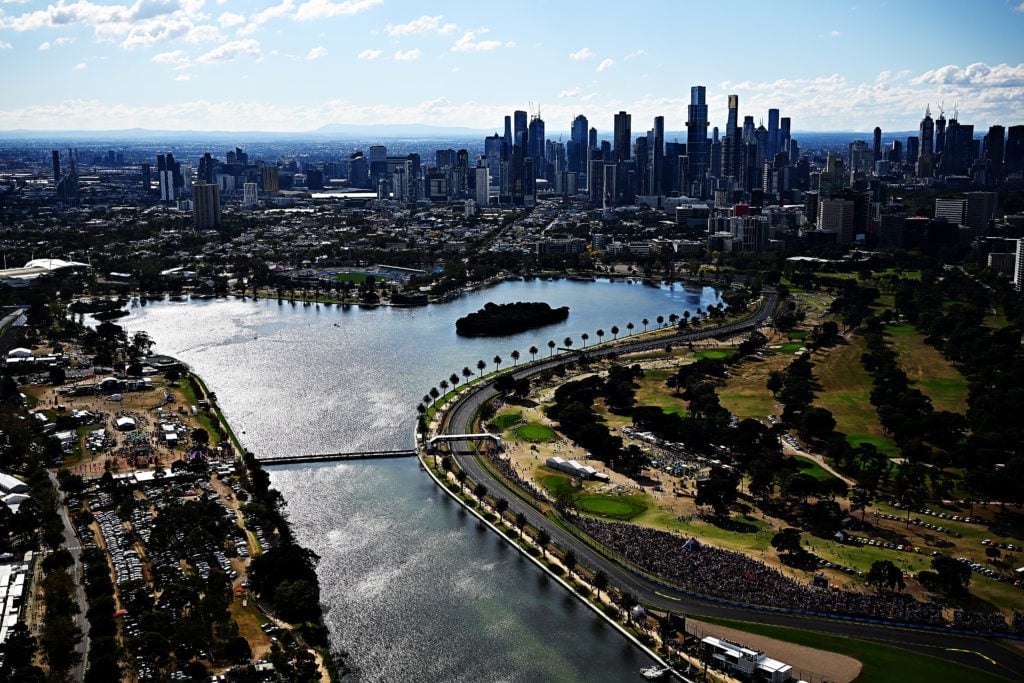
Organisers of the Australian GP introduced changes to the layout of the Albert Park Circuit for F1’s visit in 2022. They took advice from the Formula 1 drivers and removed the chicane at Turns 9 and 10 to create a fast bend leading onto the lakeside straight to aid overtaking.
The Albert Park Circuit has often sparked criticism for its lack of overtaking zones over the years. A slow entry onto the pit straight often negates the slipstream and DRS effect into T1. Moves into Turn 11 also depend on the exit the drivers get out of the fast Turn 9-10 chicane.
Resurfacing efforts on the mostly public roads that make up the Albert Park Circuit in 2022 also helped to remove some of the bumps. The drivers also need a responsive front end on their cars to flick into the high-speed corners at speed with it among the fastest F1 circuits.
Winners of the F1 Australian GP
| 1985 Australian GP: | Keke Rosberg (Williams) |
| 1986 Australian GP: | Alain Prost (McLaren) |
| 1987 Australian GP: | Gerhard Berger (Ferrari) |
| 1988 Australian GP: | Alain Prost (McLaren) |
| 1989 Australian GP: | Thierry Boutsen (Williams) |
| 1990 Australian GP: | Nelson Piquet (Benetton) |
| 1991 Australian GP: | Ayrton Senna (McLaren) |
| 1992 Australian GP: | Gerhard Berger (McLaren) |
| 1993 Australian GP: | Ayrton Senna (McLaren) |
| 1994 Australian GP: | Nigel Mansell (Williams) |
| 1995 Australian GP: | Damon Hill (Williams) |
| 1996 Australian GP: | Damon Hill (Williams) |
| 1997 Australian GP: | David Coulthard (McLaren) |
| 1998 Australian GP: | Mika Hakkinen (McLaren) |
| 1999 Australian GP: | Eddie Irvine (Ferrari) |
| 2000 Australian GP: | Michael Schumacher (Ferrari) |
| 2001 Australian GP: | Michael Schumacher (Ferrari) |
| 2002 Australian GP: | Michael Schumacher (Ferrari) |
| 2003 Australian GP: | David Coulthard (McLaren) |
| 2004 Australian GP: | Michael Schumacher (Ferrari) |
| 2005 Australian GP: | Giancarlo Fisichella (Renault) |
| 2006 Australian GP: | Fernando Alonso (Renault) |
| 2007 Australian GP: | Kimi Raikkonen (Ferrari) |
| 2008 Australian GP: | Lewis Hamilton (McLaren) |
| 2009 Australian GP: | Jenson Button (Brawn GP) |
| 2010 Australian GP: | Jenson Button (McLaren) |
| 2011 Australian GP: | Sebastian Vettel (Red Bull) |
| 2012 Australian GP: | Jenson Button (McLaren) |
| 2013 Australian GP: | Kimi Raikkonen (Lotus) |
| 2014 Australian GP: | Nico Rosberg (Mercedes) |
| 2015 Australian GP: | Lewis Hamilton (Mercedes) |
| 2016 Australian GP: | Nico Rosberg (Mercedes) |
| 2017 Australian GP: | Sebastian Vettel (Ferrari) |
| 2018 Australian GP: | Sebastian Vettel (Ferrari) |
| 2019 Australian GP: | Valtteri Bottas (Mercedes) |
| 2022 Australian GP: | Charles Leclerc (Ferrari) |
| 2023 Australian GP: | Max Verstappen (Red Bull) |
| 2024 Australian GP: | Carlos Sainz (Ferrari) |
| 2025 Australian GP: | Lando Norris (McLaren) |
| 2026 Australian GP: | George Russell (Mercedes) |
Adelaide hosted several landmark Formula 1 races and title deciders
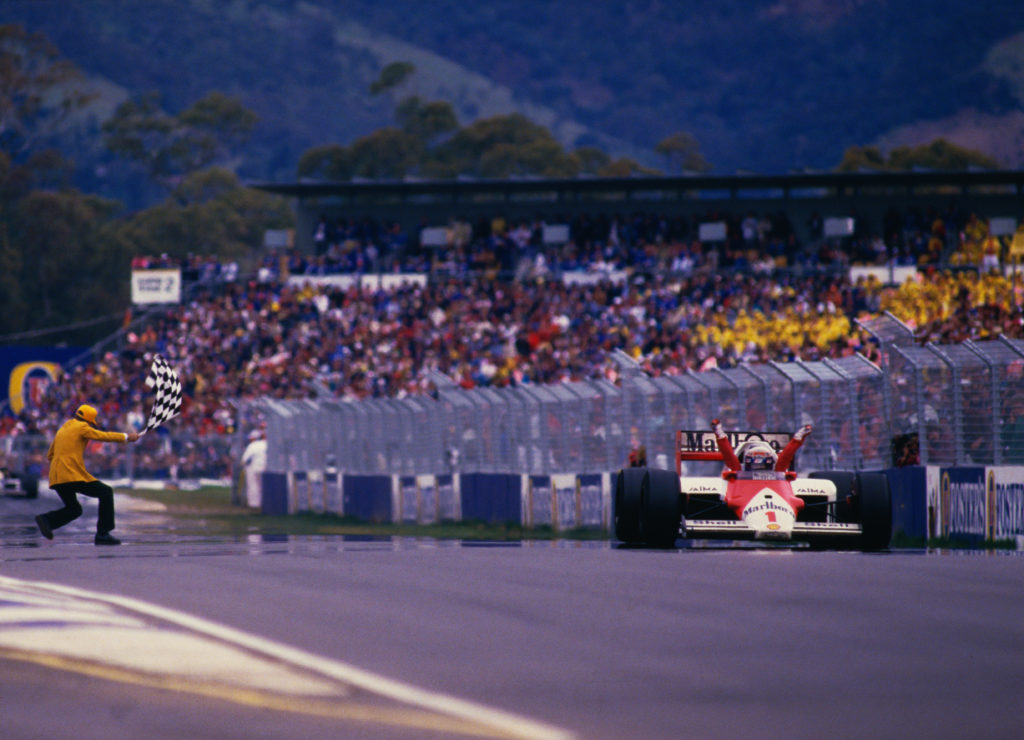
Further landmarks in Formula 1’s history occurred in Adelaide, as well. Ayrton Senna drove his final race with Lotus there in 1987 and F1 bid farewell to the original turbo era there in 1988. The 1990 Australian GP was also the 500th championship Grand Prix in F1’s history.
Adelaide continuing to host the final round of the Formula 1 championship also saw Piquet retire there in 1991 and Mansell in 1992, although Mansell returned to F1 racing in 1994. It would be a memorable return in 1994, as well, as the Briton took pole for the Australian GP.
Yet Mansell got a poor start and allowed title rivals Michael Schumacher and Damon Hill to battle for the lead. Schumacher running wide then allowed Hill to catch up and dive up his inside. But the German turning in saw both drivers retire and sealed Schumacher the title.
The Australian GP moved from Adelaide to Melbourne in 1996
Yet Albert Park has been the home of the F1 Australian GP since 1996. The local government also invested heavily in upgrading the area around the park. F1 also moved the timing of the Australian GP from being the season finale to being one of the first races held each season.
Melbourne did not wait long for its event to become a part of Formula 1’s fabric, either. The 1996 Australian GP is etched in the series’ history after Martin Brundle crashed at Turn 3 on the first lap and his Jordan flew into the air. Brundle then rushed back to get in his spare car.
The Australian GP in Melbourne has delivered controversy and chaos
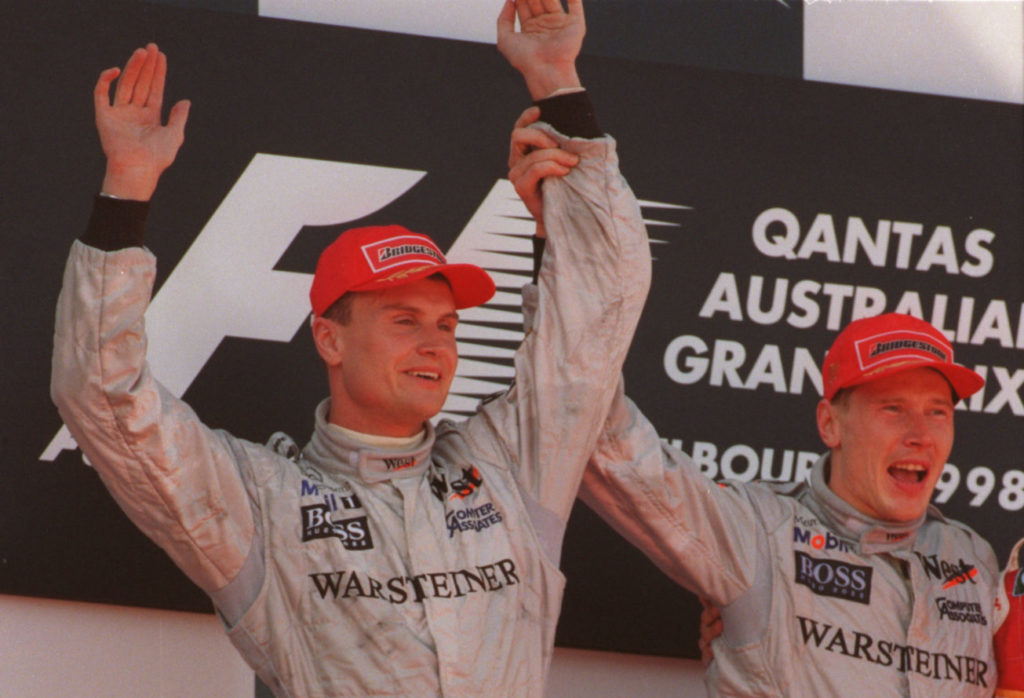
Controversy also erupted at the season-opening 1998 Australian GP when David Coulthard pulled aside to let Mika Hakkinen win. They had absolutely dominated the race for McLaren but Hakkinen dropped back after pitting, having believed the team had told him to come in.
Coulthard held a 12-second lead over Hakkinen with three laps to go. But he yielded the win due to McLaren’s pre-race agreement of whoever led at the first corner would win. It led to one of the defining Australian GP images as Hakkinen raised Coulthard’s arm on the podium.
Perplexing scenes also developed at the 2002 Australian GP as eight drivers retired on the first lap. Ralf Schumacher drove up the back of Rubens Barrichello, launching the German into the air at Turn 1. Multiple drivers then collided as they tried to avoid the early incident.
New South Wales native Mark Webber also made his Formula 1 debut at the Australian GP in 2002 with Minardi. The home hero would have a debut to remember, as well, as he took his backmarker team to a P5 finish. Webber drove brilliantly to fend off Mika Salo in the last laps.
Covid-19 later brought more chaos for Formula 1 at the Australian GP in 2020, too. The race was scheduled to start the 2020 season and F1 flocked to Melbourne despite the rise of the pandemic. McLaren even withdrew from the race after a mechanic returned a positive test.
Formula 1, eventually, abandoned the Australian GP on the Friday morning before practice had started. F1 made the decision to cancel the event following the withdrawal of McLaren on the Thursday. The series would not return to Melbourne until 2022 with a revised track.
Receive exclusive F1 news and updates twice a week to your mailbox


