

 Lando Norris
 McLaren
 Mercedes
 Red Bull
 Ferrari
 Williams
 Racing Bulls
 Aston Martin
 Haas
Haas Alpine

In 2017, the official Formula 1 YouTube channel released footage from the pre-race driver briefings at five different Grands Prix. Lewis Hamilton, Sebastian Vettel and co. were on camera during the traditionally private discussions.
This was a bold move. The Monaco Grand Prix marked the first time the meeting was broadcast since the 1990s.
That video proved to be extremely popular, racking up five million views on YouTube alone. On the back of that success, the camera crews received permission to film the sessions in Malaysia, Japan, the United States and Mexico.
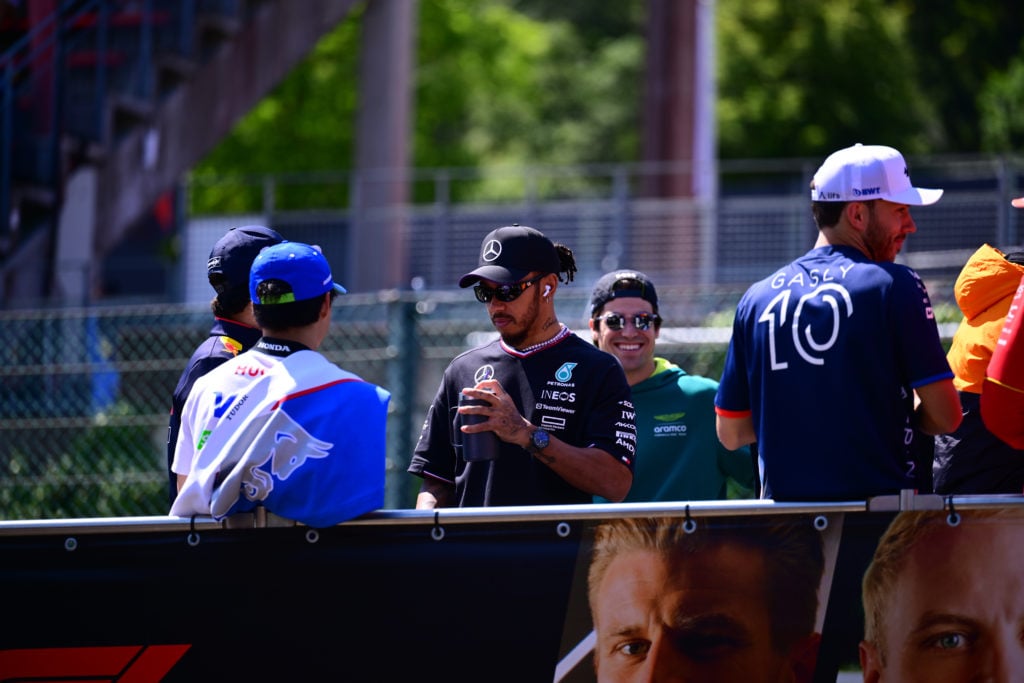
This played out in the middle of Mercedes’ dominance, with Hamilton battling Vettel for the title. 12 of the current drivers were also on the grid at that time, including Max Verstappen, Daniel Ricciardo (both at Red Bull) and Fernando Alonso (McLaren).
Sergio Perez, Esteban Ocon (both Force India), Carlos Sainz (Toro Rosso), Lance Stroll (Williams), Valtteri Bottas (Mercedes), Kevin Magnussen (Haas) and Nico Hulkenberg (Renault) also featured. They were all given the opportunity to raise grievances or queries with the late race director Charlie Whiting.
But despite the overwhelming interest in the content, it was halted before the 2018 season. The reason was initially unclear.
Formula 1 drivers may be reluctant to speak openly on camera
A report from Motorsport.com offers some insight as to why drivers may have been opposed to granting permanent access. Some of them might have been reluctant to speak out in what became a public forum.
For a couple of decades, the meetings had been kept private. But drivers were now aware that they could face a backlash from fans if they said something controversial, even though only short clips were shared.
Not all spectators were in favour either. Some felt that the F1 broadcasting team should respect the sanctity of such briefings as if they were a dressing room in football.
The thirst for behind-the-scenes access has partly been quenched by Netflix’s Drive to Survive series. The yearly documentary, which first aired in 2019, features fly-on-the-wall footage teams after teams allowed access.
Felipe Massa was a big fan of F1 broadcasting driver briefings
One of the few drivers who publicly expressed an opinion either way was Felipe Massa. The Brazilian, who partnered Stroll at Williams, would go on to retire at the end of the season.
He insisted that the cameras weren’t intrusive and welcomed the greater transparency. He thought it would improve wider knowledge of F1.
“I think it is a good idea,” he said. “To be honest I didn’t even notice that somebody was filming it in Monaco.
“I think it is good – good for the people, good for the fans, I think it is good that you participate more in what we are doing and where we are talking. If everybody knows that we are talking with Charlie Whiting and the teams and everything, then everybody understands a little bit more about F1.”
It seems unlikely that F1 will revisit broadcasting the briefings given that Drive to Survive has become so well-established. Inevitably, that has attracted its critics too.
World champion Max Verstappen ‘hates’ being interviewed for the series, because he feels they don’t show his personality. Former Williams boss Claire Williams says it’s a ‘privilege’ to be involved, but admits she finds it ‘tough’ to scrutinise team figures and drivers.
Receive exclusive F1 news and updates twice a week to your mailbox


