Lando Norris
 McLaren
 Mercedes
 Red Bull
 Ferrari
 Williams
 Racing Bulls
 Aston Martin
 Haas
Haas Alpine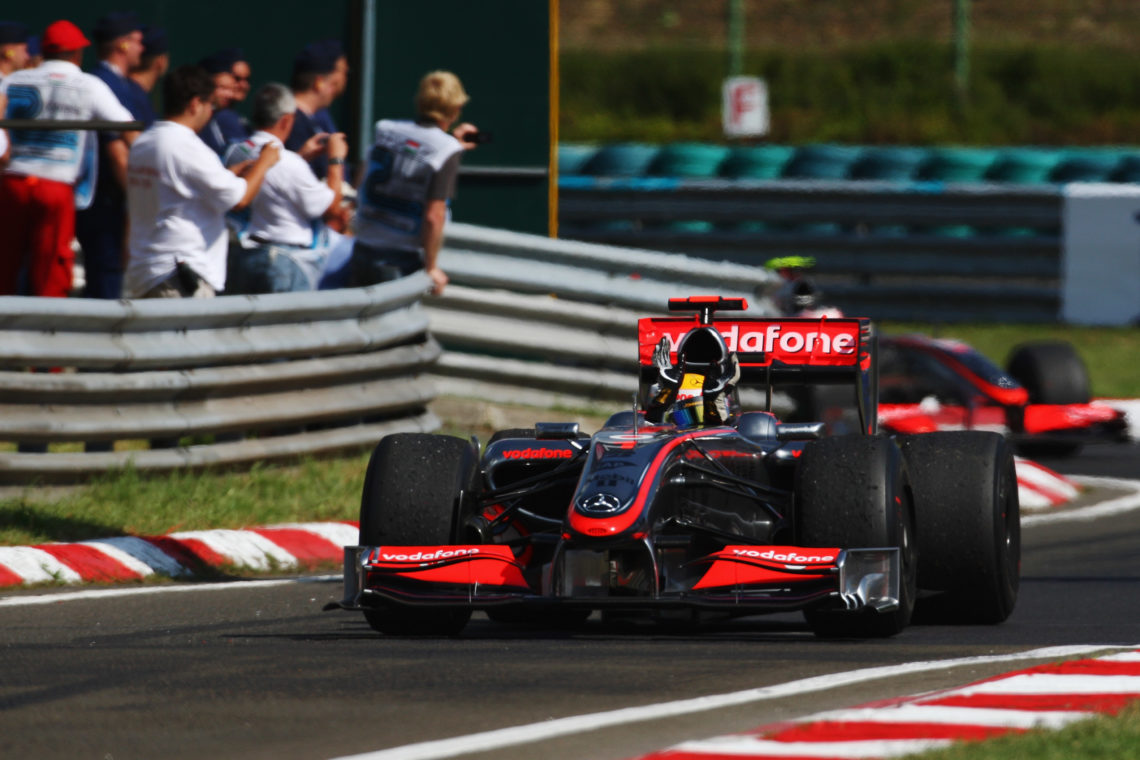


The 2009 Formula 1 season started poorly for McLaren off the back of their Drivers’ title success with Lewis Hamilton.
There were high hopes that Lewis Hamilton could retain his crown after a thrilling season-long battle with Felipe Massa after it went down to the final corner at the 2008 Brazilian Grand Prix.
In 2009 all of the cars adopted a brand new regulation set, with reduced aerodynamic elements on the bodywork, wider front wings, and taller rear wings to help increase overtaking.
Part of the package was the switch to hybrid systems for the first time in the form of a Kinetic Energy Recovery System (KERS), which utilised an onboard battery for extra power output at the command of the driver.
Due to how expensive it proved to be and the added weight it generated, only two teams on the grid eventually adopted it: Ferrari and McLaren. It was seen as the ace card because even if your car was not that great, you still had the extra 80bhp.
Only Mercedes, who provided engines to McLaren, and Ferrari had committed to developing it, meaning only four cars on the grid ran the system.
McLaren and Lewis Hamilton make history in Hungary
The MP4-24 proved to be a difficult car to drive in the early stages of the 2009 campaign as the game-changing idea turned out not to be KERS, but the double-diffuser on the Brawn GP.
This caused controversy among the top teams but the FIA eventually deemed the design used by Brawn GP as legal, while McLaren themselves had originally designed a variation but had it knocked back by the FIA.
Once McLaren developed their own legal double diffuser and introduced it at the German Grand Prix, it transformed their season. At the next race in Hungary, Hamilton qualified in fourth with teammate Heikki Kovalainen in sixth place on the grid.
Hamilton could make use of his upgraded car and the additional KERS advantage to put pressure on Mark Webber in the Red Bull, eventually overtaking him for the lead after five laps.
The Briton went on to win the race by 11.5 seconds from Ferrari’s Kimi Raikkonen, marking the first time that a hybrid F1 car had won a Grand Prix in the history of the championship.
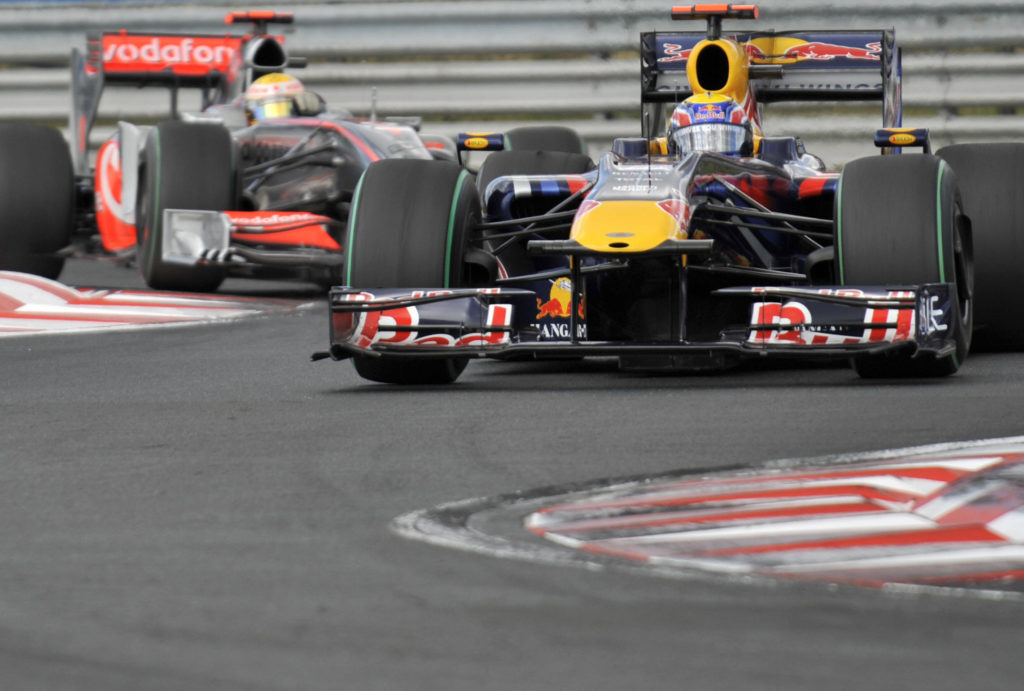
Lewis Hamilton achieved further success in the controversial 2009 season
The 2009 season was not only an impressive turn-around for McLaren and Hamilton, who went on to win another race at the Singapore Grand Prix several months later along with two podiums at Valencia, Japan and Brazil.
It was also a season marred by controversy behind the scenes at McLaren after Hamilton was disqualified at the opening race in Australia for lying to the stewards intentionally.
READ MORE: Everything you need to know about McLaren F1 Team from team principal to engine
The incident happened in the closing stages of the race when Toyota’s Jarno Trulli went off track during a Safety Car. Hamilton overtook initially but handed the place back, causing him to finish outside of the top four.
McLaren attempted to gain an advantage by lying about the chain of events, but the team radio transcripts told a different story. Hamilton went on to claim that he nearly quit F1 amid the whole saga, while team principal Martin Whitmarsh was also nearly sacked having also presided over another cheating scandal involving Ferrari in 2007.
Receive exclusive F1 news and updates twice a week to your mailbox