Lando Norris
 McLaren
 Mercedes
 Red Bull
 Ferrari
 Williams
 Racing Bulls
 Aston Martin
 Haas
Haas Alpine


Track limits in F1 became a hot topic in the Austrian Grand Prix, with 1200 incidents being reported, but what are they? Why do drivers tend to abuse track limits?
Motorsport is unlike most other sports, whereby the playing area is kind of where the competitors wish it to be.
In football, if the ball goes over the touchline, it is a throw-in. No warnings, just what it is.
In cricket, should a fielder take a catch, but carry the ball over the boundary rope, it will still count as a six, no matter how good the catch was.
However, despite motor racing having its own defined playing area, drivers will always try to make it just a bit wider and go out of bounds.
This is known as track limits in F1 – but why do drivers try and abuse them in the first place?
What track limits are in F1
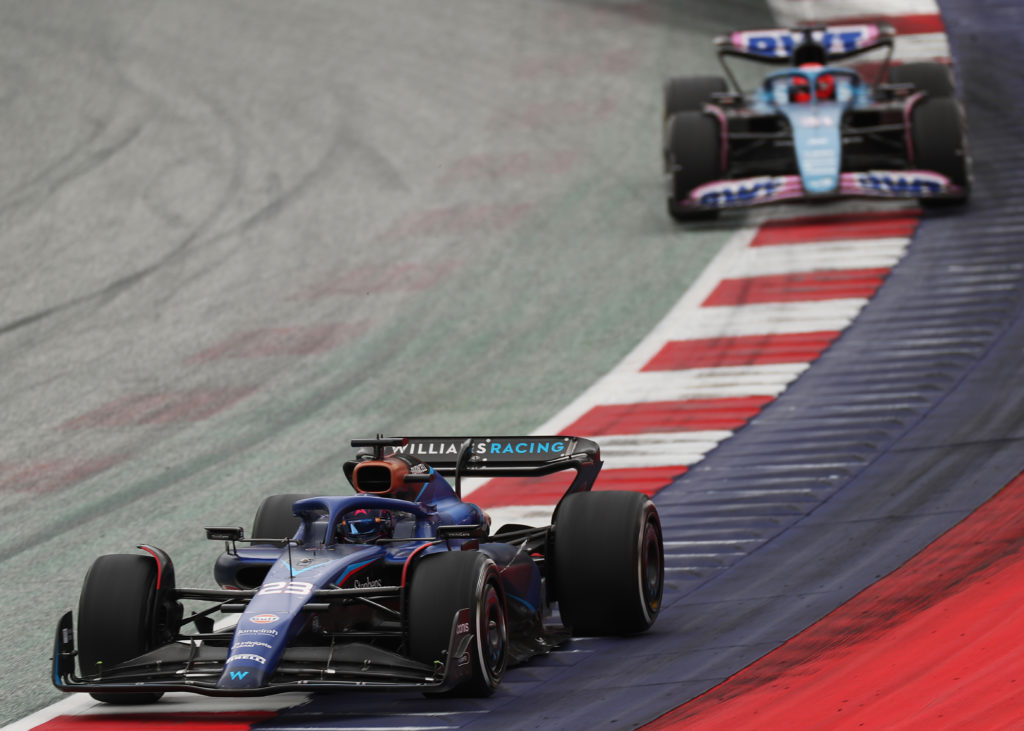
Track limits in F1 are defined by the thick, white lines that run around the circuit – marking the edge of the playing area, as it were.
The idea for the driver is simple – ‘don’t go over those white lines’ and stay on the dark bit.
On the outside of the track, there could be asphalt run-off, gravel or grass to deter someone from going out wide.
A driver will be called for track limits in F1 when they have crossed over the white line repeatedly without good cause – such as avoiding an incident.
They are also not allowed to force another driver off the track and must leave racing room on the out or inside or risk a penalty.
Repeated offences in practice or qualifying will lead to lap times being deleted by the stewards, with drivers risking time penalties – like Carlos Sainz and Lando Norris in the Austrian GP – if they continue to do it.
Why do drivers abuse them?
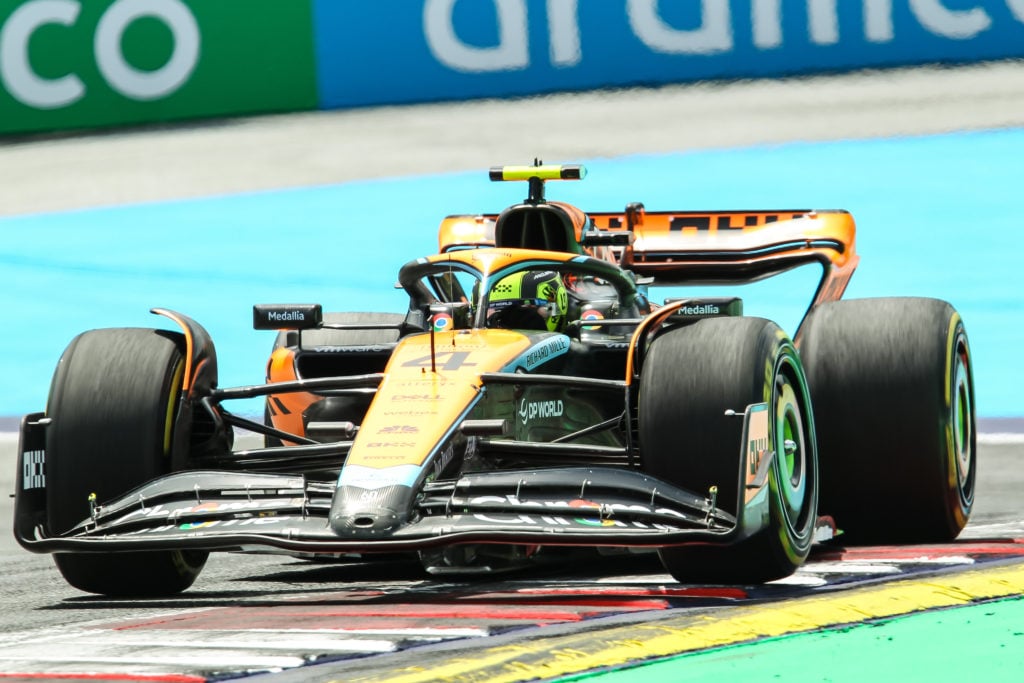
Essentially, drivers will abuse track limits because it is faster.
Take Turn 9 and 10 at the Red Bull Ring – the scene of most of the crimes in the Austrian GP weekend.
They form fast down-hill right-handers, and any racing driver worth their salt wants to carry as high a minimum speed through the corner as is possible.
After all, when the car is going around a corner, it is going sideways and not forwards.
The best way to carry as high a speed as possible is to chuck the car in as late as possible at Turn 9, run wide, hold that momentum before Turn 10 and do the same thing again.
However, carrying a high speed means a driver runs the risk of exceeding track limits as the car cannot stay on the race-track.
The solution is simple: lift off the throttle earlier, turn in earlier and safely make the corner.
But these are racing drivers we are talking about: to do this would mean they bleed lap-time to rivals and the idea would be given short-shrift by 100% of them.
It is funny though, that at street tracks like Monaco, track limits aren’t an issue as pushing too hard there usually means a chat with a barrier – one that you’d lose…
Receive exclusive F1 news and updates twice a week to your mailbox