Lando Norris
 McLaren
 Mercedes
 Red Bull
 Ferrari
 Williams
 Racing Bulls
 Aston Martin
 Haas
Haas Alpine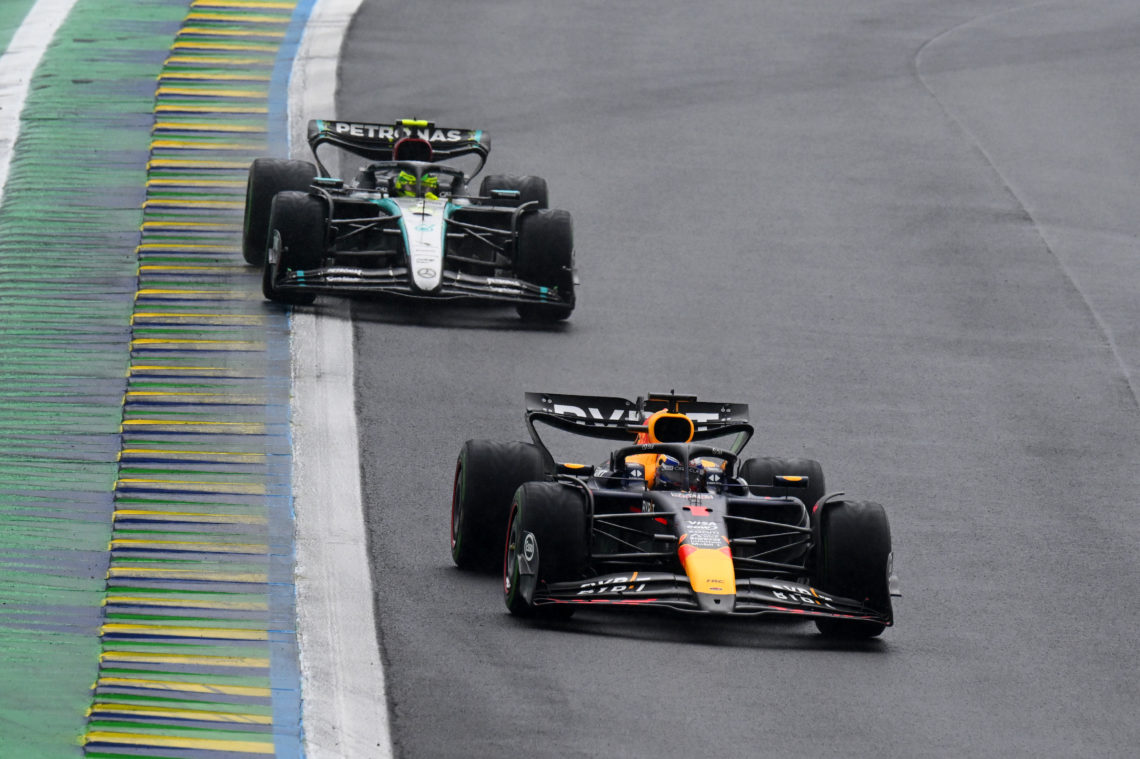

Max Verstappen put in a masterclass display during the rain-affected Sao Paulo Grand Prix when he took victory by over 15 seconds from Esteban Ocon.
It was an unlikely win for the Dutchman after he started from P17 owing to an engine penalty and an early exit from qualifying, which took place earlier in the day after being cancelled on Saturday due to the rain.
Red Bull went into the race feeling they were treated harshly, with Christian Horner voicing his concerns over why the red flag took so long before it was issued and effectively allowed others to knock out Verstappen.
When it came to the race, from the get-go Verstappen meant business. He overtook six cars on the opening lap, three of which were at the second part of the Senna ‘S’ when he went around the outside of the corner in a move that mimicked his heroics at Interlagos in 2016.
Verstappen’s driving has come under the spotlight in recent races, but he was mesmerising around the sodden circuit. The unlikely victory from P17 on the grid is only the fifth time in F1 history it has happened, with Karun Chandhok comparing it to Ayrton Senna’s masterclass in the rain at Donington in 1993.
Peter Windsor highlighted how Verstappen was able to do one thing that rivals Lewis Hamilton and Fernando Alonso could not do when speaking on his YouTube channel, despite the pair being known for their impressive performances in the rain.
Peter Windsor highlights how Max Verstappen could drive to the limits of his car better than Lewis Hamilton
A mid-race red flag after Franco Colapinto crashed proved to be pivotal for Verstappen’s chances at victory having chosen to stay out while others pitted around him, including leaders Lando Norris and George Russell.
It was then a case of not crashing, what was easier said than done when Carlos Sainz skated off the track and ended his race with 31 laps to run.
After he pounced on leader Esteban Ocon at the next restart to take the lead, Verstappen went on to set the fastest laps in 10 of the final 11 laps of the race. Windsor believes this was down to his sheer confidence in the car, whereas Hamilton and Alonso struggled.
“This was Max, feeling the grip, staying away from the white lines, sometimes he would understeer, but what he was never doing was stretching the car on entry and getting a wheel on the white line,” said Windsor.
“The only driver who would normally drive that well is Lewis Hamilton, and we didn’t see that from Lewis today because I think he was completely shocked by how badly the Mercedes handling was and how much bouncing. Fernando Alonso too, the same thing with Aston Martin being a disaster of a car.”
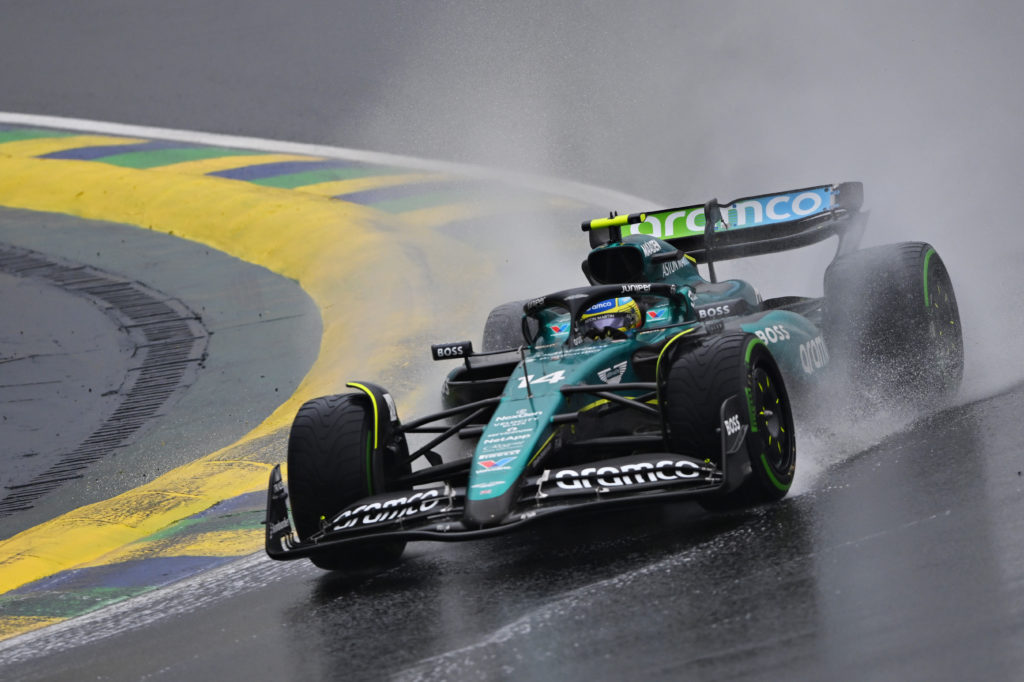
Fernando Alonso suspects brake issue compounded bouncing issues
Both Alonso and Hamilton were heard complaining about the excessive bouncing from their cars over team radio.
While it was not a return of the porpoising phenomenon that plagued the cars in 2022, it was more due to the tarmac resurface that had been made to Interlagos ahead of this year’s race.
Alonso also revealed that he was nursing a brake problem and elected to finish the race after his mechanics did such a good job repairing his car after his qualifying crash, despite needing to stop due to the bumps.
“We had a brake issue after the restart. The car was really bouncing in the second half of the race – in other circumstances I would have stopped – but the mechanics did such a good job to get the car ready after the crash, so I finished the race for them,” said Alonso in the team’s official press release.
Aston Martin now faces a threat from Alpine in the final three races after they secured the double podium with Ocon and Pierre Gasly.
Receive exclusive F1 news and updates twice a week to your mailbox