Lando Norris
 McLaren
 Mercedes
 Red Bull
 Ferrari
 Williams
 Racing Bulls
 Aston Martin
 Haas
Haas Alpine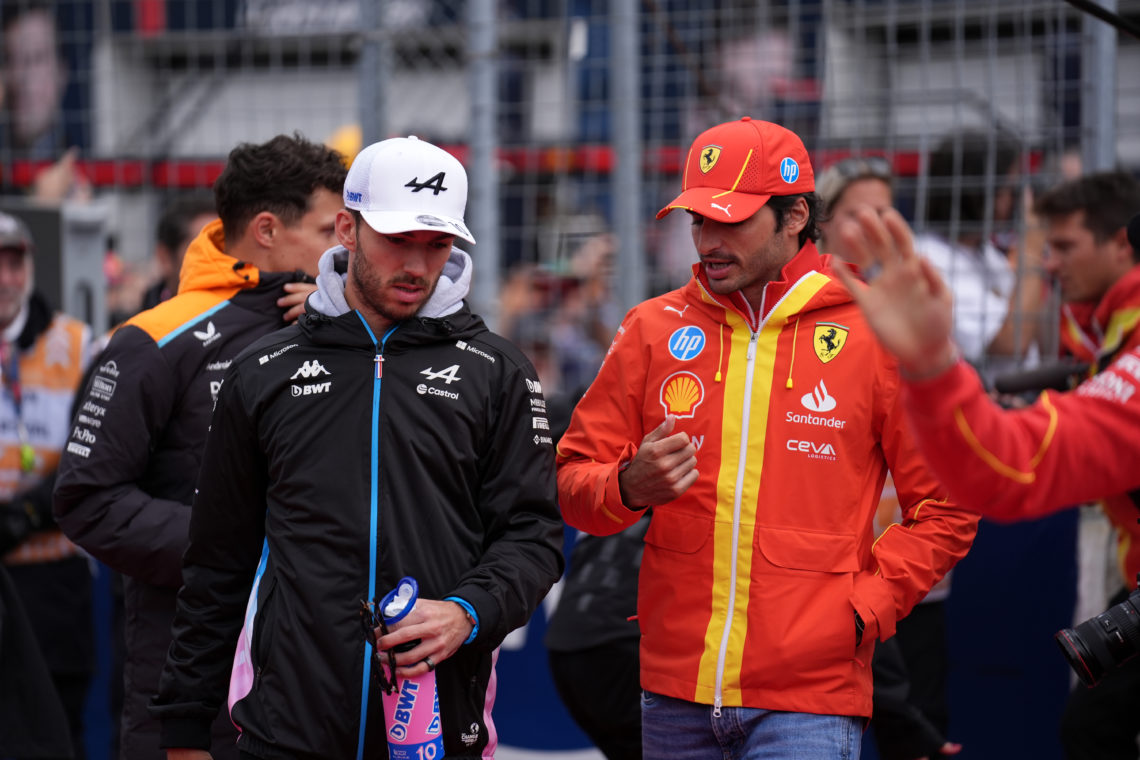

The future of Carlos Sainz has been a hot topic in the Formula 1 driver market since he became a free agent at the start of the season.
Ferrari will drop Sainz at the end of the season in favour of Lewis Hamilton, who stunned the F1 world with his announcement to leave Mercedes for the Scuderia in 2025.
That has left the spotlight on Sainz, who has drawn attention from fellow drivers for holding up the driver market with his talks. F1 Oversteer understands he is in line to join Williams, but now Alpine has reportedly made a late bid for his services.
The team faces problems with its driver lineup if it does not secure Pierre Gasly, whose contract runs out this year, and find a replacement for Esteban Ocon who announced he would be leaving at the end of the season.
Sainz told media ahead of the Spanish Grand Prix that a decision would be taken on his future “very soon” but was not clear on where that would be. It was thought that he had options with Williams and Sauber/Audi, but now an attractive offer has been made to join Alpine according to Autosport.
With that in mind, there are three reasons why an offer from Alpine might not be attractive for Sainz despite their recent uptake in form.
READ MORE: Ferrari driver Carlos Sainz’s life outside F1 from full name, girlfriend and height
Alpine’s 2026 engine is not a guaranteed success
Out of all the 2026 power unit manufacturers, there is only two that face the prospect of serving one team on the grid: Honda and Alpine.
Honda has proven its credentials as a world championship power unit maker with its Red Bull partnership, with its success being part of the reason why the group wanted to continue its F1 operations after initially pulling out at the end of 2021.
Alpine plans to only serve its works team, meaning crucial pieces of data that other power unit manufacturers gain from having customers would not be available. Renault has struggled since the introduction of the hybrid era, having won only four races since 2014.
Rumours of them potentially withdrawing from making a 2026 power unit and for the engine division at Viry-Chatillon to be diverted to other projects have emerged in the last few weeks. CEO Luca De Meo, is reportedly ‘shopping around’ for potential buyers of their 2026 engine.
The return of Flavio Briatore
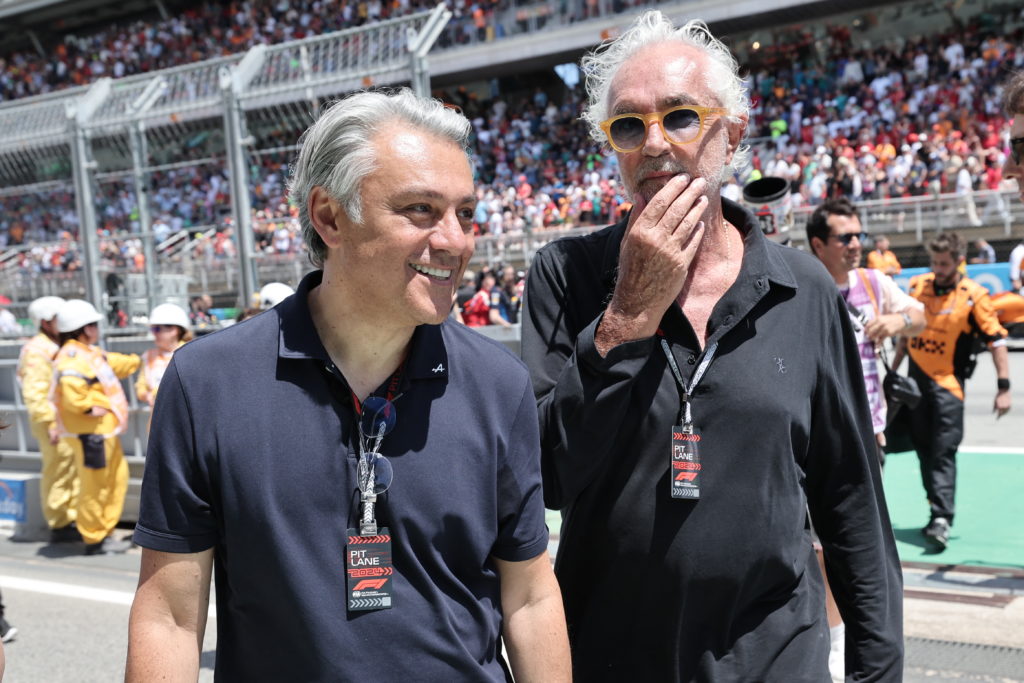
Flavio Briatore was expelled from the F1 paddock for his role in the Crashgate scandal at the 2009 Singapore Grand Prix, but he had the verdict overturned in the French courts in 2010.
Since then, he has never really left the F1 paddock having been a key figure for drivers (such as Fernando Alonso) and business associates.
Alpine has recently appointed him as an executive advisor, tasked with “scouting top talents and providing insights on the driver market, challenging the existing project by assessing the current structure and advising on some strategic matters within the sport”.
Damon Hill questioned whether it was the right move for the French team, branding it “baffling” and voicing his disappointment with fellow team principals. Indeed, why would a team hire a guy that cost them £40 million per year when Dutch bank ING pulled out because of cheating allegations?
READ MORE: Who is Flavio Briatore? Everything to know about Alpine’s F1 executive adviser
Briatore knows what it takes to succeed in F1 having won titles under its previous guise Benetton and brought early success to Michael Schumacher’s career, but his name will forever have an asterisk having played a part in what was described as “the worst case of cheating in sports history” due to its potential lethal consequences.
If Alpine is in contact with Sainz, Briatore will no doubt be playing a role in courting his services. The question is whether he wants to be thrust into a project that will likely want results out of the box in inferior machinery.
Williams and Sauber both have better offers
Although both Williams and Sauber are currently F1’s tail-end stragglers, both have ambitions to win races and challenge for championships.
In the case of Williams, team principal James Vowles has successfully lobbied for an exemption in F1’s cost cap rules to allow for greater capital expenditure between the teams at the bottom of the points table. This enables them to spend more money on bringing their facilities up to date and on par with Mercedes and Red Bull.
Sauber’s deal with Audi is based on the same premise as their deal with BMW in the early 00s. When they took over the team in 2006, they were championship challengers within three years with Robert Kubica in 2008.
While it would be a step backwards for Sainz in the short term, the thinking behind both projects is the long-term gain either could yield if proven to be successful.
Receive exclusive F1 news and updates twice a week to your mailbox