Lando Norris
 McLaren
 Mercedes
 Red Bull
 Ferrari
 Williams
 Racing Bulls
 Aston Martin
 Haas
Haas Alpine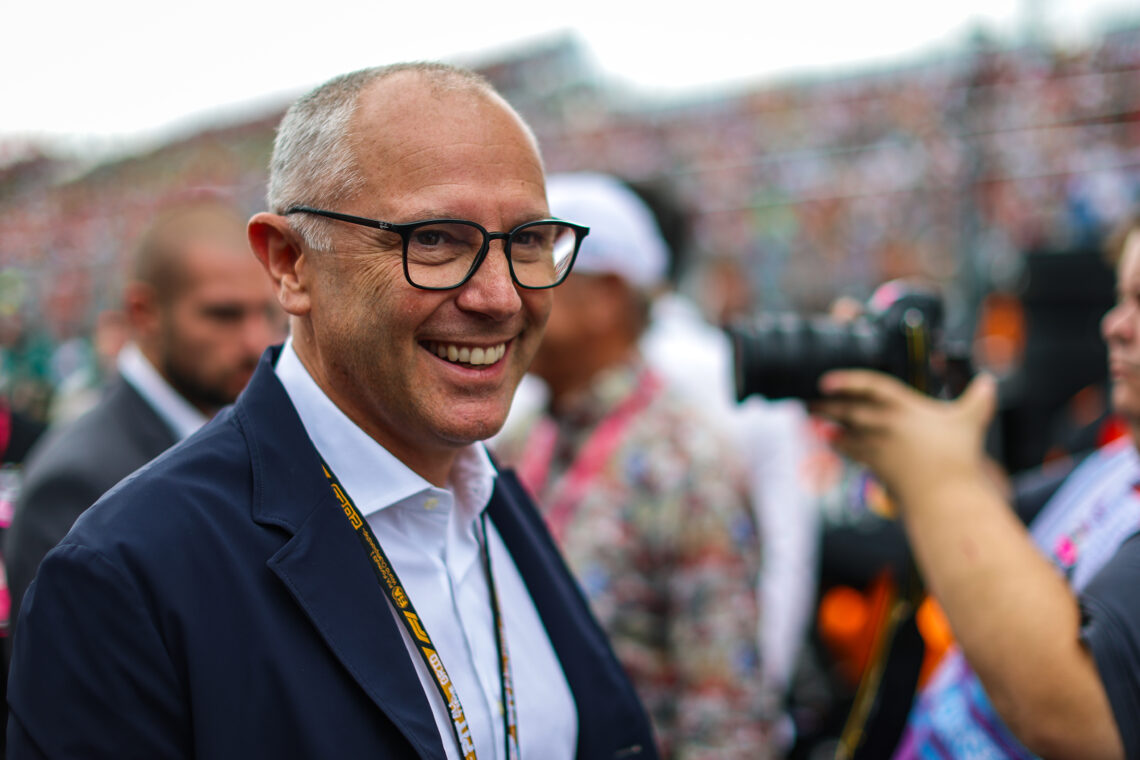


The popularity of Formula 1 is growing faster than ever before.
Formula One Group CEO Stefano Domenicali has overseen a level of growth that few in the paddock would have predicted even a decade ago.
Several incredibly close title battles, with 2016 and 2021 coming to mind, have helped, although the Drive to Survive Netflix series also deserves plenty of credit.
There are several other factors that have played their part too.
The 2025 Formula 1 season consists of 24 Grand Prix weekends and six Sprint Races, the joint-longest campaign in the sport’s history.
| Position | Drivers' Championship | Points |
| 1 | Oscar Piastri | 284 |
| 2 | Lando Norris | 275 |
| 3 | Max Verstappen | 187 |
| 4 | George Russell | 172 |
| 5 | Charles Leclerc | 151 |
| 6 | Lewis Hamilton | 109 |
| 7 | Andrea Kimi Antonelli | 64 |
| 8 | Alexander Albon | 54 |
| 9 | Nico Hulkenberg | 37 |
| 10 | Esteban Ocon | 27 |
It means Formula 1 is reaching more people around the world, with a race in Thailand potentially next on the cards.
F1 has always been popular in Europe, with the United Kingdom home to almost every team, and spikes in interest occurring when a driver does particularly well.
For example, every race sees swathes of fans arrive in bright orange to support Max Verstappen, while a return to Germany would be on the cards if someone could replicate Michael Schumacher’s success.
Domenicali knows that one of the markets F1 needs to break is the United States, and he’s now got a plan on how to do so.
READ MORE: F1 CEO Stefano Domenicali makes ‘very strong’ Lewis Hamilton prediction amid Ferrari 2025 struggles
Stefano Domenicali knows Formula 1 needs to make a ‘cultural’ change to break America
Domenicali was talking about the F1 calendar on The Race F1 Podcast, and the point about the NFL having fewer matches than F1 has races was brought up.
To explain that point of view, Domenicali said: “In the US, and this is what we need to do if I just open up this question.
“If you want to be successful in the US, on top of what we are doing, we need to get into the culture of the US.
“You wake up in the morning, with a cup of coffee, with a baseball cap, and you watch television, you watch sports. You watch mainly the NFL, NBA, and all of the other relevant sports of America.
So, it’s cultural. You live in a place where you have a social life, with sports. So, can you imagine when we are going to be at the same level, where, for sure, the American sports will always have an incredible position in the US.
“But, if we can be relevant there, I guarantee to you that this will be fascinating, and I will have a good problem to handle, that there will be more and more places that want to host in the US.
“But, it’s cultural, and that’s why I go back to saying that this is a worldwide sport. A worldwide sport that every year is able to bring in all the countries we’re going to, such as an incredible standard of event.
“Such incredible hype, there is no other sport that is able to do that.”
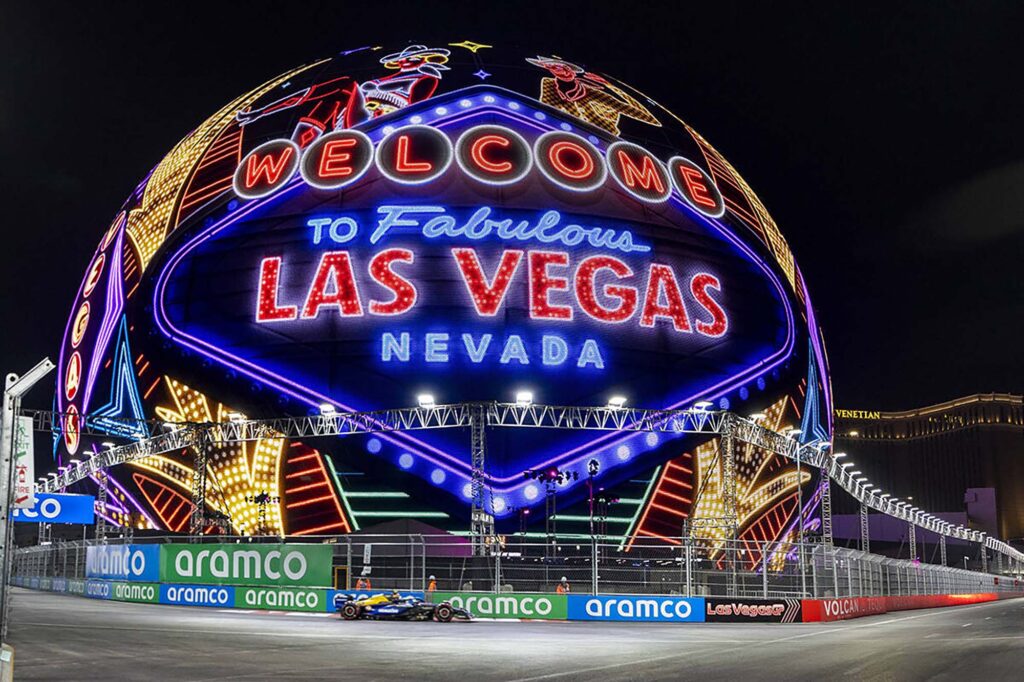
READ MORE: Five unforgettable Las Vegas Grand Prix moments including Carlos Sainz’s drain cover crash
What could Formula 1 do to increase the popularity of the sport in the United States?
Formula 1 has done a decent job hosting races around the world, although they will likely want to add a Grand Prix somewhere on the African continent sooner rather than later.
The issue for American fans is similar to what those in Australia have had to deal with, in that the time zones don’t always work.
| Circuit | Location | Times raced |
| Caesars Palace Grand Prix | Las Vegas | 2 |
| Circuit of the Americas | Austin | 12* |
| Dallas Fair Park | Dallas | 1 |
| Detroit Street Circuit | Detroit | 7 |
| Indianapolis Motor Speedway | Speedway | 19 |
| Las Vegas Strip Circuit | Las Vegas | 2* |
| Long Beach Street Circuit | Long Beach | 8 |
| Miami International Autodrome | Miami | 4* |
| Phoenix Street Circuit | Phoenix | 3 |
| Riverside International Raceway | Moreno Valley | 1 |
| Sebring Raceway | Sebring | 1 |
| Watkins Glen International | Watkins Glen | 20 |
The Las Vegas Grand Prix has proven to be a particular problem, with even fans on the Eastern coast of the United States having to stay up later than they would like to watch the race.
If the sport can find a way to make the sport more accessible in that regard, then it will begin to become even more popular in America.
That’s a challenge that has significant knock-on effects in countries where fans have been following F1 for far longer, but one that Domenicali might need to eventually address.
Receive exclusive F1 news and updates twice a week to your mailbox