

 Lando Norris
 McLaren
 Mercedes
 Red Bull
 Ferrari
 Williams
 Racing Bulls
 Aston Martin
 Haas
Haas Alpine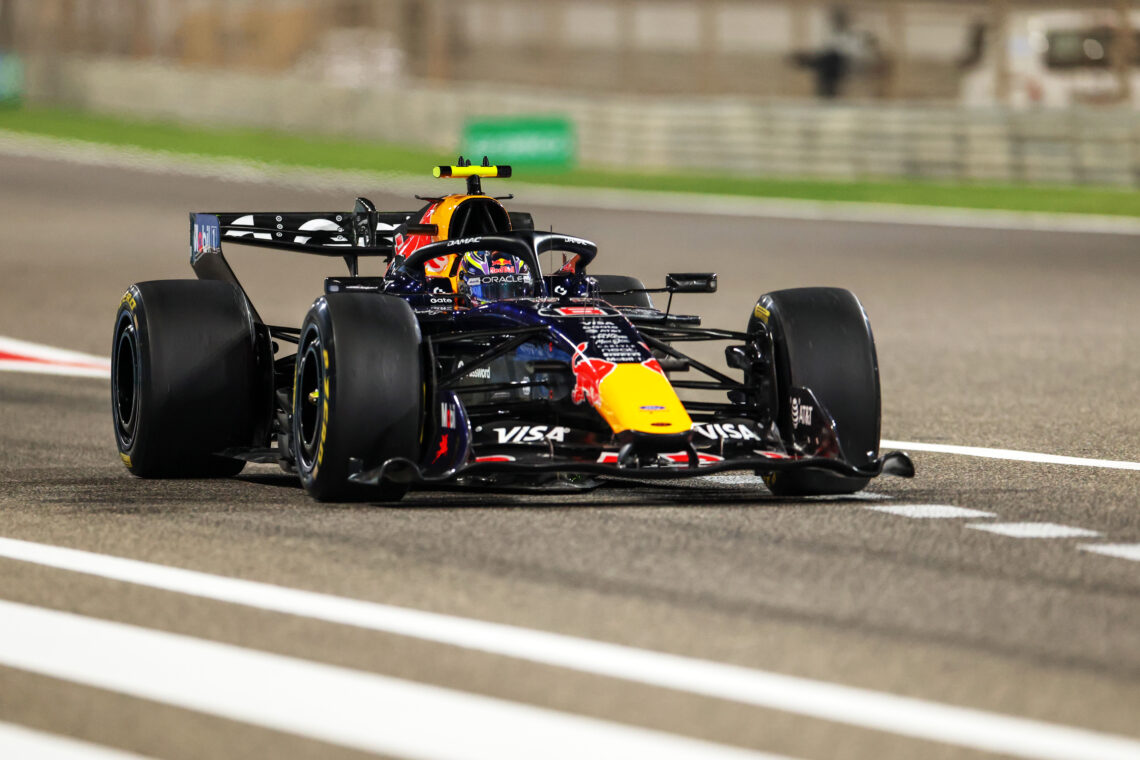


Isack Hadjar had a difficult start to the second Bahrain pre-season test, as Red Bull hit reliability issues that may actually have been a positive regarding their new sidepods.
Red Bull utilised F1’s return to the Bahrain International Circuit this Wednesday to test a few new parts on the RB22. The Milton Keynes squad unveiled a new front wing when Hadjar hit the track, plus changes to the lower area of the sidepods and two flaps on the engine cover.
Technical director Pierre Wache has chosen the second Bahrain test as the right time for Red Bull to start seeking better performance after proving the reliability of their new engine. The reliability of Red Bull Powertrains’ debut engine has been a big talking point in the paddock.
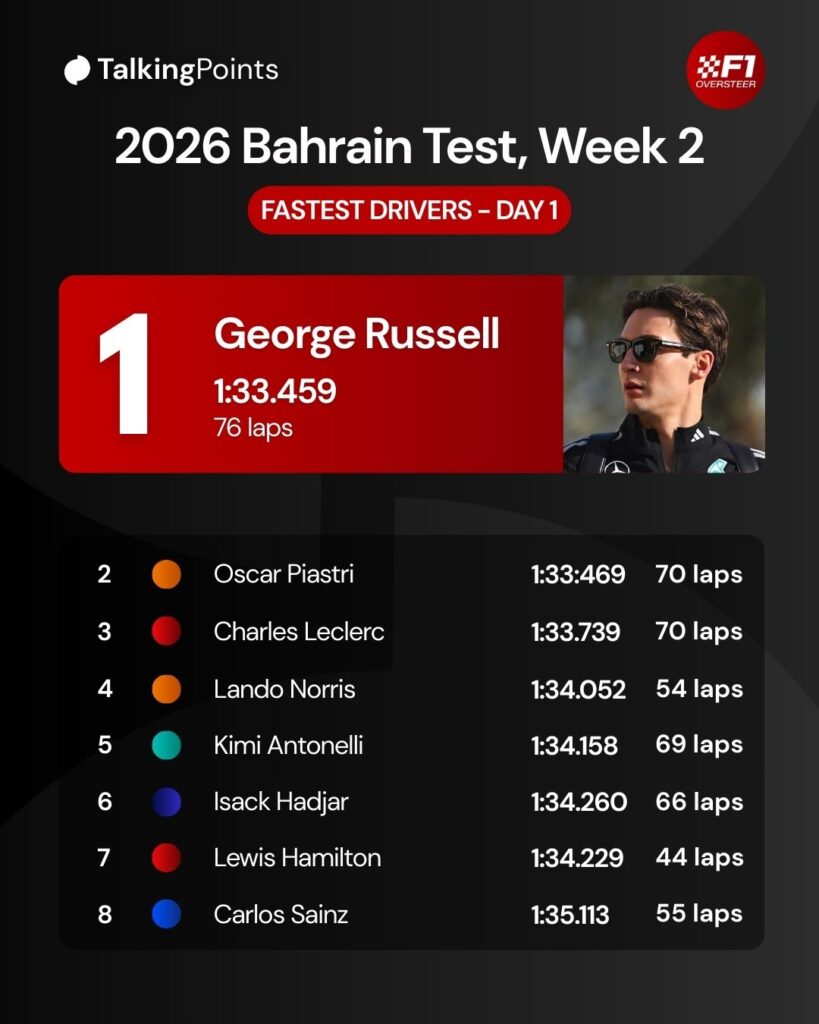
Yet Red Bull actually hit reliability problems on the first day of the second pre-season test in Bahrain on Wednesday. Hadjar was due to drive throughout the day, but he only completed a total of 66 laps after a fluid leak during the morning session that needed a lot of attention.
George Russell starts Week 2 at the 2026 F1 Bahrain test on top! But what stood out the most?
New Red Bull sidepods at the Bahrain test ‘significantly’ reduced their 2026 F1 car’s drag
Yet while Hadjar had a slower start to the day than he would have wanted, the fact that Red Bull kept their latest sidepods on his car suggests they are happy with the update. Four-time champion Max Verstappen is due to drive the Red Bull RB22 all day in Bahrain this Thursday.
READ MORE: Everything you need to know about F1’s 2026 engine and aero regulations
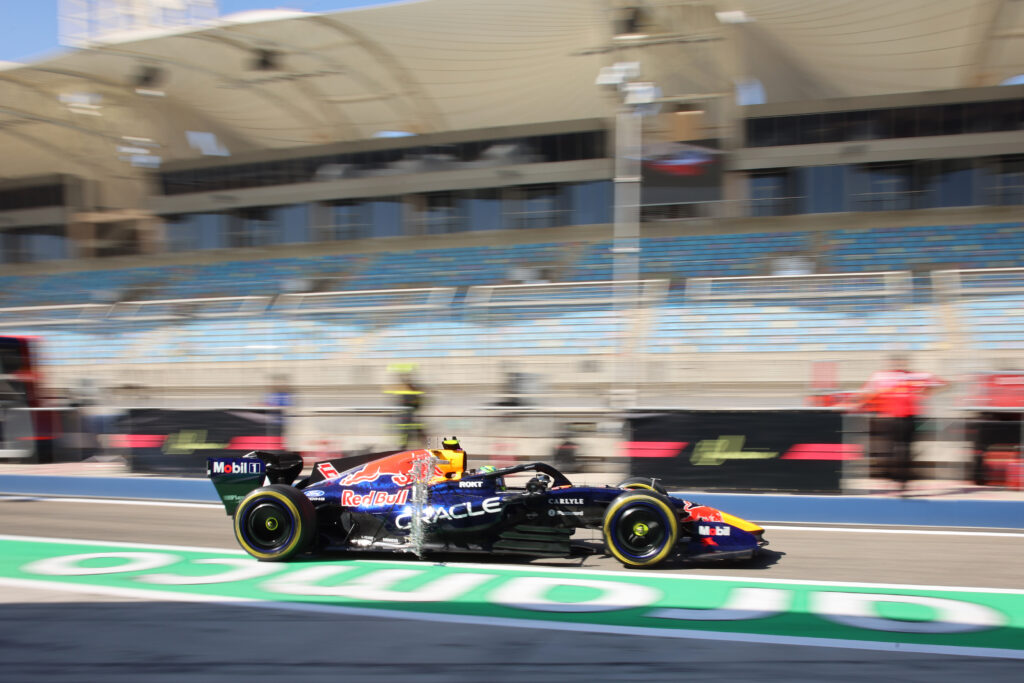
According to Motorsport.com, the sidepods that Hadjar used on Wednesday are the work of Red Bull’s head of aerodynamics Enrico Balbo and his team. Red Bull had initially chosen not to incorporate an undercut for their launch design, but the new sidepods are much slimmer.
Balbo has been ‘aggressive’ with their aerodynamic project, as he believes Red Bull’s engine reliability showed they can have smaller sidepods. The upper element is largely the same as before, but Red Bull have reshaped the lower section to ‘significantly’ slash the RB22’s drag.
Isack Hadjar will be glad that Red Bull’s sidepods have not made the RB22 more difficult to drive
Balbo and Wache are expected to continue designing further aerodynamic upgrades for the RB22, as Red Bull sticking with their new sidepods throughout a troubled day for Hadjar this Wednesday suggests they are confident that it has not made their car more difficult to drive.
Hadjar will be glad that Red Bull’s early upgrades for the RB22 have not made their car more difficult to drive, as he has now started to get to grips with the driving style that the 2026 F1 regulations will require in order to harvest enough electrical energy during the Bahrain test.
Verstappen was the first driver to adopt aggressive downshifts to recover energy at the first Bahrain test last week, along with using lower gears in the corners. While Verstappen’s ways of recovering energy made the rear of the RB22 more nervous, he could still control the car.
Hadjar initially struggled to copy Verstappen’s energy recovery tricks, especially through the tricky downhill left-hand Turn 10 and the left-handed Turn 11. But the 21-year-old, who has moved up from Racing Bulls to Red Bull this year, was gradually starting to control the slides.
Receive exclusive F1 news and updates twice a week to your mailbox


