Lando Norris
 McLaren
 Mercedes
 Red Bull
 Ferrari
 Williams
 Racing Bulls
 Aston Martin
 Haas
Haas Alpine


With the curtain now closed on the 2025 F1 season, eyes are beginning to shift focus onto the new season, and Red Bull may not be in as much danger in 2026 as they once thought.
The second half of the newly-concluded season was dominated by Max Verstappen, who claimed six of his eight victories in the term following the resumption of racing after the summer break.
It was enough for the reigning world champion to emerge as a contender to defend his drivers’ title for the fourth year in a row. In the end, Lando Norris proved to be consistent enough to claim his first championship, but not before Verstappen made him work for it.
Verstappen’s revival came after Red Bull decided to continue upgrading their 2025 F1 car, the RB21. However, the continuation of development was understood to come at the price of their 2026 challenger’s performance, but that doesn’t seem to be the case.
Do you think the new 2026 F1 regulations will improve the racing? And let us know your thoughts!
Red Bull aren’t worried about their late 2025 developments affecting their 2026 F1 car
Alpine chief Steve Nielsen recently explained why developing both the current and future F1 cars during the latter stages of a season ‘makes no sense’.
The time and resources that it takes to refine and manufacture an upgrade can be astronomical, meaning teams have to think wisely about where they are spending them, especially with F1’s new regulations right around the corner.
It was understood that Red Bull’s continuation of development would hinder their progress in the Red Bull Powertrains department, but according to F1 journalist Michael Schmidt, it hasn’t been an issue for them.
In the final episode of the Formel Schmidt podcast, the veteran reporter was asked whether the decision to continue working on the RB21 would affect them next year, to which he replied, “In 2021 and 2022, it didn’t happen.
“They employed a similar strategy then. This time, the task is, of course, much, much bigger.
“Additionally, they have to build their own engine, which is certainly a Herculean task for a private racing team or, in this case, a private engine manufacturer. One can compare it to Cosworth or Ilmor. Just like they are setting it up on their campus.
“So, it can definitely blow up in their faces, but the engine development was not influenced by this late shutdown of the 2025 car development, but we will see; however, I do trust Red Bull to put together a good car.”
- READ MORE: Red Bull might have a ‘perfect’ advantage that Max Verstappen will love in the 2026 F1 engine race
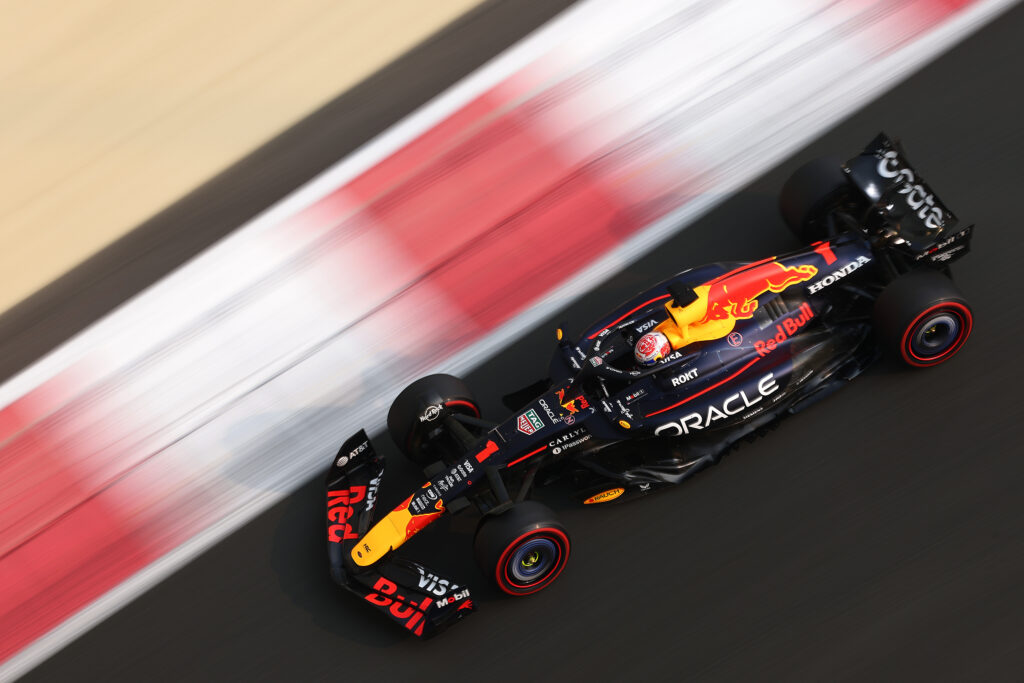
Despite starting from a fresh slate, Isack Hadjar is still expected to struggle against Max Verstappen at Red Bull next year
With Isack Hadjar set to become Verstappen’s latest sparring partner at Red Bull next season, it is widely regarded that the Frenchman could benefit from the regulatory reset and be on the same level as the four-time world champion.
However, Schmidt highlights how Verstappen’s experience will still surpass Hadjar’s enthusiasm, saying, “Verstappen is the one who is quick with everything now, but that’s how it is.
“[Hadjar] is certainly right that everything really starts from zero, completely from zero, the cars also have a completely different driving characteristic than the ones now, more like 2021.
“It will then come down to how one can adjust the driving style from these ground effect cars back to the 2026 cars. And he says, ‘Verstappen is starting from zero just like I am.’
“That’s not entirely true, because Verstappen has a larger database of different cars he has already driven.
“And he knows the team, so it will certainly not be easy for Hadjar. I would say he will certainly perform better than Tsunoda, though.”
It’s a sentiment that is held by Anthony Davidson as well, who recently noted that Hadjar is ‘naive’ to think the new regulations will help him to perform on a level akin to his vastly more experienced teammate.
Receive exclusive F1 news and updates twice a week to your mailbox