Lando Norris
 McLaren
 Mercedes
 Red Bull
 Ferrari
 Williams
 Racing Bulls
 Aston Martin
 Haas
Haas Alpine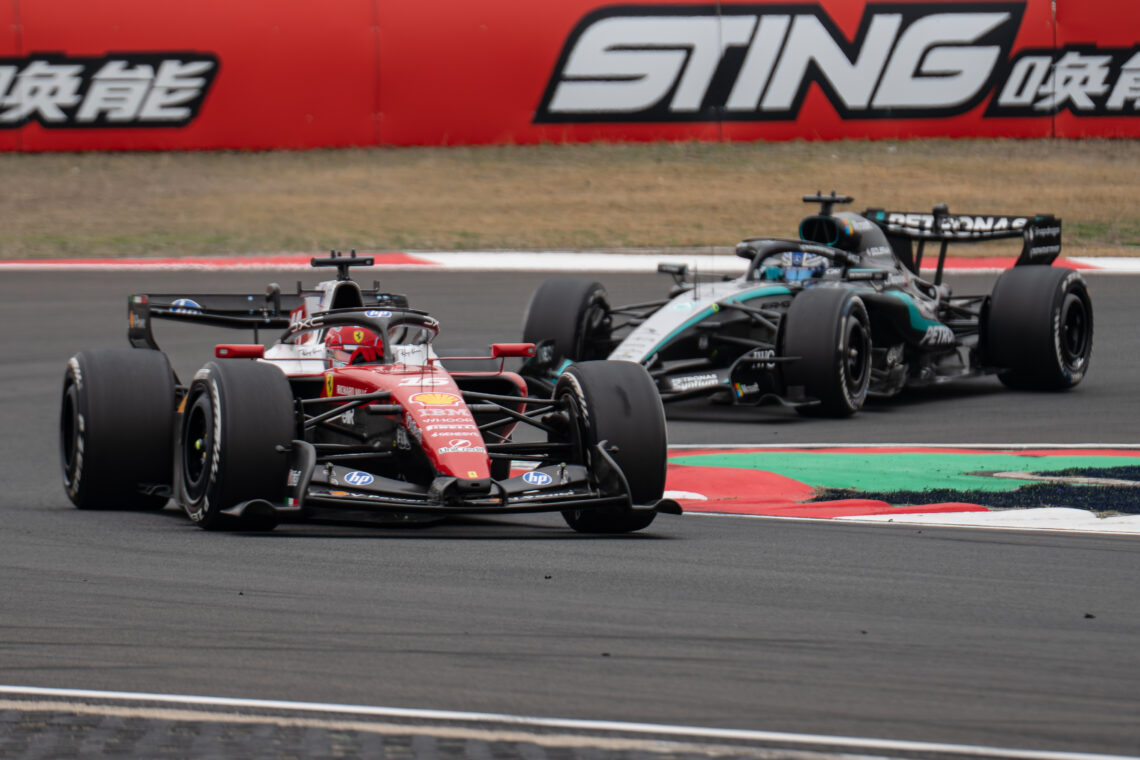


GPS data from the first two rounds of the 2026 F1 season in Australia and China shows the Ferrari SF-26 struggles a lot more under traction compared to the Mercedes W17.
Mercedes and Ferrari have started 2026 as the teams to beat, with McLaren and Red Bull so far unable to join the fight for the podium places. George Russell and Andrea Kimi Antonelli have also secured Mercedes a perfect start to the season and lead the F1 drivers’ standings.
Russell leads Antonelli by four points atop the standings due to his victories in the Australian Grand Prix and the F1 Sprint in Shanghai. Antonelli won the Chinese GP for his first victory in Formula 1, but he finished second in Melbourne and only secured P5 in the Shanghai Sprint.
Leclerc rivalled Russell for the lead of the Australian GP, but ultimately had to settle for third place after Ferrari did not pit under the early virtual safety car. Hamilton secured third in the Chinese GP for his first Grand Prix podium with Ferrari, and he even took P3 in the F1 Sprint.
Who is going to win the 2026 F1 Japanese Grand Prix?
Let us know why in the comments!
GPS data shows Ferrari’s traction under acceleration costs them lap time to Mercedes in every corner
Leclerc came home 15.519 seconds behind Russell in the Australian GP and Hamilton ended the Chinese GP 25.267s adrift of Antonelli, who the Ferrari pair were also 0.809s and 0.351s slower than respectively during qualifying, and GPS data shows where the pair lose lap time.
READ MORE: Top 10 drivers to race for Ferrari in Formula 1, ranked
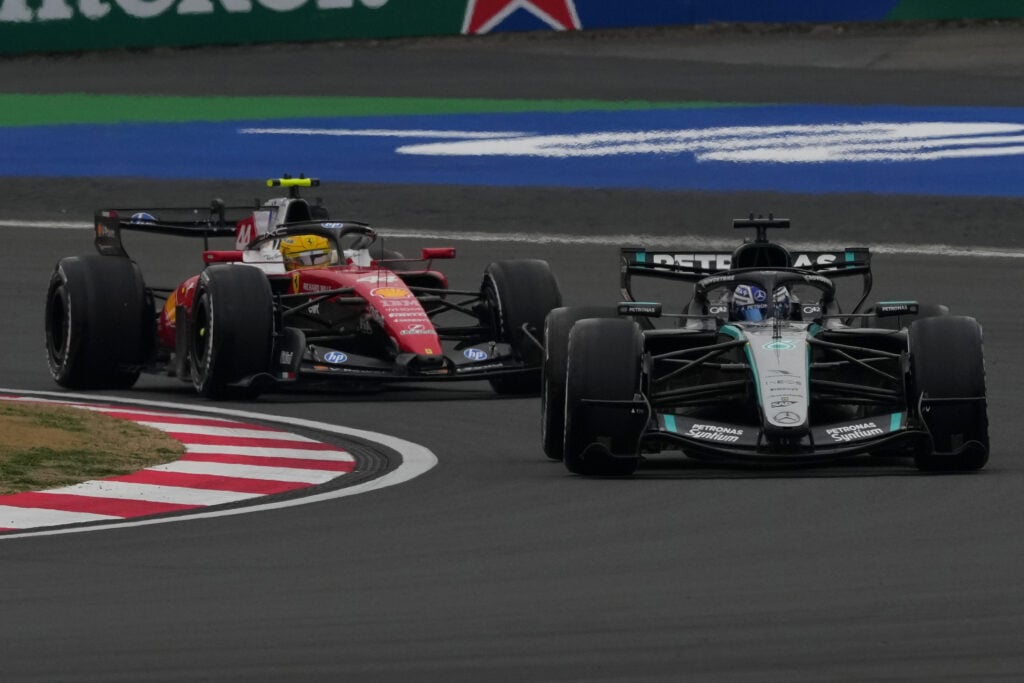
That is according to Auto Motor und Sport, which reports that GPS data from the Australian and Chinese Grands Prix shows the Mercedes W17 generates more traction than the Ferrari SF-26 under acceleration. It is proving to be a ‘decisive advantage’ for Russell and Antonelli.
While the Ferrari SF-26 allows Hamilton and Leclerc to match the Mercedes drivers through the initial turn-in phase and even appear faster through medium-to-high speed corners, the W17’s superior traction consistently lets Russell and Antonelli pull away under acceleration.
Ferrari are working on upgrades they hope will limit the time that Hamilton and Leclerc lose compared to Russell and Antonelli in every corner. The Scuderia also hope the upgrades can give a secondary boost by improving the SF-26’s tyre wear, which is also inferior to the W17.
Russell emphasised how much stronger the Mercedes W17 is compared to the Ferrari SF-26 at managing the Pirelli tyres in the Chinese GP. While he initially struggled to fight Hamilton and Leclerc after the safety car, the Briton was able to run away from the middle of the stint.
This weekend’s Japanese Grand Prix will now put whatever Ferrari learned in Australia and China to the test. Hamilton and Leclerc will need strong traction to rival the lap times that Russell and Antonelli achieve around Suzuka in qualifying, which may also decide the race.
Receive exclusive F1 news and updates twice a week to your mailbox